

The Best 3 Wheel Scooters for Toddlers and Kids

From toddlers to tweens, 3-wheeled scooters are a fun and affordable way to keep kids active. Whether riding to school or cruising the neighborhood, these scooters are self-stable (they don’t tip over on their own) and offer lean-to-steer designs that make them easier for young kids to learn—without sacrificing fun.
Some models even come with seats, making them great for the youngest toddlers who prefer to sit and scoot before transitioning to standing.
To help you find the right fit, we’ve tested more than a dozen popular brands over the years. Below, we highlight our testers’ favorites, followed by a detailed 3-Wheeled Scooter Buying Guide so you know what to look for.

Micro Kickboard Series
$110 (Mini), $169 (Maxi)
FITS KIDS: 2 – 5 years old (Mini), 5 – 12 (Maxi)
HANDLEBAR HEIGHT: 19.25″ – 27″ (Mini), 26.25″ – 35.75″ (Maxi)

Chillafish Scotti Glow
$59
FITS KIDS: 3 – 6 years old
HANDLEBAR HEIGHT: 20.5” – 28″

Retrospec Chipmunk Plus
$50
FITS KIDS: 3 – 8 years old
HANDLEBAR HEIGHT: 26” – 33.5″
Additional Recommended 3 Wheel Scooters
Toddler Scooters with Removable Seats
1. Micro Kickboard Mini with Optional Seat – $110, Best Overall
2. GoTrax KS3 – $45, Best Budget
3. Retrospec Chipmunk Plus – $50, Best Quality for Price
4. Micro Kickboard Mini2Grow – $159, Best Scooter Seat for Tiny Riders
5. La Scoota 2-in-1 – $55, Solid Scooter for Taller Kids
Taller Preschool Scooters without Seats
1. Micro Kickboard Maxi – $179, Best Overall
2. GoTrax KS1 – $39, Best Budget for Older Kids
3. Hover-1 Scout – $45, Light Up Deck
4. Besrey Kick – $80, Foldable and Easiest to Assemble
Scooters we Tested, but Don’t Recommend
1. Hurtle 3-in-1 – $60, Low quality for price
2. Razor Rollie – $65, Very small with low max weight capacity
Frequently Asked Questions
3-Wheeled vs. 2-Wheeled Scooters
Three-wheeled scooters are ideal for toddlers because they’re stable and easy to use, staying upright without the rider’s help. They’re also easier to store since they don’t tip over.
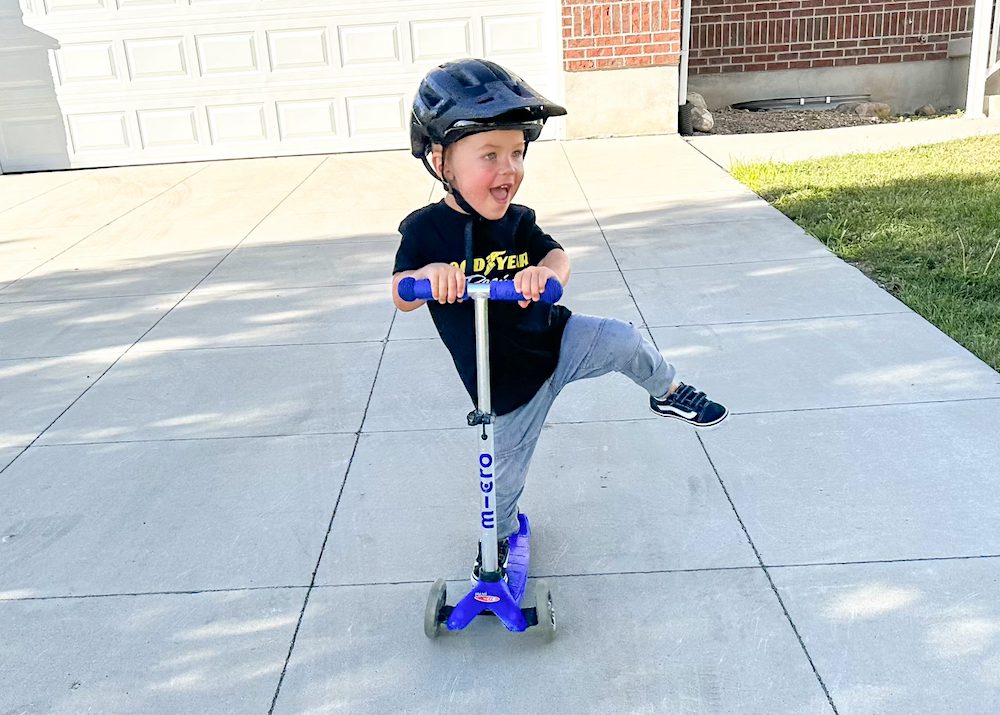
Their wider foot decks provide a more stable platform than 2-wheeled scooters, and some toddlers can even ride with their feet side-by-side instead of one in front of the other.

Most 3-wheeled models feature a lean-to-steer mechanism, where the child leans in the direction they want to turn rather than twisting the handlebars. This steering style is safer and more intuitive for beginners as it reduces sudden jerks that can cause falls and helps kids get comfortable leaning while in motion, a skill that transfers to bike riding.
Around ages 5–6, some kids are ready to transition to a 2-wheeled scooter. However, many 3-wheeled models, like the Micro Kickboard Maxi and Retrospec Chipmunk Plus, offer taller handlebars, allowing kids up to age 8 to ride comfortably.
How Do You Steer a 3-Wheeled Scooter?
Unlike traditional scooters, the handlebars on a 3-wheeled scooter don’t turn. Instead, the front wheels pivot in the direction the rider leans, similar to a skateboard.

To turn left, the child leans left while holding the handlebars; to turn right, they lean right. While this style takes a little practice, it’s highly intuitive, and most kids pick it up quickly on their own.
Should I get a Scooter with a Seat?
A seat on a scooter is completely optional and by no means necessary. It can help timid toddlers ease into scooting, but most kids do just fine without one. Since most seats are removable and don’t affect performance when not in use, so it also doesn’t hurt to have one.

Our testers learned just fine on seat-less scooters, but when given the option, they enjoyed the seated version—even though it was slower and less maneuverable. It simply adds another fun, different way to play.
Because seated scooting is slower, it can be a great indoor activity during bad weather. Sitting and pushing with their legs also helps build strength and coordination for a future balance bike. However, scooters with seats do not teach balance, so they’re no substitute for a balance bike.
Toddler Scooter vs. Balance Bike
While we love 3-wheeled scooters, we love balance bikes even more (check out our list of our favorite balance bikes: The Best Balance Bikes for All Ages). After 15+ years of helping toddlers learn to ride, we’ve noticed that kids who start on a scooter often resist learning to ride a balance bike. That’s because balance bikes are initially more challenging as they require kids to balance, steer, and propel themselves all at once.

When possible, introduce a scooter after your toddler has mastered a balance bike. It can be frustrating at first since they’ll likely be faster on a scooter than on their bike, but be patient. Once they master their balance bike, they’ll not only outpace their scooter, but also ride in more places, on dirt, over jumps at bike parks, and transition to a pedal bike more quickly and easily.

Toddler Scooters Mini Reviews
All the 3-wheeled scooters we tested were very similar, but not identical. The best scooter for your child depends largely on their height and your budget. In terms of quality, the Micro Kickboard Mini and Maxi models stand out as the clear leaders, followed by the Retrospec Chipmunk Plus. The Micro Kickboard models are also the most expensive scooters on this list.
If your child is particularly tall or short, handlebar height is especially important. The minimum and maximum handlebar heights for each scooter are listed in our mini-reviews below. For reference, the lowest minimum height is the Micro Kickboard Mini2Grow at 17.75″, followed by the Chillafish Scotti at 20.5″. At the other end, the tallest maximum height is the Micro Kickboard Maxi at 35.75″, which is generally best suited for kids 8 and up.
Micro Mini and Maxi Deluxe
$109+ (Mini), $169+ (Maxi)
MIN/MAX HANDLEBAR HEIGHT: 21.5” – 31” (Mini), 26.25” – 35.75” (Maxi)
LED LIGHTS: Light up wheels available in some models (see below)
FEATURES: Exceptional quality, smooth ride, adjustable-height handlebars, large variety of color options
Pros:
Cons:
What We Love About the Micro Kickboard Mini and Maxi
With gorgeous colors, Swiss-quality design, and a smooth, quiet ride, the Micro Kickboard scooters are our hands-down favorite toddler scooters. While more expensive than other options on our list, Micro’s reputation for unmatched quality and durability makes them worth the investment. If you want the best 3-wheel scooter available, these are it.
The adjustable-height handlebar is easy to use and offers 9.5+″ of continuous adjustability—more than any other toddler scooter we tested. This gives Micro scooters one of the longest fit ranges as your child grows.
Micro Mini Versions
Micro offers seven versions of the Mini, all built on the same high-quality base but with different handlebars and wheel options. The Mini and Mini LED have a minimum handlebar height of 21″, while the other models feature a shorter bar with a minimum of 17.75″ for younger toddlers.
- Mini – Standard model, no LED wheels (Optional Seat)
- Mini LED – Same model with LED wheels
- Mini Glow Plus LED – LED wheels plus glowing deck
- Mini LED Foldable – Folds for easy transport
- Mini 3-in-1 – Includes a seat and shorter bar for seated mode
- Mini2Grow – Includes a seat with shorter bar as well as a push bar
- Mini Rock & Go LED – Starts as a rocker base, then converts to a scooter with a seat, and finally into a standard scooter
Micro Maxi Versions
Micro also offers five versions of the Maxi. All share the same handlebar height, but vary by LED lights and foldability. The Maxi Pro LED additionally has wider tires and a broader handlebar for better control during fast turns.
- Maxi – Standard model, no LED wheels
- Maxi LED – Same model with LED wheel
- Maxi LED Foldable – Folds for easy transport
- Maxi Glow Plus LED – LED wheels plus glowing deck
- Maxi Pro LED – Wider tires and handlebars for better control at higher speeds

Chillafish Scooti Glow
$55
MIN/MAX HANDLEBAR HEIGHT: 20.5” – 28″
LED LIGHTS: Light-up wheels
FEATURES: Adjustable-height handlebars (4 settings) can also be removed for more compact storage or transport, optional light-up wheels, fun color schemes
Pros:
Cons:
What We Love About the Chillafish Scooti Glow
We’ve been testing Chillafish balance bikes and ride-on toys for years, and the Scotti toddler scooter lives up to the brand’s reputation for smart design, solid quality, and approachable pricing. The latest version, the Scotti Glow, adds LED light-up wheels for extra fun.
Our testers loved how smooth the ride felt—comparable to the much pricier Micro Mini. The Scotti’s lean-to-steer function also has more play, making it more responsive to movement. While adventurous or more experienced riders may enjoy the added maneuverability, the Micro Mini’s tighter steering limits are often easier for the average toddler just learning to scoot.
For toddlers and petite preschoolers, the Scotti is an excellent and affordable alternative to higher-end models. It’s also a standout for smaller riders thanks to its low minimum handlebar height of 20.5″, one of the lowest we’ve seen outside of Micro.

Retrospec Chipmunk Plus
$50
MIN/MAX HANDLEBAR HEIGHT: 26” – 33.5″
LED LIGHTS: Light-up wheels
FEATURES: Sitting and standing mode, adjustable-height handlebars, extra smooth and stable ride, available in lots of colors
Pros:
Cons:
What We Love About the Retrospec Chipmunk Plus
At around $50, the Retrospec Chipmunk Plus offers incredible value. Having assembled and tested many 3-wheeled scooters back-to-back, we were impressed that the Chipmunk Plus matches—or even outperforms—scooters at higher prices. From ease of assembly to overall build quality, it delivers top-notch performance and usability at a bargain.
One standout feature is its foldable seat, which makes it an excellent choice for siblings or families sharing a scooter. The seat flips up and out of the way without tools, and its height can be adjusted through three settings without tools. Once kids have outgrown the seat entirely, it can be removed altogether.
The Chipmunk Plus also has the easiest handlebar adjustment lever of any scooter we tested. Its wide release lever is intuitive, easy to unlock, and locks securely with little effort—something parents will appreciate during setup and adjustments.

GoTrax KS1 and KS3
~$40
MIN/MAX HANDLEBAR HEIGHT: 26” – 34”
LED LIGHTS: Light-up wheels
FEATURES: Adjustable height handlebars (3 settings), light-up wheels
Pros:
Cons:
What We Love About the GoTrax KS1 and KS3
The GoTrax KS1 and KS3 are essentially the same scooter, with the KS3 adding a foldable seat. Both models include LED light-up wheels and a generous handlebar range of 26″ to 34″, giving them one of the widest fits among budget scooters. While not as finely tuned as higher-end models, the GoTrax scooters deliver solid value at an affordable price.
For families wanting a scooter with a seat, the KS3’s foldable option is handy, but not perfect. The seat locks into place when upright, and while older testers could press the small button to release it, younger toddlers often found it frustrating when switching between seated and standing modes.
Adjusting or removing the seat is also less user-friendly than other models since both require tools. Parents who want quick transitions may find this cumbersome.
GoTrax KS Series Versions
- KS1 – Standard scooter with LED wheels
- KS3 – Same scooter as the KS1 but with a foldable seat
- KS3 Pro – A completely different design with a new base, handlebar, and seat. It is the only KS model that folds up. We have not tested this version.

LaScoota 2-in-1
~$55
MIN/MAX HANDLEBAR HEIGHT: 25.5″ – 34″
LED LIGHTS: Light-up wheels
FEATURES: Sitting and standing modes, tool-free removable seat
Pros:
Cons:
What We Love About the LaScoota 2-in-1
The LaScoota 2-in-1 is a solid scooter with no major drawbacks, but it also doesn’t have any standout features that set it apart. Its overall quality is on par with other scooters in this price range, but compared to models like the Retrospec Chipmunk Plus or GoTrax KS3, the LaScoota falls short in one key area: the seat. Instead of folding up, the seat must be fully removed before the scooter can be used in standing mode.
That said, the LaScoota does offer nearly 9″ of handlebar height adjustment, giving it one of the widest growth ranges among budget scooters. The seat is also easy to remove without tools, which parents will appreciate. Smooth steering, light-up wheels, and a wide range of color options make it a fun and functional choice for kids.

Hover-1 Scout
$45
MIN/MAX HANDLEBAR HEIGHT: 24” – 32.5″
LED LIGHTS: Wheels (white only) + light-up deck (battery powered)
FEATURES: Smooth steering, more mature styling
Pros:
Cons:
What We Love About the Hover-1 Scout
The Hover-1 Scout delivers solid performance at a budget price, with a slightly more mature look compared to other entry-level scooters. Its muted colors and white LED light-up wheels give it a cleaner style, though the lights blink rather than glow in color like most competitors.
One standout feature is the light-up deck—a rarity among budget scooters we recommend. It requires three AAA batteries and must be manually switched on and off, but the added visibility is a real bonus for riding at dawn or dusk (just make sure your child remembers to turn the lights off!).
The Scout also turns smoothly and handles well, though it does come with a few trade-offs. The handlebar height adjustment knob can be tricky to fully tighten, its maximum handlebar height is lower than many competitors, and despite some product descriptions, the scooter does not fold.

Besrey Turbo+ Kick Scooter
$80
MIN/MAX HANDLEBAR HEIGHT: 23.5” – 33”
LED LIGHTS: Light-up wheels
FEATURES: Foldable, no assembly required, slightly wider base for support, easy-to-use adjustment lever
Pros:
Cons:
What We Love About the Besrey Kick Scooter
The Besrey Turbo+ is one of the more unique 3-wheeled scooters we tested thanks to its wider-set front wheels. This design has its trade-offs—it feels a little less maneuverable at slower speeds but much more stable at higher speeds. As a result, our more experienced riders loved it, while beginners tended to prefer the smoother, more intuitive handling of the Micro.
If the Micro isn’t in your budget and you think your child will be more of a speed demon, the Besrey is a solid choice. With tons of color options, a foldable handlebar for easy transport and storage, and brighter-than-average LED wheels, it’s a fun and practical option for families.

Hurtle Scooter
$60
MIN/MAX HANDLEBAR HEIGHT: 25.5” – 34”
LED LIGHTS: Light-up wheels
FEATURES: Foldable seat, bright LED lights
Why We Don’t Recommend the Hurtle
The Hurtle Scooter comes in a wide range of fun colors and includes both bright LED wheels and a foldable seat. Unfortunately, during testing, its performance didn’t hold up against other scooters at the same price point. Steering felt more difficult, the ride was clunkier, and overall it lacked the smoothness and ease of use we expect in a good toddler scooter.
While it looks appealing and has some convenient features, there are simply better-performing scooters on this list often at a lower cost.

Razor Rollie
$65
MIN/MAX HANDLEBAR HEIGHT: 22” – 27”
LED LIGHTS: Light-up wheels and deck
FEATURES: Low minimum handlebar height
Why We Don’t Recommend the Razor Rollie
The Razor Rollie stands out as the only scooter on this list with a self-lighting deck (no switch required, unlike the Hover-1). Unfortunately, its 45 lb. weight limit greatly reduces its long-term usability. Every other scooter we tested supports at least 100 lb., while the Rollie is rated for less than half of that.
The lower weight capacity is also noticeable in its construction. The deck is made of cheaper plastic that flexes significantly under weight, and the foam handlebar grips are low quality—the only grips in our testing that are likely to fall apart quickly.
While the Rollie looks appealing with its light-up deck and wheels, the limited weight capacity, weaker build, and cheap grips make it a poor choice compared to the other scooters on this list.
3-Wheel Scooters Video Summary
Want to 3-wheeled scooters in action? This older video shows some of our favorite scooters in action. Several shown here are no longer available, but some, like our top pick, the Micro Kickboard Mini and Maxi, are still available.
3-Wheel Scooter Buying Guide
While 3-wheel scooters are generally simple, their features and build quality can vary. They’re the best choice for toddlers thanks to their stability, but many models are also designed for older kids.
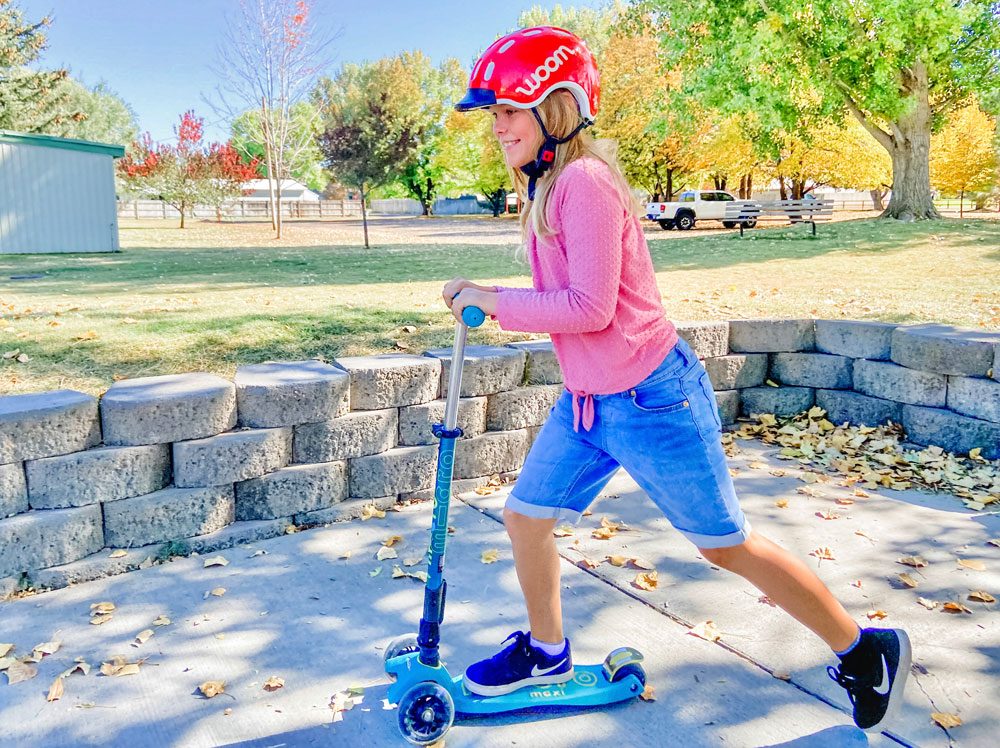
Below is a quick overview of the most important features to consider when choosing the best 3-wheel scooter for your child. If you’re interested in other styles beyond 3-wheel models, check out our Best Scooters for Kids guide.
Handlebar Height
All scooters on our list have adjustable handlebars so they can grow with your child. The minimum and maximum handlebar heights make a big difference in how young a rider can start and how long the scooter will fit them. A lower minimum height is best for young toddlers and for use with a seat, while a taller maximum height works well for preschoolers and older kids. For your convenience, we’ve listed the minimum and maximum handlebar heights in the mini reviews above.
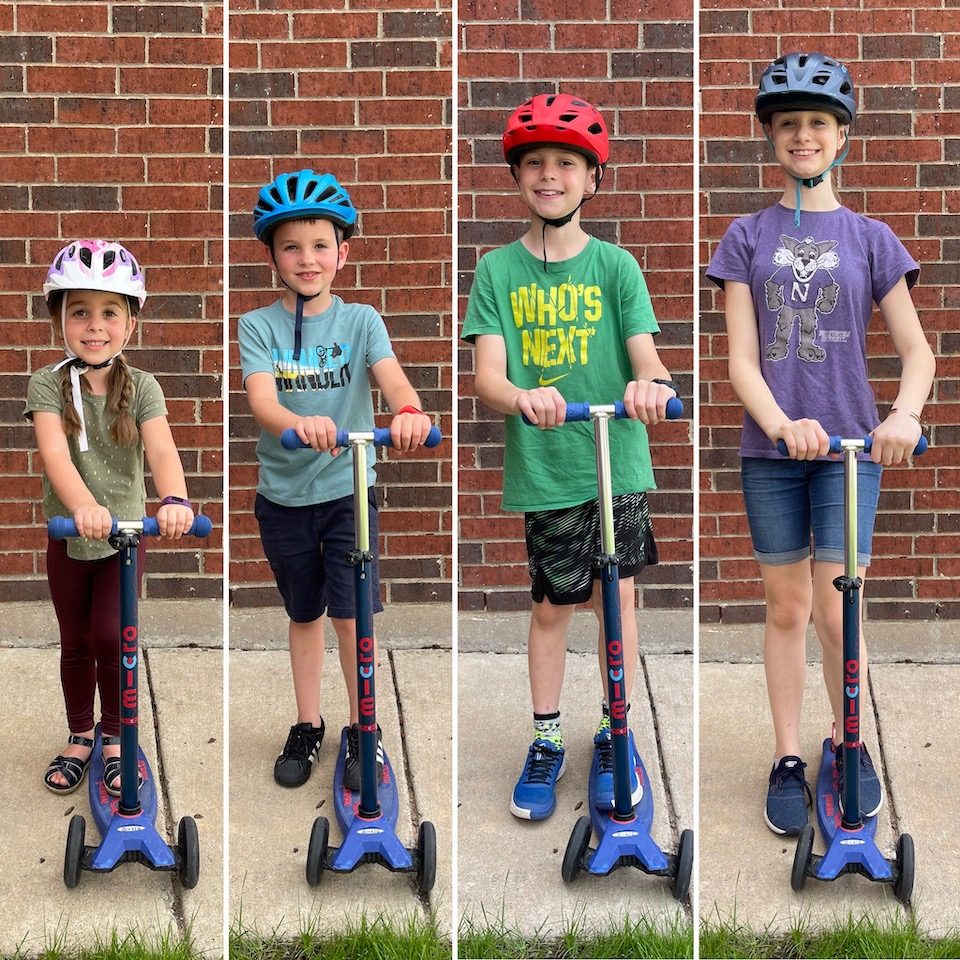
Among the models we tested, the Micro Kickboard Mini had the lowest standard minimum handlebar height at 21.5″. The Micro Mini2Grow, though not shown below, includes a second handlebar designed for seated mode that drops even lower to 17.75″.

At the other end, the Hurtle and LaScoota tied for the tallest maximum handlebar height at 34″.

Most scooters offer a couple of inches of continuous height adjustment at the lower range, plus two or three preset height settings at the higher range. The Micro Mini and Maxi stand out by offering eight inches of continuous adjustability.
Lower adjustments use a quick-release collar similar to a bike seat clamp—loosen the lever, adjust to the desired height, then retighten. Upper preset adjustments use set holes secured by a spring-loaded button, much like on crutches.
While adjustment is straightforward, younger kids will need an adult’s help. On budget models, quick-release levers can be harder to secure and may require tightening with an Allen wrench.
Steering
With two wheels in front, 3-wheeled scooters use a lean-to-steer design instead of turning the handlebars. This works with toddlers’ natural tendency to lean in the direction they want to go, making steering intuitive.

Most brands steer similarly, but in our tests, Micro Kickboard’s mechanism was the easiest to engage and allowed for tighter turns.
Foot Platform
A wider deck increases stability and confidence for young riders. Most 3-wheeled scooters have decks about 5″ wide, compared to 3.5″ on a small 2-wheeled Razor.

Deck surfaces vary by model, some feature rubberized sections for added grip, while others use textured plastic similar to grip tape. We preferred scooters with decks that combined rubberized and hard plastic sections (like on the Micro Mini and Retrospec Chipmunk), as they offered the best grip in both wet and dry conditions.

Foldable and Removable Seats
If you choose a scooter with a seat, pay attention to whether the seat is foldable and how easy it is to remove, especially if a young toddler and an older child will share the same scooter.
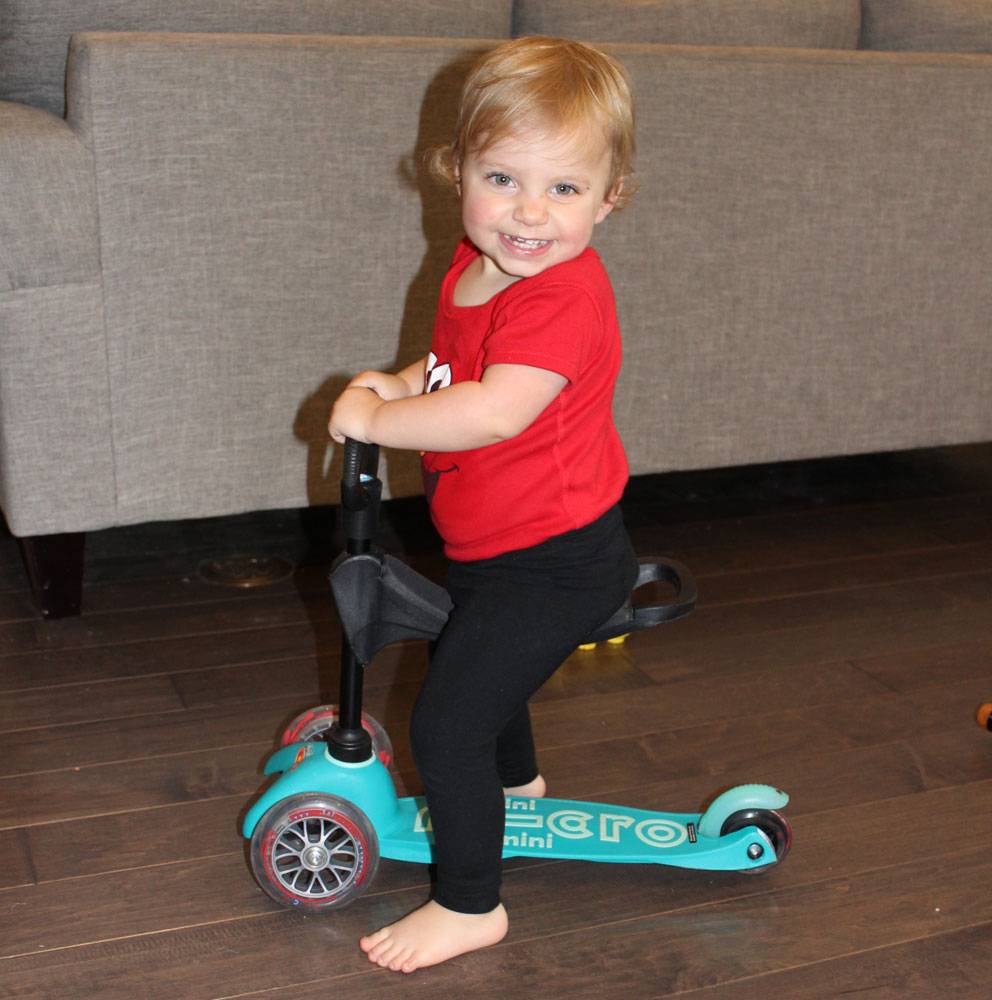
A folding seat flips up and out of the way without tools, making the transition between seated and standing use quick and easy. A non-folding seat requires tools and time to remove and reinstall, which quickly becomes frustrating if you need to switch often. For shared use, a foldable seat is the way to go.

Of the scooters we tested, the Retrospec Chipmunk Plus, GoTrax GS3, and Hurtle all feature foldable seats.
For very young toddlers, the Micro Kickboard Grow with Me is a standout. Its curved seat, small foot pegs, and push-bar attachment make it easier for little riders to hold on, while allowing an adult to guide the scooter (though steering while pushing takes practice).

Seat height adjustment varies by model, but most offer only minimal range that doesn’t make a big difference. Unless your child is very small, we recommend setting the seat to its highest position from the start. This avoids extra adjustments later and prevents the awkward fit that can happen when the handlebar sits high above the lowest seat setting.
Overall Quality of Build
Among budget-friendly models, many share the same basic parts—everything from the turning mechanism and wheels to the grips and foot brake is often identical across brands. The main differences are usually in the deck design, with each brand applying its own patterns or colors to an otherwise standard size.
In terms of durability and performance, the Micro Kickboard stands out with fewer plastic parts, tighter construction, and less play in the components. For a more affordable option, the Retrospec Chipmunk Plus was our clear favorite, delivering the best balance of performance and build quality in its price range.
Some parents ask about electric scooters for toddlers and kids, but we recommend holding off on electric scooters until kids are at least 5. You can check out our Best Electric Scooters for Kids article here.
FTC Disclosure: Affiliate links are included in this review. No monetary compensation was provided for this review, however, some of the reviewed products were supplied by the manufacturer or distributor to help facilitate this article. All opinions and images are that of Two Wheeling Tots LLC. All content and images are copyrighted and should not be used or replicated in any way. View our Terms of Use.
