

Priority Start 20 Review
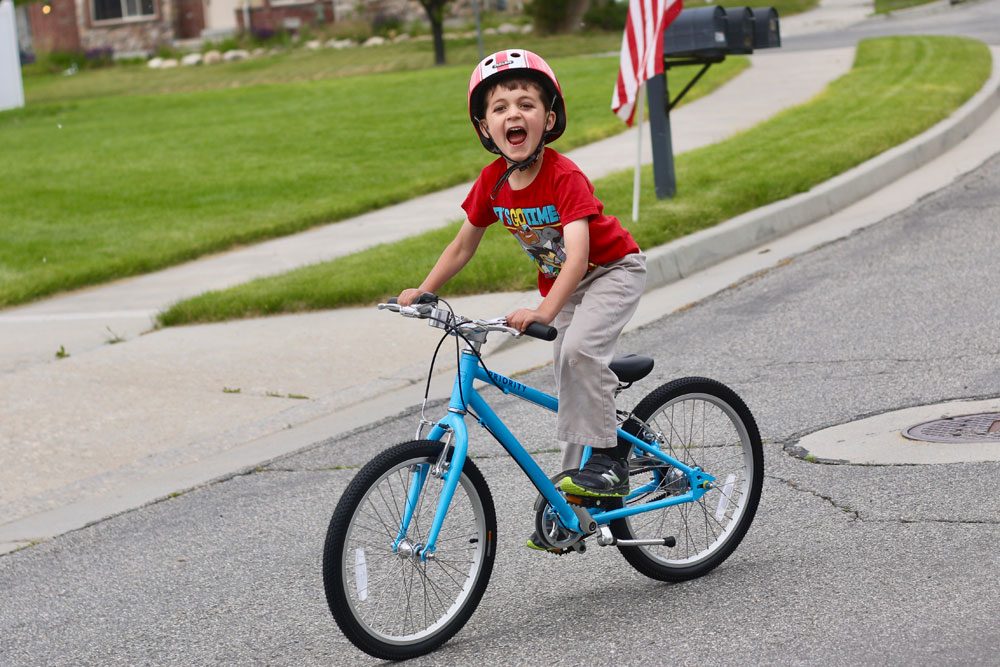
The Priority Start 20 delivers exceptional value by pairing premium features including a belt drive and an internally-geared hub all within a mid-range price. Pairing simplicity with performance, the Start 20 is the perfect intro to gears for kids while also being easy to maintain for parents. With an essentially maintenance-free internally-geared hub and a grease-free belt drive, the Priority Start 20 provides the gear options kid and parents want, without the hassle of a finicky derailleur and troublesome chain!
Combined with a lightweight frame and grease-free belt drive, the Start 20 is the perfect “Goldilocks” bike for the average everyday rider – not too basic, not too complex, but just right. From fit to gearing, we cover everything you need to know about the Priority Start 20 in our review.
Priority Start 20
OUR SCORE: 90.1/100 – Exceptional
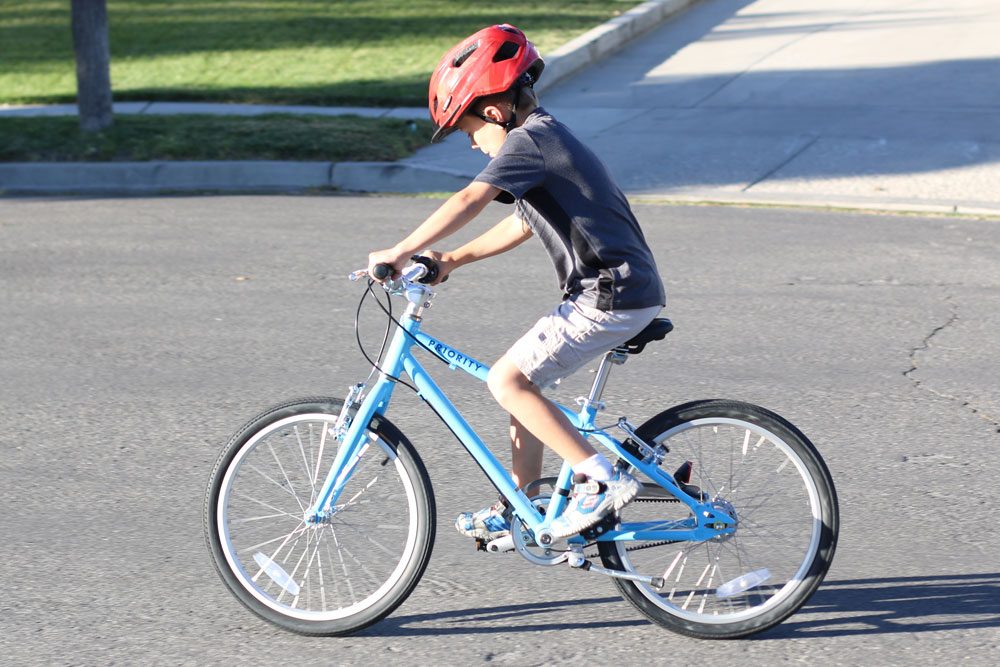
MSRP: $399
SEAT HEIGHT: 20.5″ – 27″
WEIGHT: 19.5 lb.
BEST FOR: Riders needing extra gears for riding around town, but without the complexity of 7 or 8 gears.
ADDITIONAL SPECIFICATIONS
FRAME: Aluminum
BRAKES: Dual v-brakes
GEARS: 3/Internally-geared Shimano Nexus Hub
GAIN RATIO: 2.39 to 4.45
Cons:
Our 20″ Bike Rubric Score
We score 20″ bikes on a 100-point scale across eight categories. The Priority Start 20 scored 90.1—our highest value-per-dollar rating—by delivering premium features (belt drive, internal hub gearing) at a mid-range price ($399). This bike earned extra credit points for both belt drive and internal hub, while the ultra-low 20.5″ minimum seat height and 6.5″ useable range make it accessible to smaller riders. See all 20″ bike scores.
How the Priority Start 20 Scored
Score Breakdown ▼
Frame Design 15.0 / 15 ▼
What we evaluate: Frame design focuses on weight reduction, geometry, and accessibility. Points reward aluminum construction, low bottom bracket for stability, low minimum seat height for younger riders, step-through frames for easy mounting, and threaded bottom brackets for easier maintenance.
- ✅ Aluminum Frame (4 pts)
- ✅ Low Bottom Bracket (3 pts)
- ✅ Low Min Seat Height ≤ 23″ (3 pts)
- ✅ Low Step-Through Frame (3 pts)
- ✅ Threaded Bottom Bracket (2 pts)
Components 20.0 / 20 ▼
What we evaluate: Component quality directly affects ride quality and durability. We score based on narrow Q-factor (better for kids’ hip width), sealed components (lower maintenance), 3-piece cranks (stronger and replaceable), quality tires, and adjustability features.
- ✅ Narrow Q-factor (3 pts)
- ✅ 3-Piece Crank (3 pts)
- ✅ Quality/Sealed Hubs (2 pts)
- ✅ Quality Seat Post Quick Release (2 pts)
- ✅ Comfortable Padded Saddle (2 pts)
- ✅ Sealed/Cartridge Bottom Bracket (2 pts)
- ✅ Adjustable Handlebar (2 pts)
- ✅ Quality Headset (2 pts)
- ✅ Brand Name Tires (2 pts)
Gearing & Brakes (City) 23.0 / 30 ▼
What we evaluate: City bikes are scored on shifter ease of use, gear range width, brake quality, and features that make braking safer for kids. A gear range width of 2.0+ allows the bike to handle both flat cruising and moderate hills effectively.
- ✅ Easy to Use Shifter (Grip OR Trigger) (6 pts)
- ✅ Short Reach Brake Levers (4 pts)
- ❌ Gear Range Width 1.86 (0 pts)
- ✅ V-Brakes (3 pts)
- ✅ Derailleur Hanger (3 pts)
- ✅ Brake Duplicity (3 pts)
- ✅ Gear Indicator on Shifter (3 pts)
- ❌ Reflective Sidewall Tires (2 pts)
- ✅ Kickstand Included (1 pt)
- ❌ Quick Release Wheels (1 pt)
- ✅ Water Bottle Cage Mounts (1 pt)
Gear Range Width: 1.86
Weight 10.1 / 15 ▼
How it’s scored: Weight is scored proportionally within bike category. The lightest bike in the category receives 15 points, the heaviest receives 0 points. This ensures fair comparison—single speeds are compared to single speeds, city bikes to city bikes, etc.
Bike Weight: 19.5 lbs
Category: City/Neighborhood
Useable Fit Range 10.0 / 10 ▼
How it’s scored: Bikes with wider useable seat height ranges score higher on a proportional scale across all 20″ bikes. The widest range scores 10 points, the narrowest scores 0 points. A wider range means the bike grows with your child longer, providing better long-term value.
Useable Range: 6.5″
Seat Height: 20.50″ – 27.00″
Scored against all 20″ bikes regardless of category
Ease of Assembly 6.0 / 6 ▼
What we evaluate: Assembly scoring measures the out-of-box experience. Points are awarded for clear instructions, minimal assembly requirements, and pre-tuned components that work properly without adjustment.
- ✅ Clear Written Instructions (2 pts)
- ✅ Video Instructions (1 pt)
- ✅ Easy Assembly / Mostly Assembled (1 pt)
- ✅ Pre-tuned Brakes (2 pts)
Warranty & Customer Service 4.0 / 4 ▼
What we evaluate: Post-purchase support matters for long-term satisfaction. Points are awarded for responsive customer service with real people (not just chatbots), frame warranties, and component coverage.
- ✅ Customer Service with Real Person (2 pts)
- ✅ Frame Warranty (1 pt)
- ✅ Partial Component Warranty (1 pt)
Extra Credit +2.0 ▼
What earns extra credit: Bonus points for innovative features that enhance durability, reduce maintenance, or add exceptional value beyond standard expectations.
- ✅ Belt Drive (+1 pt)
- ❌ Tubeless Compatible Rims (+2 pts)
- ✅ Internal Hub Gearing (+1 pt)
Priority Start 20 Review – Results of Our Test Rides
Jumping up from a 16″ to a 20″ bike is a big step. Of all the things a parent needs to consider, in addition to price, weight, geometry, and gain ratio, gears are now an option. For mountain-bike-riding kids or those riding on long road rides, gears are essential, but for the average neighborhood rider, are gears really necessary?
Geared bikes add an additional level of complexity to riding for kids as well as for parents trying to maintain the bike. Single-speed bikes, however, can restrict the length and variety of terrain a child can go on. The Priority Start 20 is the perfect in-between solution, offering the simplicity and easy maintenance of a single-speed but with the gearing options of a traditional geared bike.
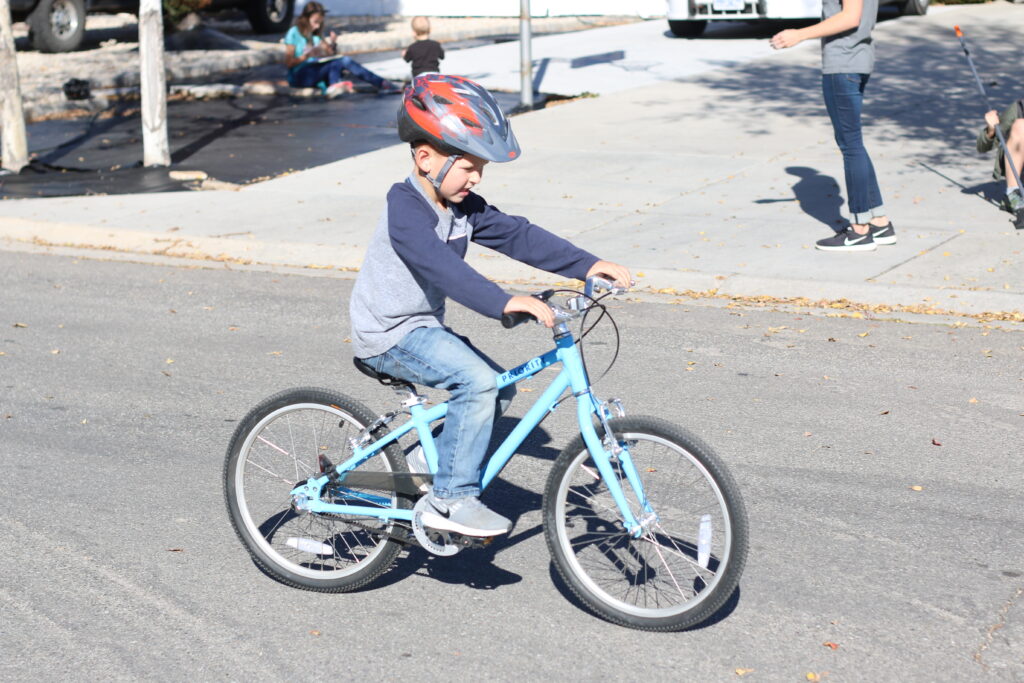
We put the Priority Start 20 to the test with a 5, 6, and 7-year-old to see how they faired on the Priority. From long paved biking trails to cruises around the neighborhood, the Priority quickly became a favorite amongst the group.
Priority Start 20 Performance
Love at first ride, our main 6-year-old tester was pure smiles and was eager to keep riding. From cruising around the neighborhood to keeping up with his older siblings on longer rides, the Start 20″ was quick and responsive and easily held its own. With a lightweight frame weighing only 19.6 lb., the Start didn’t hold back our average-sized 6-year-old tester from cruising up hills or leaning through turns.

While he has access to many other geared bikes, the Priority quickly stood out for offering a smooth and comfortable ride on paved surfaces. Designed for city riding, the Start features smoother street tires (as compared to the standard “multi-use tire”) that quietly and quickly rolls over the pavement.
Climbing a hill? No problem, with a quick click of the shifter, the internally geared hub of the Priority quickly goes to work. Want to catch some speed and lay down some rubber, “click, click” and off the Start goes.

While the three gears of the Priority don’t provide near the same amount of gearing choices as other bikes, it was more than sufficient for our neighborhood rides. For more ambitious riders tackling steep inclines, the Start wouldn’t be our first choice, but for the vast majority of rides that 5 to 8-year-olds go on, the Start 20 is right at home.
What size child is the Priority Start 20 best for?
Perfectly sized for our tester in size 5 clothes, the Start 20 is small enough to provide a comfortable transition from a 16″ bike, while being large enough to provide plenty of room for growth. With a seat height range of 22″ to 28.5″, the Start is smaller than most 20″ bikes on the market and has significantly higher quality components and a better overall design than bikes found in big box stores.
We tested the Start on kids with inseams that ranged from 21″ to 26″ and they comfortably fit on the Priority without any fit concerns. With 21″ inseam, our 6-year-old tester provided a perfect fit while still offering plenty of room for growth.
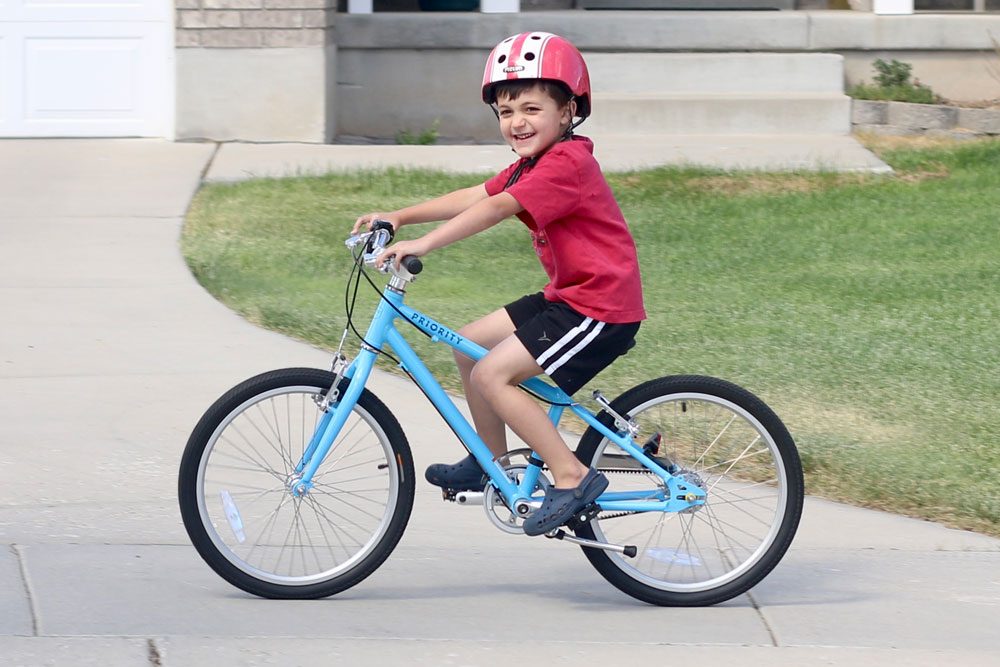
Our taller 7-year-old tester with a 24.5″ inseam (who is riding with the seat higher than it should be!) still fit great on the bike, but the bike offered much less room for growth. To ensure at least a full year or more on the bike, we wouldn’t recommend the Start 20 for a child with an inseam over 24″.
For kids a little too short for the Start 20, Priority also offers a Start 16 with a seat height range of 18.5″ – 23″. For taller kids, the Start 24 has a seat height range of 27″ – 34.5″. All of Priority’s Start models feature belt drives and internally-geared hubs.
For detailed instructions on how to find a bike that’s the perfect size for your child, check out our step by step Kids Bike Sizing Guide.
Priority Start 20 Components
Grease-free Belt Drive
Smooth, sleek, and certifiably cool, the Start 20 comes with a belt versus a chain. With no need for grease, the belt is clean to the touch and won’t leave you finding surprise grease stains on your child’s pants and hands, or on your own fingers!
The Start’s Grease-free Belt Drive

It’s also highly unlikely that a belt drive will ever fall off, minimizing the potential for the drama of mid-ride chain problems. For added safety, the Start also comes with a chainguard to prevent clothing from potentially getting caught in the belt.
Internally-geared Hub
The Start 20 featured an internally-geared hub which allows the gearing of the bike to take place inside the hub of a bike, versus with a bulky derailleur. Instead of a derailleur moving a chain up and down a cassette, the Start’s hub smoothly changes the gearing of the bike inside an enclosed rear hub.
With no external moving parts, the gearing system on the Start requires very little maintenance and also provides much smoother gear changes. Derailleurs are perhaps the most delicate part of a bike, and with the way kids throw their bikes around, are the most likely to get damaged and cause serious problems on a kid’s bike. This, of course, is not an issue with the Priority 20 because it doesn’t have a derailleur!
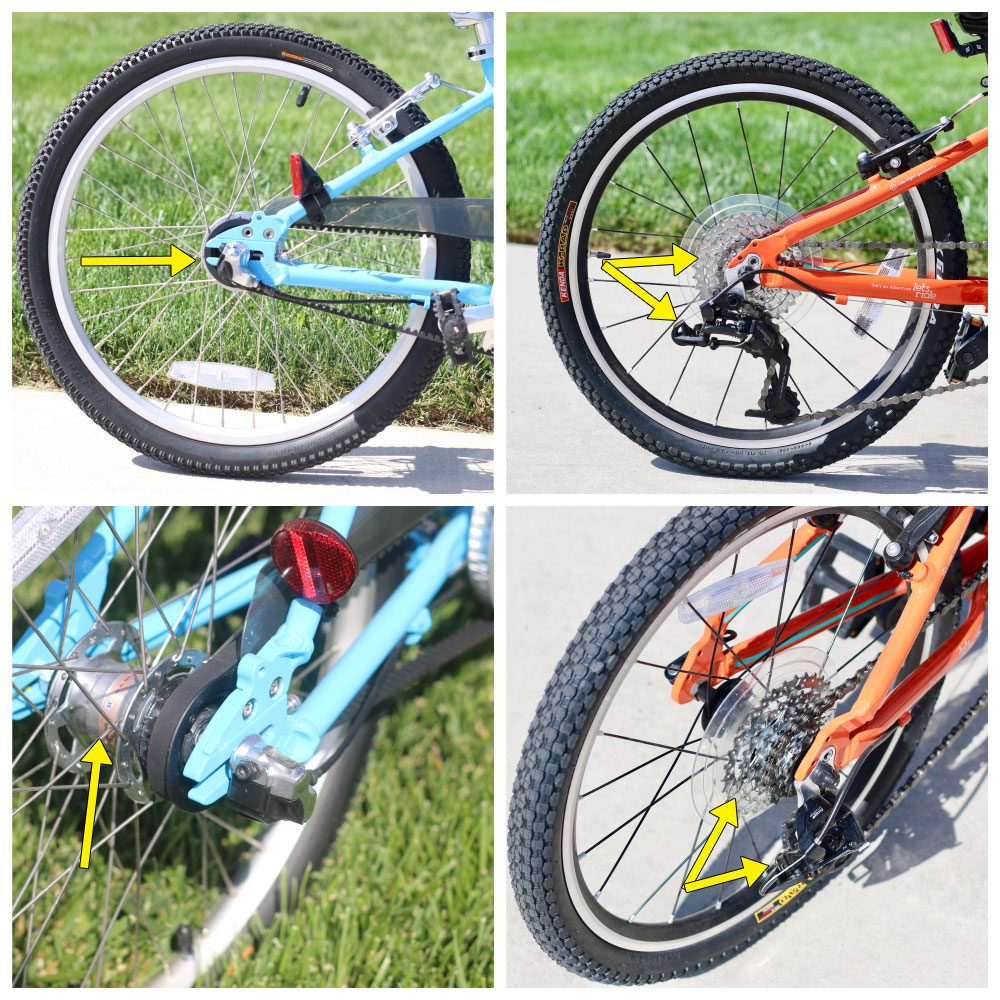
An additional advantage of an internally-geared hub over a derailleur is that the bike doesn’t have to be moving to shift gears. If only we had a dollar for every time we’ve shouted, “Don’t shift gears if you’re not moving!!”
On a traditionally geared bike with a cassette and a derailleur, shifting while the bike is standing still can cause the chain to jump up and down as it shifts roughly while the chain settles into place. Over time, this can cause the entire shifting system to become less responsive and in need of expert tuning. And of course, kids do this all the time! Just one more reason the internally-geared hub really is a big win for kids’ bikes.
Shifters and Brakes Levers
1, 2 or 3. With the simple twist of the shifter, our tester was easily able to change the gears on the Start. No debating between which of the 7 gears are the best for the ride, the Start makes it easy – 1 for downhill or extra speed, 2 for regular riding, and 3 for hills or slow and easy cruising.
Easy-to-Use Shifters and Brake Levers

Properly sized for young riders, the Start’s dual brake levers require minimal effort to activate and can easily be adjusted to bring the brake lever closer to the grip of small hands for easy reach. While the brake levers aren’t as high-end as those found on woom or Prevelo, the performance did not disappoint.
Geometry
Designed for comfort and ease of use, the Priority Start 20 has a comfortable upright position that is ideal for the average young rider. Not too upright to prevent kids from being able to shift their weight around, and not too aggressive to tire kids out on longer rides, the Start provides a comfortable, fun ride.
Priority Start’s Comfortable Upright Geometry

Compared to the Pello Rover, which is designed for a more aggressive rider taking on basic trail riding, the Priority is visually more upright.
Padded, Adjustable Saddle
Not skimping on the seemingly minor details, the Start offers a comfortable padded saddle on rails for front-to-back adjustability. The seat also tilts up to down to help to alleviate any potential issues with pressure points on the saddle. Our testers had no concerns with the saddle, but knowing a saddle can be adjusted if needed is a big win
For easy seat height adjustments, the Start also has a quick release seat post clamp.

Priority Start 20 vs. Early Rider
Uniquely built with three gears in an internally-geared hub and a belt-drive, there are few very widely produced 20″ bikes that directly compare to the Start. The Early Rider Belter Auto 20 is similar to the Priority Start as it also has a belt drive and an internally-geared hub, but it only has 2 gears and automatically shifter between the two for the rider. It is also designed for a much more aggressive rider (more leaned in geometry) and is also about $200 more than the Start.
All in all, the Priority is an amazing and unique bike that offers a fun and comfortable ride, with minimal or any maintenance, for neighborhood riders sticking mainly to paved surfaces.
Priority Start 20 Bike Review Bottom Line
Not too simple, not too complex, the Start is the perfect 20″ bike for young riders ready for adventure, but not quite ready for the complexity of 7-speeds and a finicky derailleur. Easy-to-use and a joy to ride, the Start 20 is a standout choice for neighborhood riders aged 5 to 8.
FTC Disclosure: Affiliate links are included in this review. No monetary compensation was provided for this review, however, the reviewed product was supplied by the manufacturer or distributor to help facilitate this review. All opinions and images are that of Two Wheeling Tots LLC. All content and images are copyrighted and should not be used or replicated in any way. View our Terms of Use.
