

woom GO 4 Bike Review

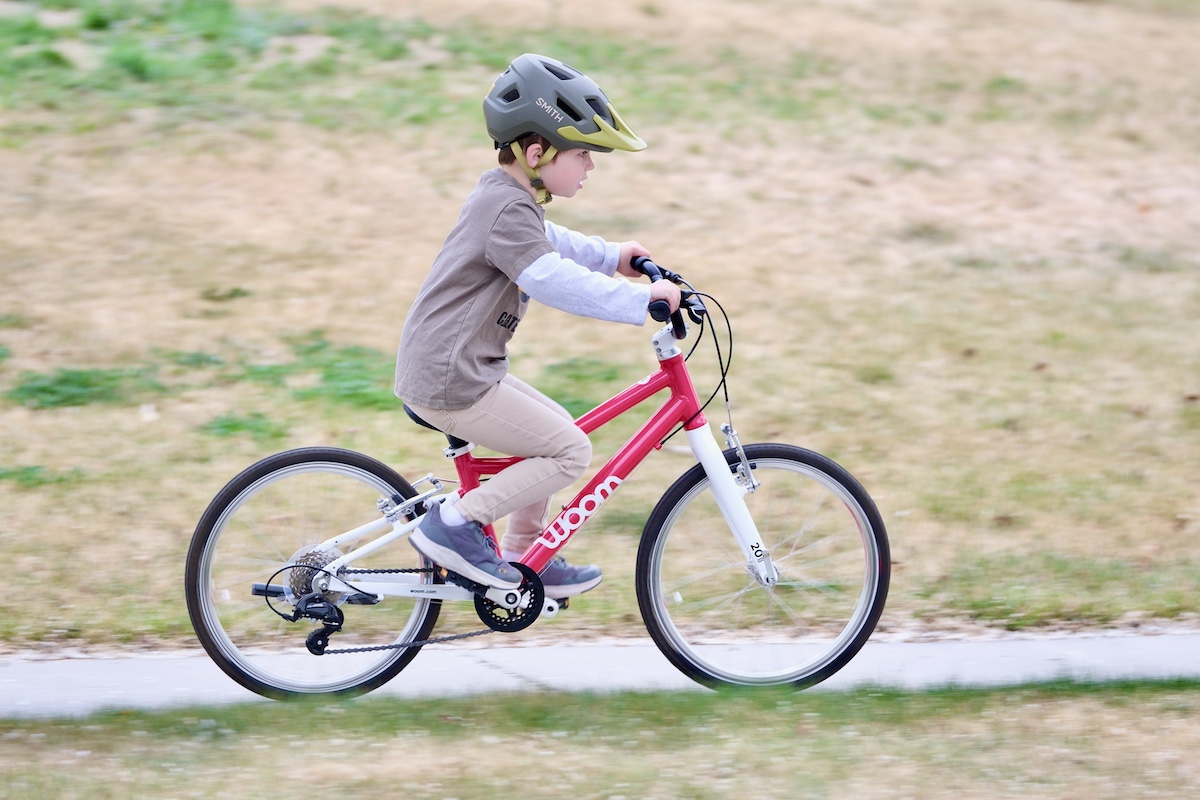
The new woom GO 4 will have you wishing they made an adult-sized version—and your kid begging to go ride. While the woom 4 was already an exceptional bike, its latest rendition, the woom GO 4, is even better for young riders learning to shift gears for the first time.
Thoughtfully designed for smaller bodies, the GO 4 turns the concept of a kid-sized geared bike into a science. From its intuitive shifter and ergonomic grips to its easy-to-adjust saddle and handlebars (now labeled for sizing), every touchpoint is engineered for comfort. Don’t be surprised if your child doesn’t say much about the bike—besides how fun it is to ride.
Having tested every woom 20” bike since the brand launched in the U.S., I can confidently say this is their best beginner-friendly geared model to date. Below, I’ll walk you through all the essential details, starting with highlights and commonly asked questions.
woom GO 4
OUR SCORE: 96.0/100 – Exceptional
MSRP: $639
SEAT HEIGHT: 22.4” – 28.7″
WEIGHT: 17.2 lb.
BEST FOR: Casual to extensive neighborhood riders needing a fast, efficient and FUN bike that keeps kids coming back for more
ADDITIONAL SPECIFICATIONS
FRAME: Aluminum
BRAKES: Dual v-brakes
GEARS: 7-speed with a 2.3 – 5.9 gain ratio
SHIFTERS: microSHIFT grip shift with indicator window
DERAILLEUR: microSHIFT
Cons:
Our 20″ Bike Rubric Score
We score 20″ bikes on a 100-point scale across eight categories. The woom GO 4 achieved our highest score at 96.0 thanks to its exceptional lightweight design (17.2 lbs), premium component quality across the board, and wide 6.3″ useable fit range. This 8-speed city bike earned perfect scores in Frame Design, Components, Gearing & Brakes, Weight, and Fit Range—demonstrating why woom commands premium prices. See all 20″ bike scores.
How the woom GO 4 Scored
Score Breakdown ▼
Frame Design 15.0 / 15 ▼
What we evaluate: Frame design focuses on weight reduction, geometry, and accessibility. Points reward aluminum construction, low bottom bracket for stability, low minimum seat height for younger riders, step-through frames for easy mounting, and threaded bottom brackets for easier maintenance.
- ✅ Aluminum Frame (4 pts)
- ✅ Low Bottom Bracket (3 pts)
- ✅ Low Min Seat Height ≤ 23″ (3 pts)
- ✅ Low Step-Through Frame (3 pts)
- ✅ Threaded Bottom Bracket (2 pts)
Components 20.0 / 20 ▼
What we evaluate: Component quality directly affects ride quality and durability. We score based on narrow Q-factor (better for kids’ hip width), sealed components (lower maintenance), 3-piece cranks (stronger and replaceable), quality tires, and adjustability features.
- ✅ Narrow Q-factor (3 pts)
- ✅ 3-Piece Crank (3 pts)
- ✅ Quality/Sealed Hubs (2 pts)
- ✅ Quality Seat Post Quick Release (2 pts)
- ✅ Comfortable Padded Saddle (2 pts)
- ✅ Sealed/Cartridge Bottom Bracket (2 pts)
- ✅ Adjustable Handlebar (2 pts)
- ✅ Quality Headset (2 pts)
- ✅ Brand Name Tires (2 pts)
Gearing & Brakes (City) 29.0 / 30 ▼
What we evaluate: City bikes are scored on shifter ease of use, gear range width, brake quality, and features that make braking safer for kids. A gear range width of 2.0+ allows the bike to handle both flat cruising and moderate hills effectively.
- ✅ Easy to Use Shifter (Grip OR Trigger) (6 pts)
- ✅ Short Reach Brake Levers (4 pts)
- ✅ Gear Range Width 2.55 (3 pts)
- ✅ V-Brakes (3 pts)
- ✅ Derailleur Hanger (3 pts)
- ✅ Brake Duplicity (3 pts)
- ✅ Gear Indicator on Shifter (3 pts)
- ✅ Reflective Sidewall Tires (2 pts)
- ✅ Kickstand Included (1 pt)
- ✅ Quick Release Wheels (1 pt)
- ✅ Water Bottle Cage Mounts (1 pt)
Gear Range Width: 2.55
Weight 13.7 / 15 ▼
How it’s scored: Weight is scored proportionally within bike category. The lightest bike in the category receives 15 points, the heaviest receives 0 points. This ensures fair comparison—single speeds are compared to single speeds, city bikes to city bikes, etc.
Bike Weight: 17.2 lbs
Category: City/Neighborhood
Useable Fit Range 9.3 / 10 ▼
How it’s scored: Bikes with wider useable seat height ranges score higher on a proportional scale across all 20″ bikes. The widest range scores 10 points, the narrowest scores 0 points. A wider range means the bike grows with your child longer, providing better long-term value.
Useable Range: 6.3″
Seat Height: 22.40″ – 28.70″
Scored against all 20″ bikes regardless of category
Ease of Assembly 6.0 / 6 ▼
What we evaluate: Assembly scoring measures the out-of-box experience. Points are awarded for clear instructions, minimal assembly requirements, and pre-tuned components that work properly without adjustment.
- ✅ Clear Written Instructions (2 pts)
- ✅ Video Instructions (1 pt)
- ✅ Easy Assembly / Mostly Assembled (1 pt)
- ✅ Pre-tuned Brakes (2 pts)
Warranty & Customer Service 3.0 / 4 ▼
What we evaluate: Post-purchase support matters for long-term satisfaction. Points are awarded for responsive customer service with real people (not just chatbots), frame warranties, and component coverage.
- ✅ Customer Service with Real Person (2 pts)
- ✅ Frame Warranty (1 pt)
- ❌ Partial Component Warranty (1 pt)
Extra Credit +0.0 ▼
What earns extra credit: Bonus points for innovative features that enhance durability, reduce maintenance, or add exceptional value beyond standard expectations.
- ❌ Belt Drive (+1 pt)
- ❌ Tubeless Compatible Rims (+2 pts)
- ❌ Internal Hub Gearing (+1 pt)
What type of rider is the woom GO 4 best for?
- Kids transitioning from a 16” to a 20” bike who are learning to use gears
- Hesitant or petite riders who benefit from a lightweight, confidence-building ride
- Families riding mainly on pavement or longer distances
- Kids with at least a 19” inseam (22” if they’re still learning to pedal)
Who Might Want a Different Bike?
- Aggressive riders who lean into corners or hit jumps—geometry is too upright
- Kids riding mostly on dirt or gravel—consider the woom EXPLORE 4
- Riders who need a broader gear range for steeper climbs or faster flats—look at the Prevelo Alpha Three
woom GO vs. woom ORIGINAL 4 – What’s Different?
The GO is essentially a rebranded and upgraded version of the discontinued ORIGINAL 4. While it retains the same lightweight frame, it comes with several key improvements:
- New microSHIFT grip shifter with indicator window (a major usability upgrade)
- BMX-style riser handlebars (less adjustability than the ORIGINAL, but now compatible with the POP basket)
- Handlebar and seat post sizing markings for easier setup
- More comfortable saddle and ergonomic grips
- New colors with metallic finishes
woom GO vs. woom EXPLORE 4
If your child regularly rides on mixed surfaces, rides more aggressively and craves more performance, the woom EXPLORE may be worth the upgrade. Key differences include:
- Wider, all-terrain tires for better traction and comfort
- Hydraulic disc brakes for stronger stopping power
- Easier-to-use Shimano shifter
- Height-adjustable handlebars to dial in a more aggressive or relaxed fit
- Matte paint and all-black components for a more mature look
Both bikes fit the same size rider, so the better choice really comes down to your child’s riding style. The GO 4 delivers plenty of performance for everyday neighborhood riders, while the EXPLORE is geared toward kids ready to take their riding to the next level. (We dive deeper into this comparison later in the review.)

woom 4 Bike Review – Results of our Test Rides
Transitioning from a 16″ to a 20″ bike can feel like a big leap for young riders—both physically and emotionally. With larger wheels, wider handlebars, and the introduction of gears, the step up can be intimidating for some kids. Luckily, the woom GO 4 is thoughtfully designed to make that transition surprisingly smooth.
Sizing and Our Testers Experiences
The GO 4 is officially recommended for kids ages 6 to 8, with a height range of 45″ to 51″ and a seat height that adjusts from 22.1″ to 28″. We suggest a minimum inseam of 20” for confident pedalers and 22” for beginners who are just learning to pedal with or without training wheels.
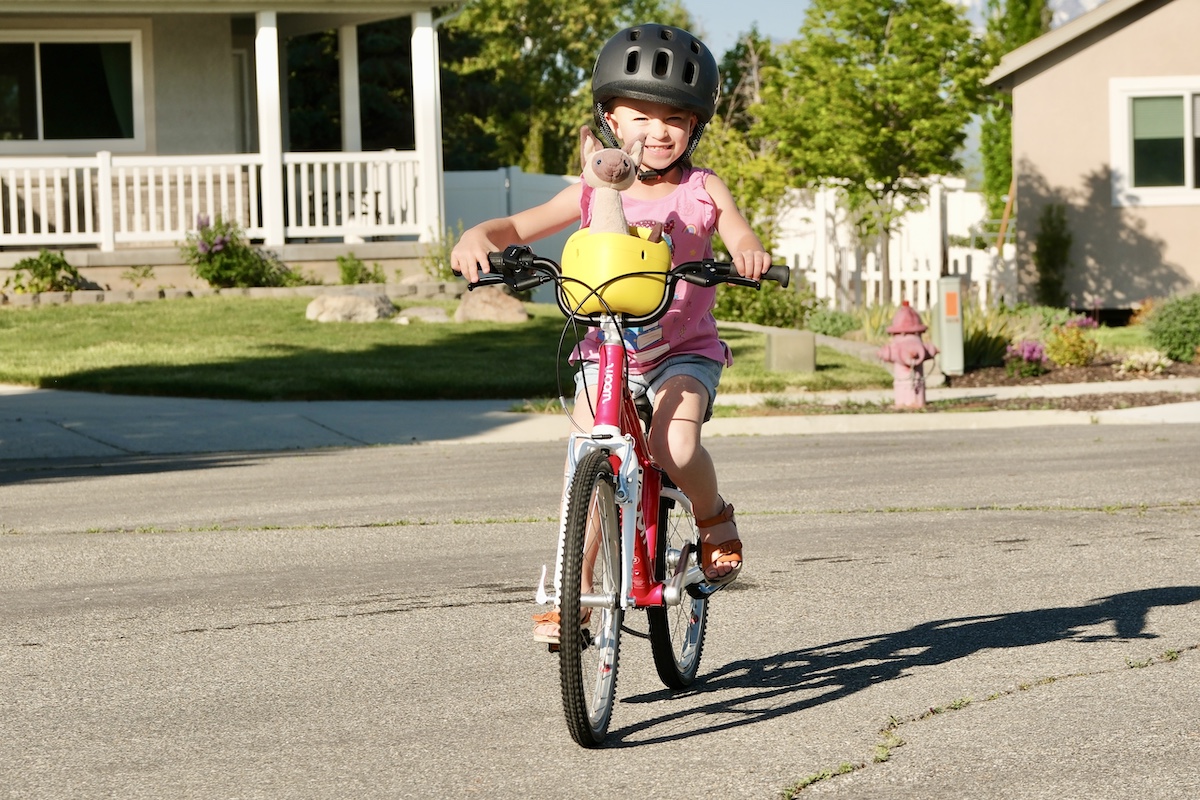
We tested the GO 4 with four riders of varying heights, experience levels, and personalities—from timid to fearless. Each brought a different comfort level and riding style to the table—and all of them rode away smiling. With just a few quick adjustments, every tester felt confident and in control, which speaks volumes about how well the GO 4 is designed for real kids, not just size charts.
45” Tall – Age 6 – Timid but eager
Our youngest and shortest tester (44” without shoes, ~45” with) still fits comfortably on her 16” bike, but she was excited to try something new. After lowering the seat to its minimum, tilting the handlebars back toward her, and adjusting the brake levers (more on that later), she was off and riding.
While many 20” bikes tend to look oversized on kids just hitting the minimum size range, the GO 4 looked and felt just right. She confidently maneuvered through a group of younger riders, weaving in and out without hesitation.
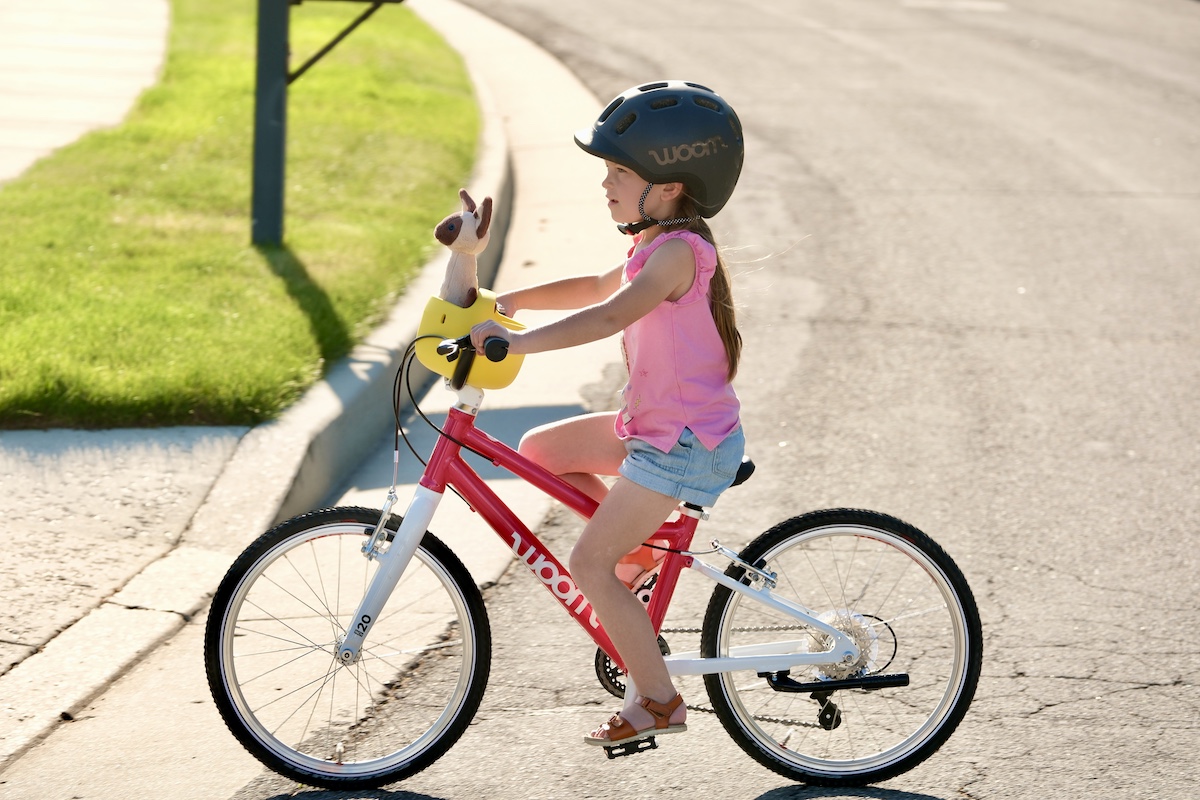
In addition to being very lightweight, the GO 4’s upright geometry played a key role in helping her feel immediately at home. As you can see in the image above, she sits upright with her shoulders almost directly over her hips—a natural and relaxed position that mimics how we stand. Most young riders feel most secure in this posture, while being forced into a more aggressive, leaned-forward stance can make many timid or newer riders feel unstable—especially when moving up to a larger bike.
All in all, the GO 4 truly shines for smaller, more cautious riders like this one. It’s easy to ride, comfortable, and fun—no need for intense focus or effort. The bike simply works with the rider’s body, allowing them to enjoy the ride from the very first pedal stroke.
47” Tall – Age 6 – Aggressive and confident
This tester, who normally rides a woom OFF AIR 20” mountain bike, took the GO 4 for a spin and immediately put it through its paces. He leaned hard into turns, whipped the rear wheel around for skids, and stopped with flair—doing what he does best.
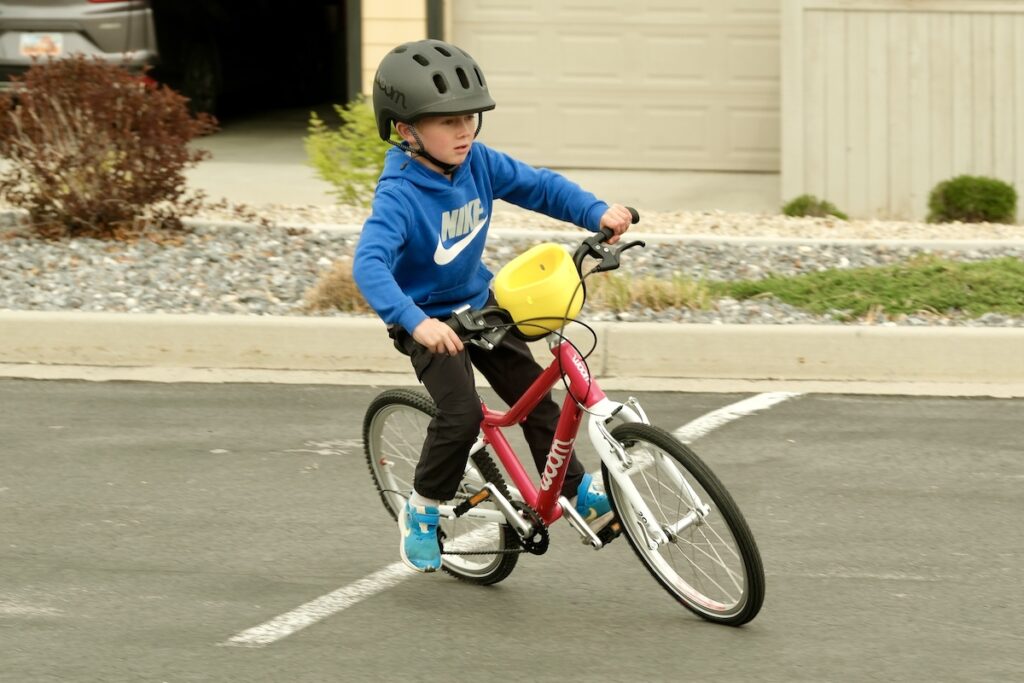
While the GO is not built for trails like the OFF AIR, it was noticeably lighter and more nimble on pavement, making it a fun change of pace. For kids like him who are adventurous but mostly ride in the neighborhood, the GO 4 is still a solid choice. That said, for a more efficient ride that better matches his energy and trail-readiness, woom EXPLORE 4 would be the better pick.
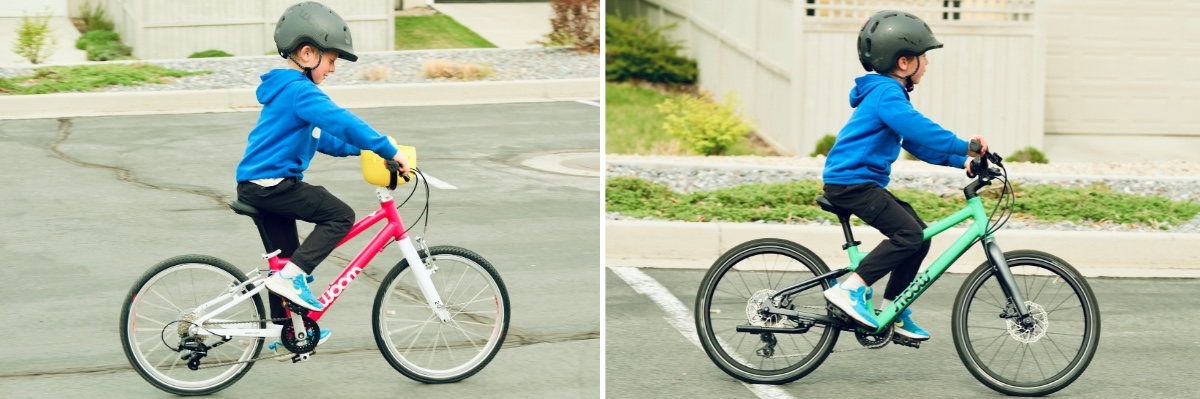
This tester rode the GO 4 and the EXPLORE back-to-back and clearly preferred the feel of the EXPLORE—especially with the handlebars were adjusted to give him a slightly more leaned-in, aggressive riding position.
50” Tall – Age 6 – Cautious rider still on a 16” bike
This tester is the perfect reminder to measure your child height and inseam before ordering. Even though she still comfortably rides her 16” bike, once she got on the GO 4, it was clear she was already near the top end of the GO 4’s size range! While the GO still fits for now (she prefers her seat lower than ideal), she’ll likely only get about a year of use before needing to size up to a 24”.
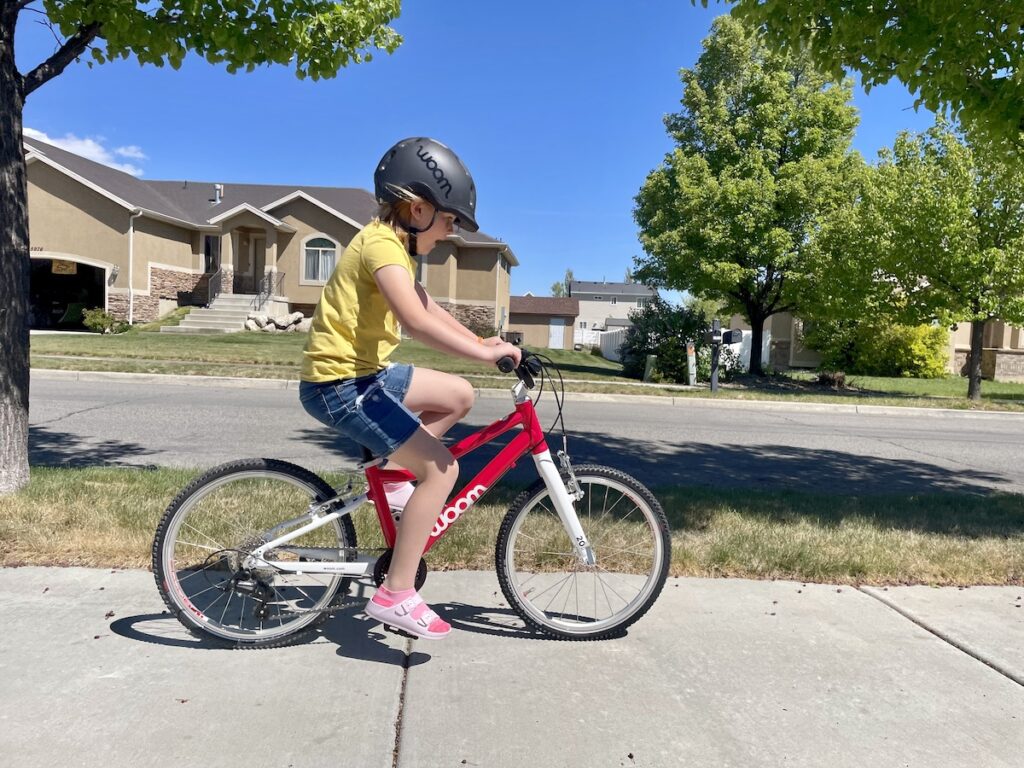
Despite being a bit hesitant, she quickly found her rhythm—riding down the street, navigating a slow, tight turn on a steep driveway, and returning without issue. She experimented with the gears but mostly stuck to one, as she’s still used to riding a single-speed bike.
The lightweight frame of the GO 4 made a noticeable difference in her control. On the steep driveways in our neighborhood, she was able to make tighter, slower turns with more confidence compared to heavier bikes like the Guardian 20” Large and Retrospec Koda Plus, which she also tested.
That said, the Guardian was ultimately the better fit. While the GO 4 offered a smoother, easier ride, the Guardian’s larger frame and longer cockpit gave her more space and a more comfortable riding position. As seen in the image below, the cockpit on the GO 4 felt noticeably more cramped.
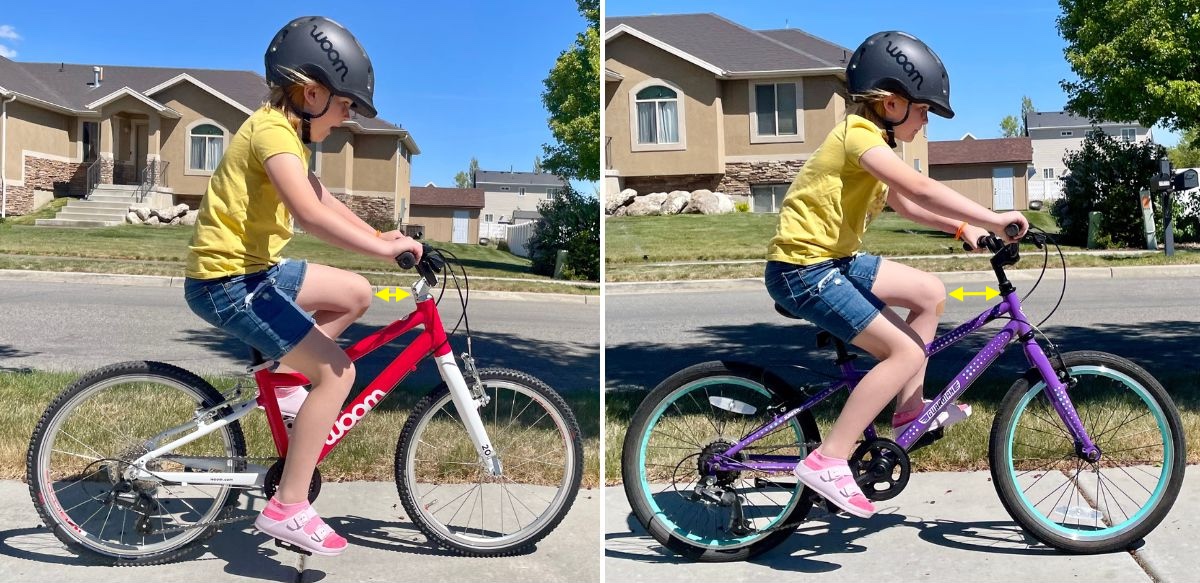
If your child is nearing the upper size limit of the GO 4 but isn’t quite ready for the woom EXPLORE 5 (which starts at a 27.2” seat height), the Guardian 20” Large can be an alternative. Just keep in mind that the GO line tops out at 20”, so the next size up is their 24” woom EXPLORE 5.
52” Tall – Age 6 – Taller, experienced rider
This tester had just outgrown her woom ORIGINAL 4, so we were curious how she’d fit on the GO 4. With the saddle raised to its full 28” height and the handlebars rolled forward to create more room in the cockpit, she was able to ride comfortably—but, much like her ORIGINAL, it wasn’t a great fit. That said, she did find the shifter on the GO 4 noticeably easier to use than the one on her ORIGINAL, which made for a more enjoyable ride.
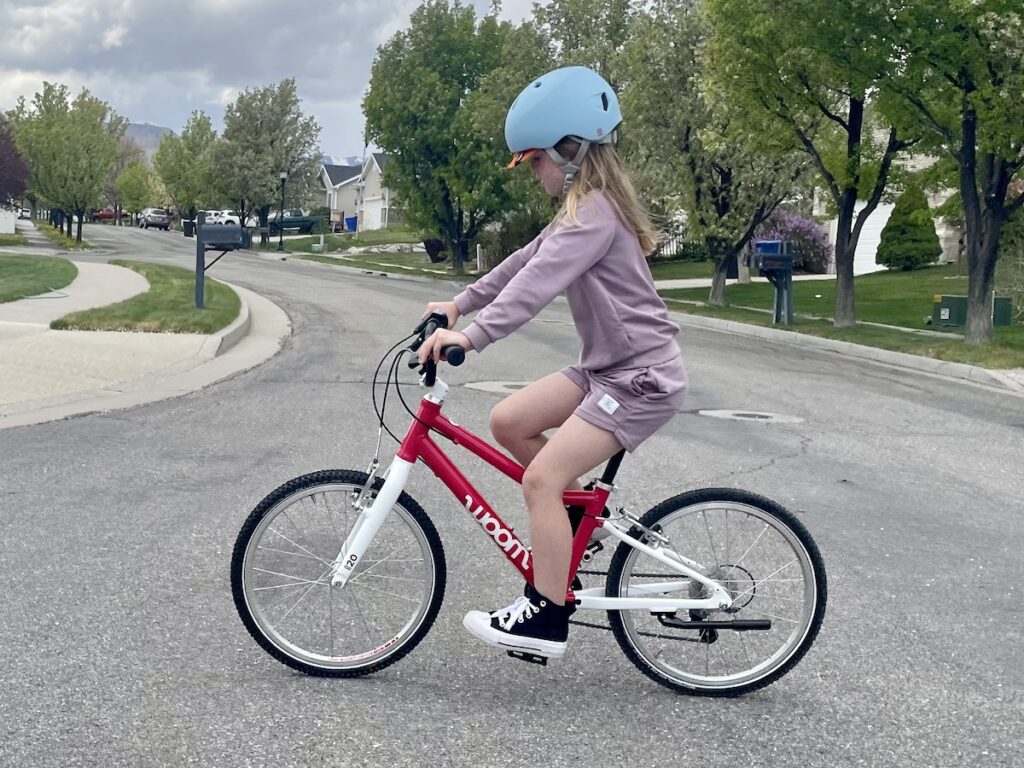
Given that she’s maxed out on the GO 4 and has a more aggressive riding style, the woom EXPLORE 5 would be the next logical step. If the EXPLORE is out of budget, the Prevelo Alpha Four offers a more affordable alternative with a similarly aggressive fit and wider gear range—making it a great option for confident riders ready for their next upgrade.
Notable Features of the woom GO 4
One potential drawback of the woom GO is its higher price point. Unfortunately, high-quality bikes—especially well-designed kids’ bikes—are expensive to manufacture. Compared to heavier, mass-produced big-box store bikes with steel frames, every component on the woom GO has been carefully selected and fine-tuned to deliver an efficient, lightweight, and incredibly comfortable ride.
From handlebars to kickstands, here’s a closer look at the thoughtfully engineered details—many of which you might not notice at first—that help justify the GO’s premium price tag.
BMX-Style Handlebars
The GO 4’s new BMX-style riser bars are a departure from the height-adjustable handlebars found on the ORIGINAL 4 and EXPLORE. These bars tilt forward or back to grow with your child, subtly increasing cockpit space and handlebar height.
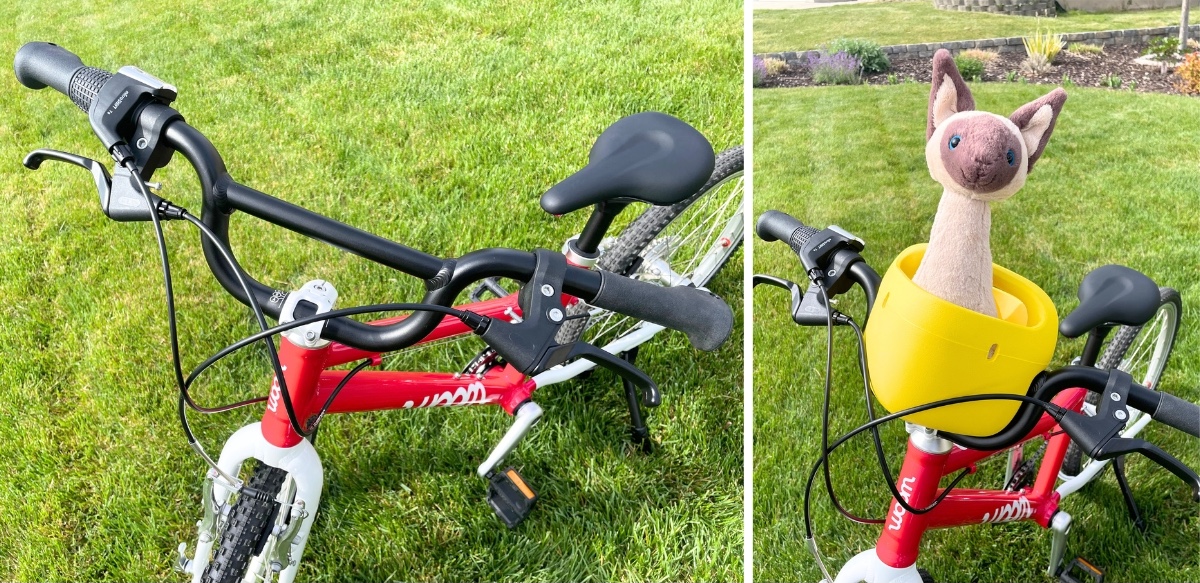
They don’t offer quite as much adjustability as the rotating stem on the EXPLORE, but they’re much easier to adjust—and now compatible with the woom POP basket, a must-have for many young riders.
The POP basket easily clicks on and off the handlebars and features a top handle for carrying off the bike. Made from a lightweight, flexible material similar to Crocs, it’s both durable and kid-friendly—perfect for hauling snacks, toys, or treasures from the playground.
Ergonomic Grips
The ergonomic grips on the GO 4 are narrower in diameter than previous woom models, giving smaller hands a more secure and comfortable hold. Each grip also features a flared, flat platform at the end, providing young palms with a stable resting surface. This design helps reduce hand fatigue and gives kids more control—especially on longer rides.
Compared to the grips on the Guardian 20”, the GO’s grips are both narrower and offer better ergonomic support. The widened end also acts as a bumper, helping protect a rider’s hands in the event of a handlebar strike against a wall, tree, or other object.

To top it off, the grips lock securely in place, preventing them from slipping over time and making handlebar access easier during maintenance or repairs. It’s a small but meaningful feature that adds to the GO 4’s overall rider-focused design.
Brakes
The GO 4 features dual V-brakes, which are both reliable and easy to maintain. Unlike the smaller GO 2 and GO 3 models—which include a colored rear brake lever to help kids remember which hand controls which brake—the GO 4 uses two standard black levers.
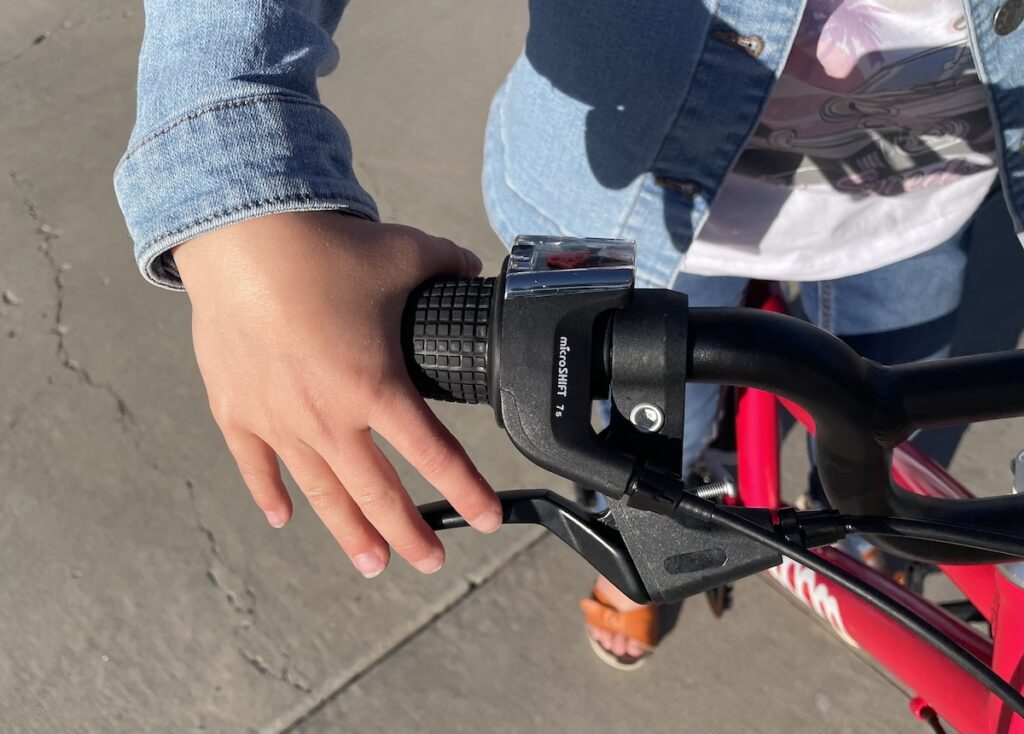
For kids just learning to use dual hand brakes, parents may need to provide a bit of extra coaching—especially when teaching them how to brake evenly with both hands, or to rely more on the rear brake when appropriate. Learning to use front and rear brakes independently is an important skill for growing riders, as it not only helps them stop more effectively but also introduces redundancy to the braking system (so they’re not relying on just one brake to stop safely).
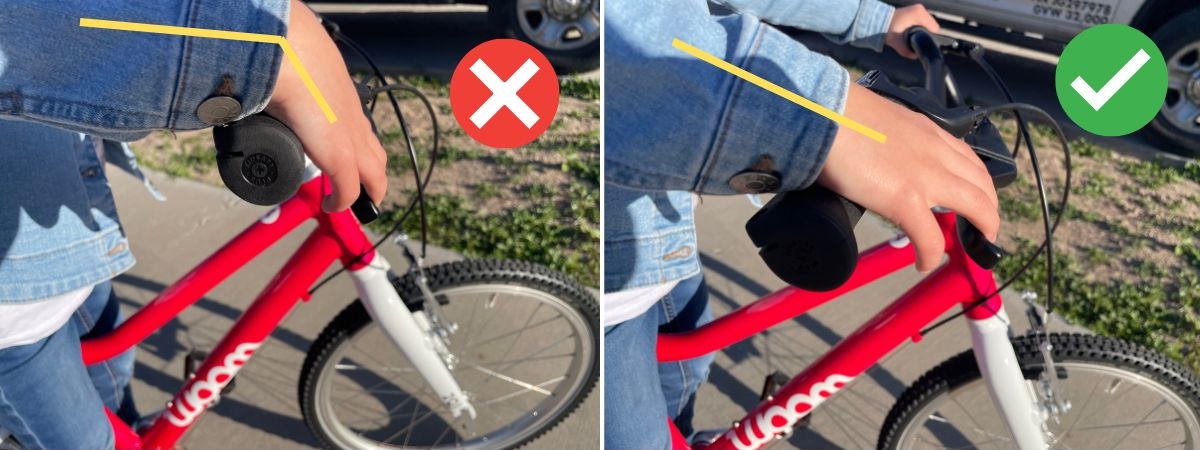
As with any bike, proper brake adjustment is key. The brake levers on the GO 4 are short reach, meaning they’re designed to sit closer to the grips—making them easier for smaller hands to operate. If your child still has difficulty reaching the lever, it can be moved even closer by turning the reach adjustment screw (a small silver screw located on the side of the lever).
It’s also important to reposition the brake levers if you adjust the handlebar angle as your child grows. The levers should be set so your child’s fingers naturally fall onto them while holding the grips—without having to reach up or down. You can easily adjust the angle by loosening the clamp bolt on each lever with an Allen wrench and rotating the lever into the correct position.
Gearing & Shifter
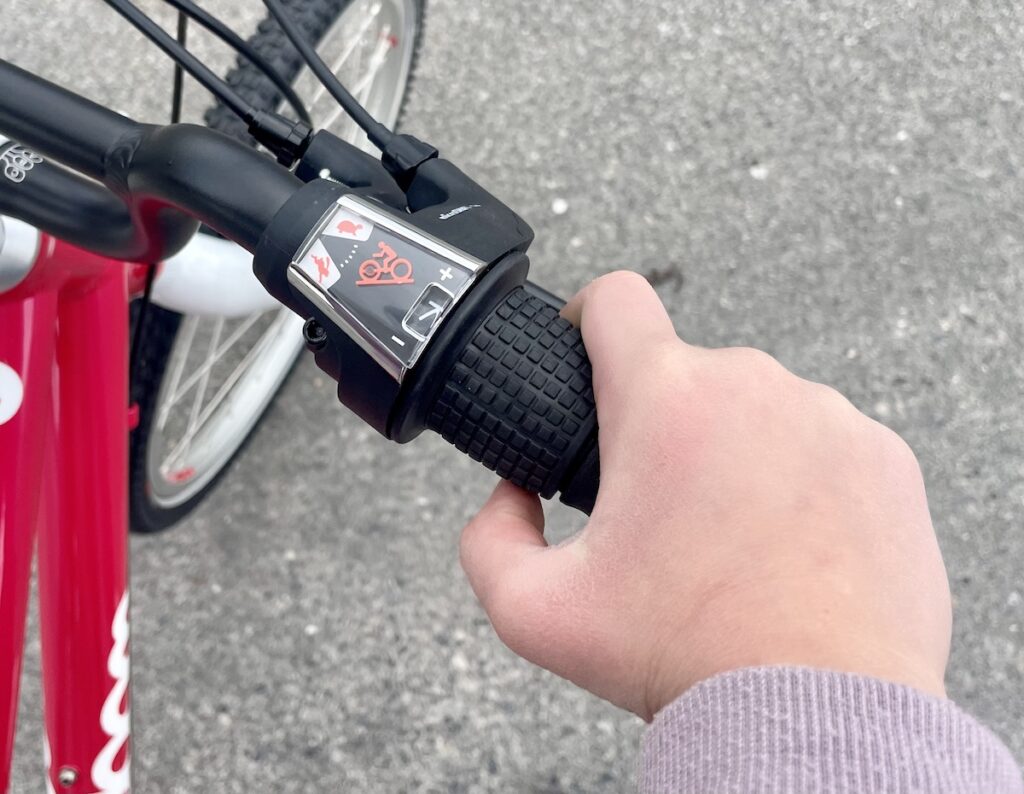
The GO 4 uses a 7-speed microSHIFT grip shifter, which is a significant upgrade over the older shifter found on the woom ORIGINAL 4. It’s smoother, easier to twist, and includes a fun gear indicator window that helps kids learn when to shift. Inside the window, a small bike graphic tips upward or downward depending on the selected gear—pointing toward a turtle in lower gears and a rabbit in higher gears. This playful visual is intuitive and easy for kids to understand. This is the same shifter made popular by Guardian bikes.
With a gain ratio of 2.3 to 5.9, the GO’s gearing is well-suited for neighborhood riding and moderate hills. On her commute to school, one of our testers had no trouble climbing nearly 100 feet of elevation over a one-mile ride to school. For extra-steep hills, the lowest gear may not be quite low enough—but for most young riders, those climbs are best avoided anyway 🤪.
Derailleur Hanger
While both the woom GO and Guardian 20” use microSHIFT shifters and derailleurs, the GO has a key durability advantage: it includes a replaceable derailleur hanger. This small metal piece (pointed out with the red arrow in the image below) is designed to bend instead of break if the derailleur is hit—whether from a crash or from the bike being dropped on its side.

In contrast, Guardian bikes do not include a derailleur hanger. Without it, the impact from a crash or fall has to be absorbed by either the derailleur itself or the bike frame—both of which can lead to costly repairs. It’s a small design detail, but one that can make a big difference in long-term durability and maintenance costs.
👉 Pro tip: Teach kids with geared bikes to always lay their bike down with the chain side up to avoid damaging the derailleur. Derailleurs can be finicky and expensive to repair, so protecting them goes a long way toward keeping the bike shifting smoothly.
Narrow-Wide Chainring
For fewer chain-related headaches, the GO 4 also comes equipped with a narrow-wide chainring, which helps prevent chain slippage and derailments. This design alternates the width of the chainring teeth—narrow teeth for narrow chain links, wide teeth for wide links—allowing the chain to stay better aligned and securely in place as it moves.

Narrow-wide chainrings are typically found on higher-end adult bikes, particularly mountain bikes where chain retention is critical. Seeing this feature on a kids’ bike is a welcome surprise—especially since chain derailments tend to happen more frequently with younger, less experienced riders. It’s a subtle upgrade, but one that adds real value and helps reduce frustration for both kids and parents.
Handlebar and Seatpost Markings
First introduced on the EXPLORE line, the GO 4 now includes clearly labeled sizing markers on both the seatpost and handlebars. These A, B, and C indicators help parents match the handlebar position to the child’s seat height, making it easier to ensure a balanced, comfortable fit as kids grow.

This tiny detail makes a surprisingly big difference for parents adjusting the bike for growing riders—or swapping between siblings.
Comfort Saddle
The updated saddle on the GO 4 is smaller, more ergonomic, and more cushioned than those on previous woom models. It offers improved support under the sit bones without feeling bulky or oversized—something that’s especially important for younger riders who are still developing their balance and riding posture.

While past woom saddles received mixed feedback from our testers, this one got a solid thumbs-up across the board. In the side-by-side comparison with the Guardian saddle shown above, the difference is clear: the GO’s saddle is not only smaller to better fit kids’ narrower hips and smaller frames, but also noticeably more padded where it counts. It’s a thoughtful upgrade that contributes to the overall comfort of the ride—especially on longer outings.
Kickstand
Kickstands can be both a blessing and a frustration on kids’ bikes. On most models—including the Guardian 20” shown below—the kickstand is mounted directly behind the crank arms. If the rider forgets to flip it up before pedaling, the crank can hit the kickstand and prevent the pedals from rotating, effectively stopping the ride before it starts.
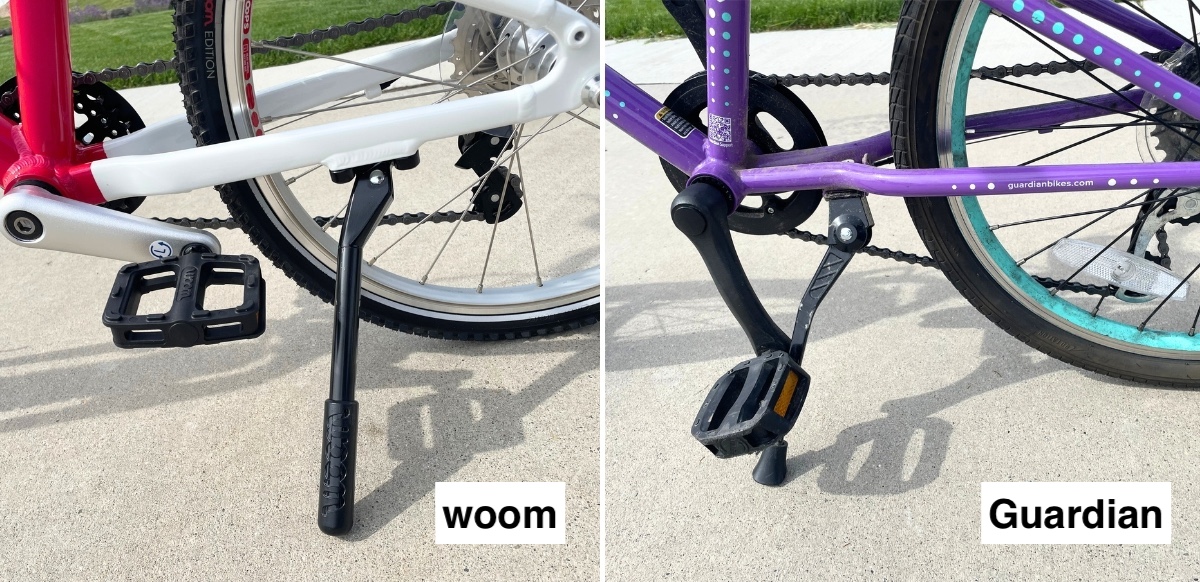
The woom GO 4 avoids this issue with a rear-mounted kickstand, positioned well behind the crank. This smart design allows kids to keep pedaling even if the kickstand is left down. When it comes into contact with grass, a curb, or any other surface, the stand simply bounces up and out of the way—keeping the ride smooth and stress-free for both kids and parents.
Paint and Color Options
The GO 4 comes in five vibrant colors, each with a unique finish that makes the bike stand out. The turquoise and blue feature a metal flake, while the remaining colors have a pearl-like shimmer.
Our review model was “hot pink”, though it often looked more red depending on the lighting. In contrast, our GO 3 in metallic turquoise really shows off the shimmer, especially in bright sunlight. Kids definitely notice—and love—the sparkle, making the color options as fun as the ride itself.
woom GO 4 vs. Competitors
We clearly love the woom GO 4, and if you’re looking for the best bike for neighborhood riding—especially for more timid or newer riders—it’s hard to beat. That said, we know it’s a premium bike with a price tag to match. If the GO 4 isn’t the right fit for your budget or your rider’s style, here are a few other options to consider:
Prevelo Alpha Three
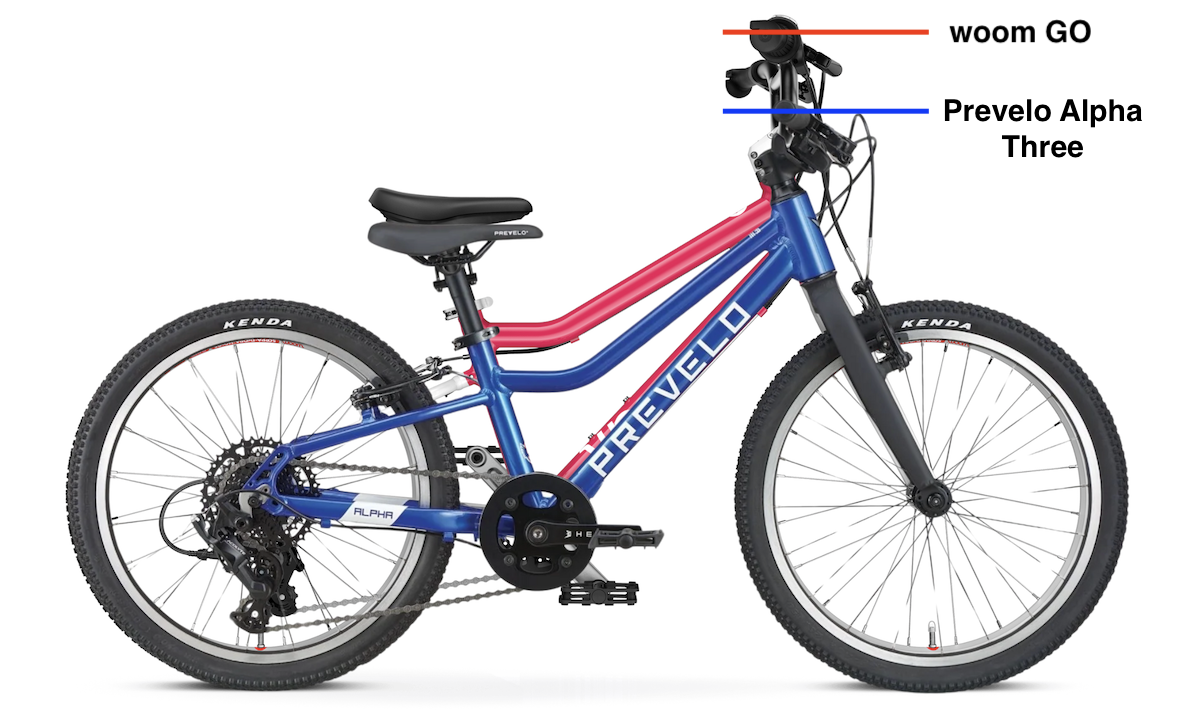
Comparable in weight to the GO 4, the Alpha Three is built for more aggressive riders. Its forward-leaning geometry and wider gear range make it better suited for steeper climbs, faster speeds, and confident kids who are ready to take their riding to the next level.
However, this more aggressive setup may feel intimidating for more cautious riders. In the overlaid image below, you can clearly see the difference in handlebar position—the woom GO’s handlebar (red line) sits much higher than the Alpha Three’s (blue line), offering a noticeably more upright and relaxed riding position.
Priority Start 20
Slightly, heavier than the GO 4 but several hundred dollars cheaper. With a maintenance-free belt drive and 3-speed internal hub, it’s a great low-maintenance option for flater neighborhoods. However, the limited gearing make it less ideal for hills or longer rides.
Guardian 20” Large
Noticeably heavier than the GO 4, the Guardian 20” Large is a solid budget-friendly option with a kid-friendly design. However, its steel frame adds weight, which can make it harder for smaller or less confident riders to manage—especially on hills or tight turns.
woom GO 4 vs. woom EXPLORE 4 Comparison

While the woom GO 4 and woom EXPLORE 4 share the same frame, they’re designed with very different types of riders in mind. The EXPLORE is built for more adventurous and aggressive riders—those who regularly venture onto gravel or dirt roads, ride at higher speeds, or take on hills that demand more robust braking and traction.
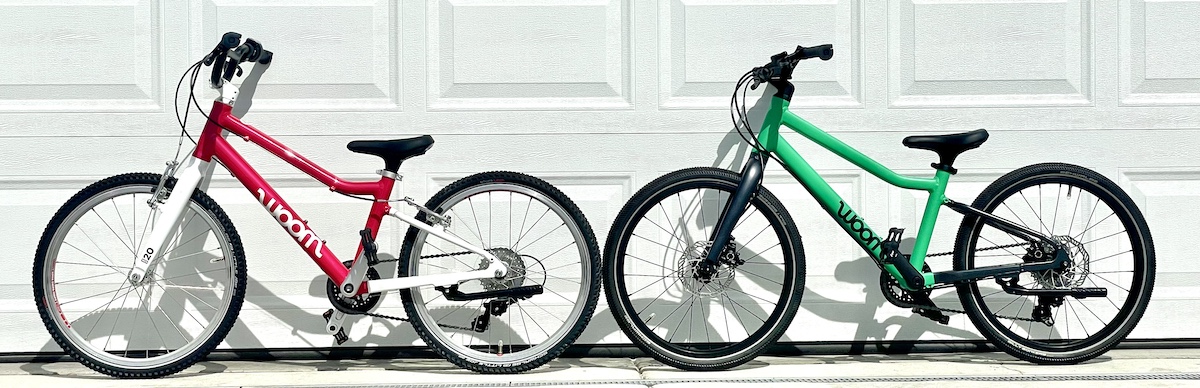
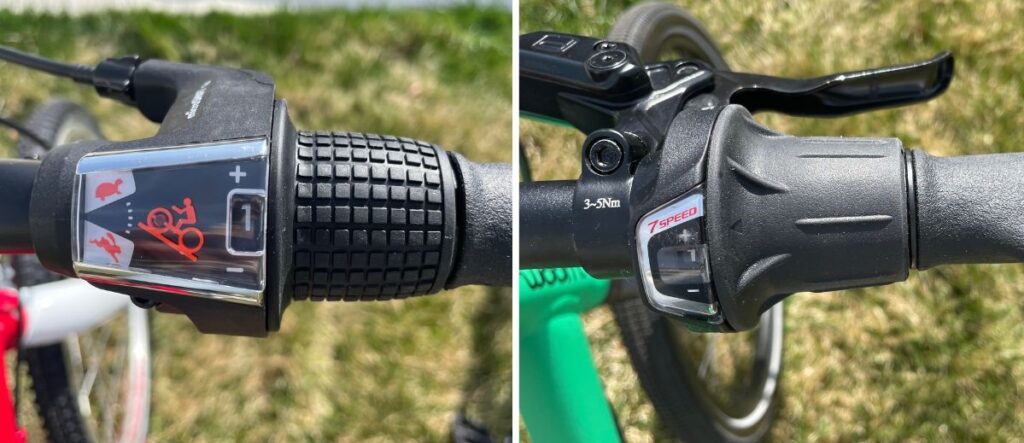
The shifter is another upgrade that many kids notice immediately. As shown in the side-by-side image below, the EXPLORE’s Shimano grip shifter is even easier to use than the GO’s microSHIFT version. While both are excellent for young hands, our testers consistently favored the feel and responsiveness of the Shimano system. For kids who are just learning to shift, or those with smaller hands or less fine motor control, this upgrade can make a big difference in confidence and ease of use.
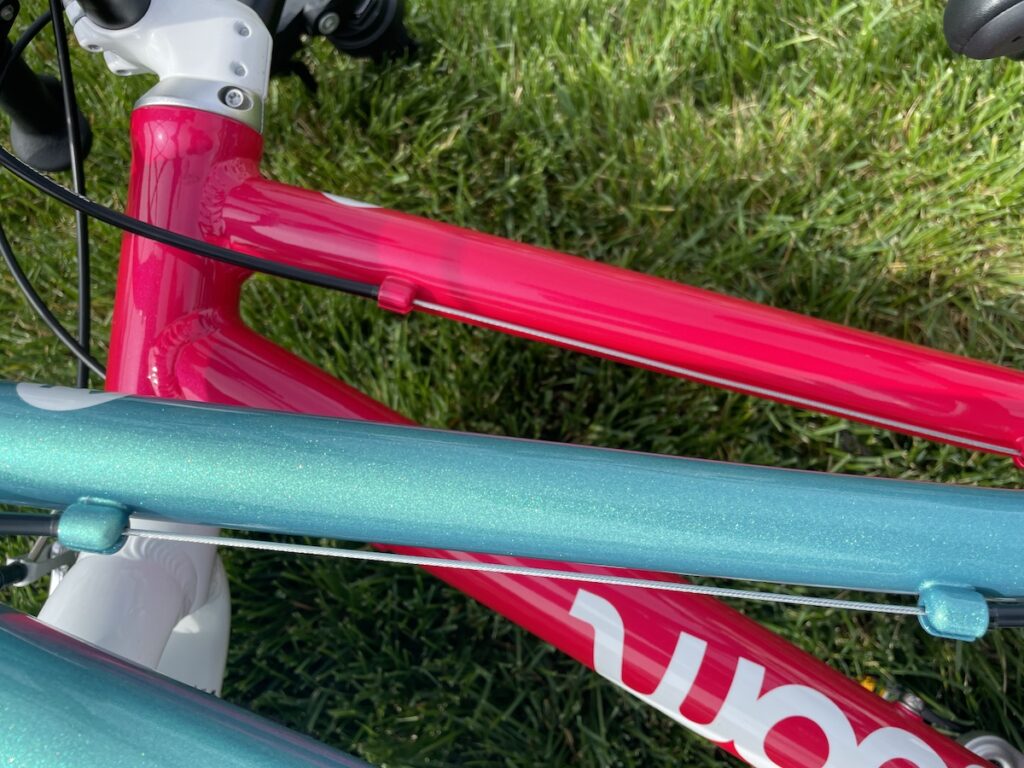
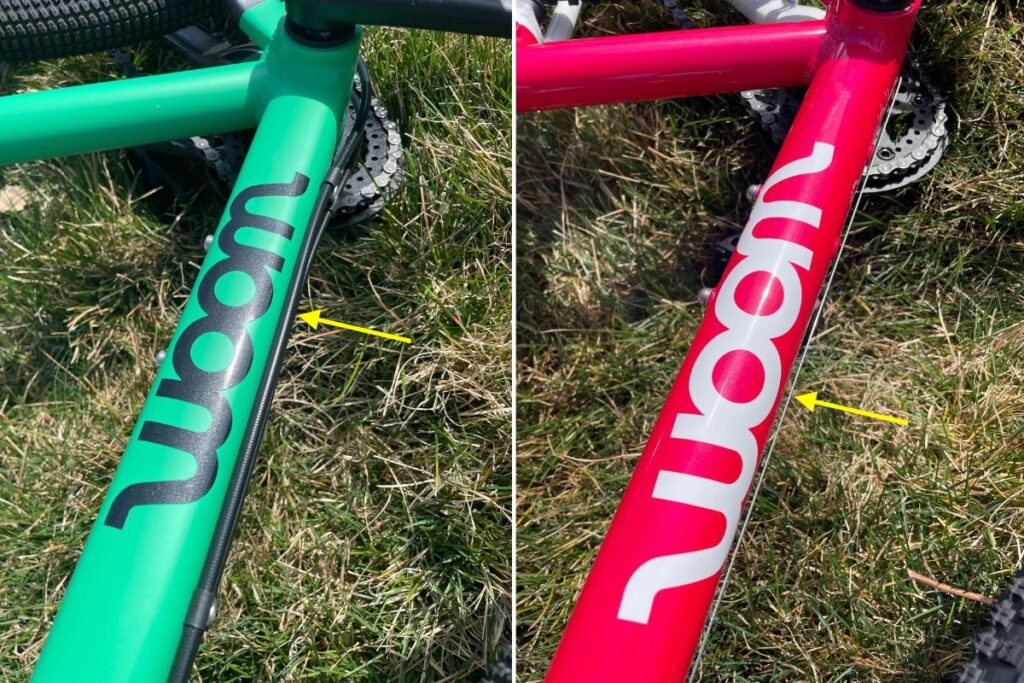
Another thoughtful upgrade on the EXPLORE is its fully housed cables. In the photo below, you can see the GO’s exposed cable segments versus the continuous housing on the EXPLORE. Housing not only protects the cables from dirt, moisture, and accidental damage, but also improves long-term durability—especially important for kids riding in all weather or over rougher terrain.
The EXPLORE’s handlebars also offer more adjustability. While the GO 4 uses BMX-style handlebars that can tilt forward and back, the EXPLORE features a rotating stem, allowing the handlebars to grow with your child by adjusting both the reach and height. This gives the EXPLORE a slight edge in long-term fit—particularly for taller or more aggressive riders.

woom 4 Review Bottom Line
If you’re looking for a lightweight, thoughtfully designed bike to help your child confidently transition to gears, the woom GO 4 is hard to beat. With comfort-focused touchpoints, intuitive shifting, and sizing that truly fits smaller riders, it’s ideal for hesitant or first-time 20” bike riders. The GO 4 shines as a smooth, fun, and easy-to-ride bike that makes neighborhood cruising and longer rides feel effortless.
RECALL NOTICE: If you’re considering purchasing a used woom 4 ORIGINAL bike, be aware that the stems on models sold between September 2018 and March 2022 have been recalled by the CPSC. Before buying, check the woom’s Recall Notice to confirm the bike has been updated with the new stem.
FTC Disclosure: Affiliate links are included in this review. No monetary compensation was provided for this review, however, the reviewed product was supplied by the manufacturer or distributor to help facilitate this review. All opinions and images are that of Two Wheeling Tots LLC. All content and images are copyrighted and should not be used or replicated in any way. View our Terms of Use.
