

Biky Air 20 Inch Kids Bikes Review – Fun, Fast and Efficient!

Why make something beautifully simple complicated? The Biky Air 20 line keeps things pure and focused on what really matters, having fun! Now available in two configurations, the single-speed Air 20 and the 7-speed Air 20 S7.
Both bikes share the same ultra-lightweight aluminum frame, dual Tektro handbrakes, and the confidence-building design that makes the original Biky 20 a standout. The S7 adds a MicroShift grip shifter and 7 gears for kids who need to tackle hills or want to explore farther. Whether your child wants pure, no-fuss neighborhood riding or is ready to graduate to gears, the Biky Air 20 lineup has them covered.
Biky Air 20 and Air 20 S7
AIR 20 SCORE: 91.0/100 – Exceptional
AIR 20 S7 SCORE: 94.0/100 – Exceptional
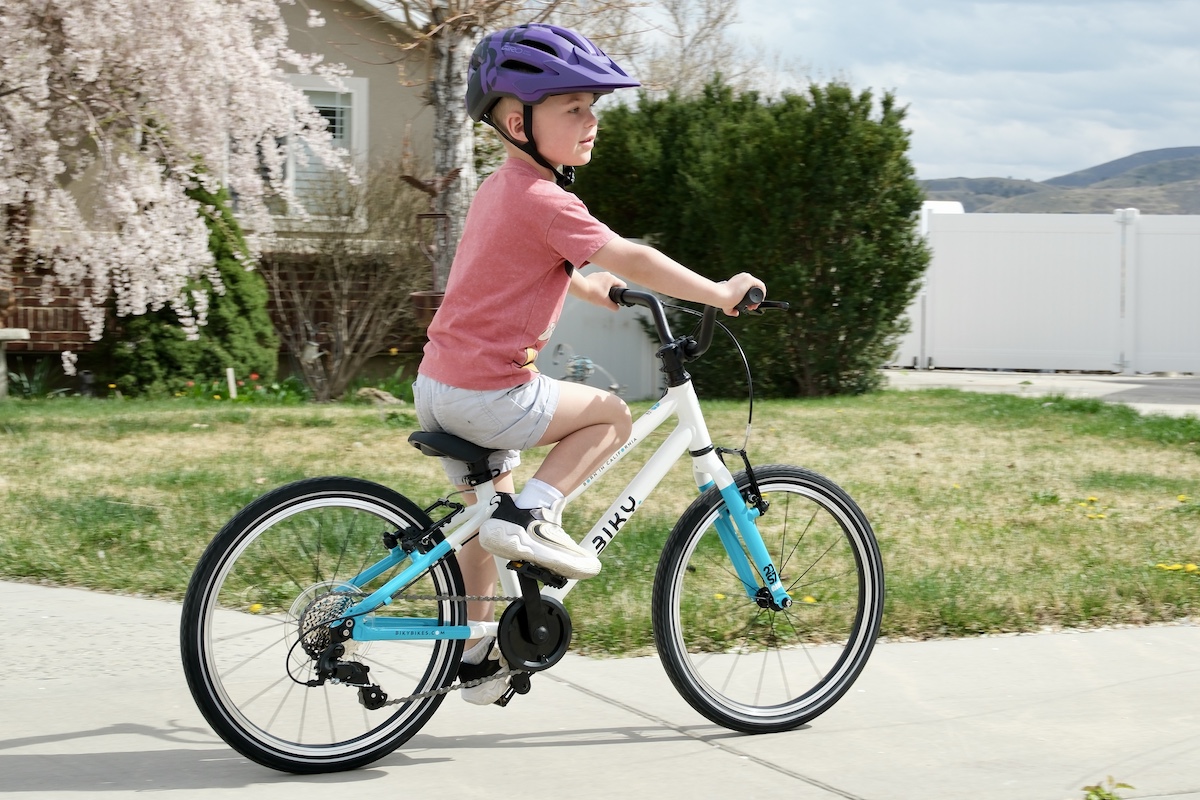
MSRP: Single – $499, S7 – $599
SEAT HEIGHT (both): 21.75″ – 28.5″
WEIGHT: Single – 15.3 lb., S7 – 16.4 lb.
BEST FOR: The single speed Air 20 is ideal for playful neighborhood riders who want a lightweight, nimble, no-fuss bike. The Air 20 S7 is perfect for riders ready for gears to tackle hills or longer distances, while still benefiting from the same featherweight frame.
ADDITIONAL SPECIFICATIONS
FRAME: Aluminum
BRAKES: Dual v-brakes
GAIN RATIO: Single – 4.5, S7 – 2.23 – 5.2
Cons:
Our 20 Inch Bike Rubric Score
We score all 20″ bikes on a 100-point scale across eight categories. Both Biky models rank among the very best in their respective categories.
Biky Air 20 (Single Speed): 91.0/100 – Exceptional. The lightest single-speed 20″ bike in our entire test group at 15.3 lb. Earned perfect scores in Frame Design, Components, Gearing & Brakes, and Weight.
How the Biky Air 20 Scored
Score Breakdown ▼
Frame Design 15.0 / 15 ▼
What we evaluate: Frame design focuses on weight reduction, geometry, and accessibility. Points reward aluminum construction, low bottom bracket for stability, low minimum seat height for younger riders, step-through frames for easy mounting, and threaded bottom brackets for easier maintenance.
- ✅ Aluminum Frame (4 pts)
- ✅ Low Bottom Bracket (3 pts)
- ✅ Low Min Seat Height ≤ 23″ (3 pts)
- ✅ Low Step-Through Frame (3 pts)
- ✅ Threaded Bottom Bracket (2 pts)
Components 20.0 / 20 ▼
What we evaluate: Component quality directly affects ride quality and durability. We score based on narrow Q-factor (better for kids’ hip width), sealed components (lower maintenance), 3-piece cranks (stronger and replaceable), quality tires, and adjustability features.
- ✅ Narrow Q-factor (3 pts)
- ✅ 3-Piece Crank (3 pts)
- ✅ Quality/Sealed Hubs (2 pts)
- ✅ Quality Seat Post Quick Release (2 pts)
- ✅ Comfortable Padded Saddle (2 pts)
- ✅ Sealed/Cartridge Bottom Bracket (2 pts)
- ✅ Adjustable Handlebar (2 pts)
- ✅ Quality Headset (2 pts)
- ✅ Brand Name Tires (2 pts)
Gearing & Brakes (Single Speed) 28.0 / 30 ▼
What we evaluate: Single speed bikes are scored on optimal gain ratio (3.4-4.6 for flat terrain), brake quality and safety features. No coaster brake is preferred for better control, and short-reach levers ensure small hands can brake effectively.
- ✅ Optimal Gain Ratio 4.46 (5 pts)
- ✅ No Coaster Brake (4 pts)
- ✅ Brake Duplicity (4 pts)
- ✅ V-Brakes (4 pts)
- ✅ Short Reach Brake Levers (4 pts)
- ✅ Quick Release Wheels (2 pts)
- ✅ Rattle-free Chain Guard (2 pts)
- ✅ Smooth Rolling Tires (2 pts)
- ❌ Kickstand Included (1 pt)
- ✅ Reflective Sidewall Tires (1 pt)
Gain Ratio: 4.46
Weight 15.0 / 15 ▼
How it’s scored: Weight is scored proportionally within bike category. The lightest bike in the category receives 15 points, the heaviest receives 0 points. This ensures fair comparison—single speeds are compared to single speeds, city bikes to city bikes, etc.
Bike Weight: 15.3 lbs
Category: Single Speed
Useable Fit Range 5.0 / 10 ▼
How it’s scored: Bikes with wider useable seat height ranges score higher on a proportional scale across all 20″ bikes. The widest range scores 10 points, the narrowest scores 0 points. A wider range means the bike grows with your child longer, providing better long-term value.
Useable Range: 5.0″
Seat Height: 23.00″ – 28.00″
Scored against all 20″ bikes regardless of category
Ease of Assembly 5.0 / 6 ▼
What we evaluate: Assembly scoring measures the out-of-box experience. Points are awarded for clear instructions, minimal assembly requirements, and pre-tuned components that work properly without adjustment.
- ✅ Clear Written Instructions (2 pts)
- ❌ Video Instructions (1 pt)
- ✅ Easy Assembly / Mostly Assembled (1 pt)
- ✅ Pre-tuned Brakes (2 pts)
Warranty & Customer Service 3.0 / 4 ▼
What we evaluate: Post-purchase support matters for long-term satisfaction. Points are awarded for responsive customer service with real people (not just chatbots), frame warranties, and component coverage.
- ✅ Customer Service with Real Person (2 pts)
- ✅ Frame Warranty (1 pt)
- ❌ Partial Component Warranty (1 pt)
Extra Credit +0.0 ▼
What earns extra credit: Bonus points for innovative features that enhance durability, reduce maintenance, or add exceptional value beyond standard expectations.
- ❌ Belt Drive (+1 pt)
- ❌ Tubeless Compatible Rims (+2 pts)
- ❌ Internal Hub Gearing (+1 pt)
Biky Air 20 S7 (7-Speed): 94.0/100 – Exceptional. Among the highest-scoring geared 20″ bikes we’ve tested. The combination of extreme lightweight, a great fit range and a wider gear range earns it top marks. See all 20″ bike scores.
How the Biky Air 20 S7 Scored
Score Breakdown ▼
Frame Design 15.0 / 15 ▼
What we evaluate: Frame design focuses on weight reduction, geometry, and accessibility. Points reward aluminum construction, low bottom bracket for stability, low minimum seat height for younger riders, step-through frames for easy mounting, and threaded bottom brackets for easier maintenance.
- ✅ Aluminum Frame (4 pts)
- ✅ Low Bottom Bracket (3 pts)
- ✅ Low Min Seat Height ≤ 23″ (3 pts)
- ✅ Low Step-Through Frame (3 pts)
- ✅ Threaded Bottom Bracket (2 pts)
Components 20.0 / 20 ▼
What we evaluate: Component quality directly affects ride quality and durability. We score based on narrow Q-factor (better for kids’ hip width), sealed components (lower maintenance), 3-piece cranks (stronger and replaceable), quality tires, and adjustability features.
- ✅ Narrow Q-factor (3 pts)
- ✅ 3-Piece Crank (3 pts)
- ✅ Quality/Sealed Hubs (2 pts)
- ✅ Quality Seat Post Quick Release (2 pts)
- ✅ Comfortable Padded Saddle (2 pts)
- ✅ Sealed/Cartridge Bottom Bracket (2 pts)
- ✅ Adjustable Handlebar (2 pts)
- ✅ Quality Headset (2 pts)
- ✅ Brand Name Tires (2 pts)
Gearing & Brakes (City) 26.0 / 30 ▼
What we evaluate: City bikes are scored on shifter ease of use, gear range width, brake quality, and features that make braking safer for kids. A gear range width of 2.0+ allows the bike to handle both flat cruising and moderate hills effectively.
- ✅ Easy to Use Shifter (Grip OR Trigger) (6 pts)
- ✅ Short Reach Brake Levers (4 pts)
- ✅ Gear Range Width 2.97 (2 pts)
- ✅ V-Brakes / Tektro (3 pts)
- ✅ Derailleur Hanger (3 pts)
- ✅ Brake Duplicity (3 pts)
- ✅ Gear Indicator on Shifter (3 pts)
- ✅ Smooth Rolling Tires (2 pts)
- ❌ Kickstand Included (1 pt)
- ✅ Quick Release Wheels (1 pt)
- ✅ Water Bottle Cage Mounts (1 pt)
Gear Range Width: 2.97 (2.23 – 5.2)
Weight 14.0 / 15 ▼
How it’s scored: Weight is scored proportionally within bike category. The lightest bike in the category receives 15 points, the heaviest receives 0 points. This ensures fair comparison—single speeds are compared to single speeds, city bikes to city bikes, etc.
Bike Weight: 16.4 lbs (without kickstand)
Category: City/Neighborhood
Useable Fit Range 8.0 / 10 ▼
How it’s scored: Bikes with wider useable seat height ranges score higher on a proportional scale across all 20″ bikes. The widest range scores 10 points, the narrowest scores 0 points. A wider range means the bike grows with your child longer, providing better long-term value.
Useable Range: 6.75″
Seat Height: 21.75″ – 28.5″
Scored against all 20″ bikes regardless of category
Ease of Assembly 5.0 / 6 ▼
What we evaluate: Assembly scoring measures the out-of-box experience. Points are awarded for clear instructions, minimal assembly requirements, and pre-tuned components that work properly without adjustment.
- ✅ Clear Written Instructions (2 pts)
- ❌ Video Instructions (1 pt)
- ✅ Easy Assembly / Mostly Assembled (1 pt)
- ✅ Pre-tuned Brakes (2 pts)
Warranty & Customer Service 3.0 / 4 ▼
What we evaluate: Post-purchase support matters for long-term satisfaction. Points are awarded for responsive customer service with real people (not just chatbots), frame warranties, and component coverage.
- ✅ Customer Service with Real Person (2 pts)
- ✅ Frame Warranty (1 pt)
- ❌ Partial Component Warranty (1 pt)
Extra Credit +0.0 ▼
What earns extra credit: Bonus points for innovative features that enhance durability, reduce maintenance, or add exceptional value beyond standard expectations.
- ❌ Belt Drive (+1 pt)
- ❌ Tubeless Compatible Rims (+2 pts)
- ❌ Internal Hub Gearing (+1 pt)
What Type of Rider is Each Bike for?
Biky Air 20 – Single Speed
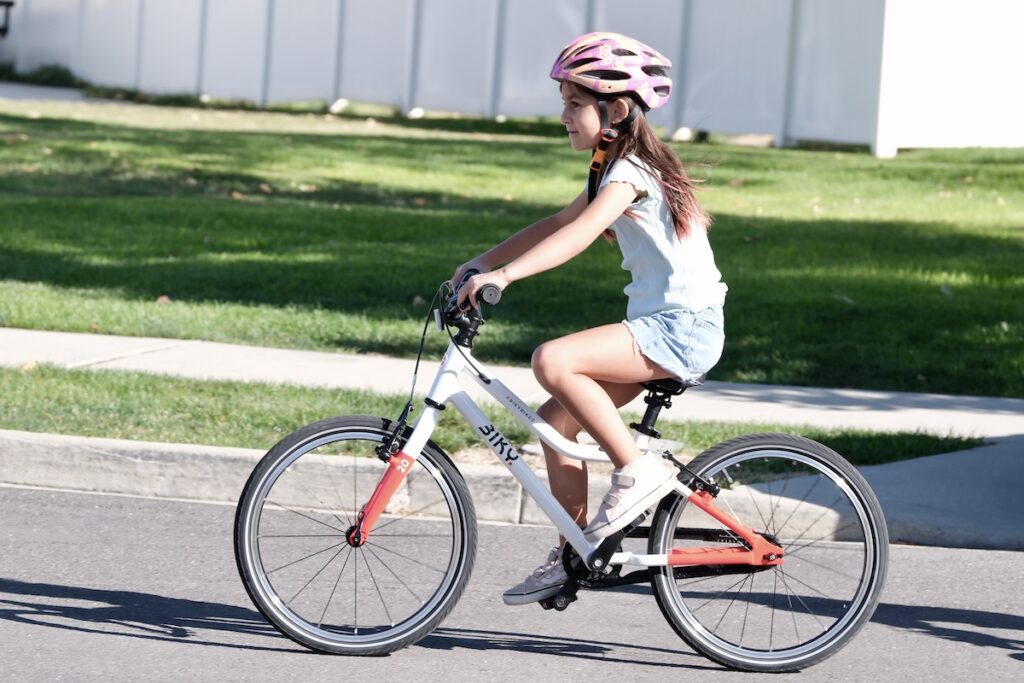
This lightweight single-speed with smooth tire tread is ideal for neighborhood riding, especially for petite or more timid riders. At just 15.3 lb., lighter than some 12″ and 16″ bikes 🤯, the Air 20 is great for kids still mastering the pedal bike or for those looking for a fast, fun ride. If your child’s neighborhood is relatively flat and they don’t need gears, this is the purest, most joyful riding experience we’ve tested in a 20″.
Who is the Biky Air 20 not ideal for?
If your child lives in a hilly area, a single-speed bike may not be the best choice. If you shift gears on your own bike to navigate hills, your child will likely benefit from gears too. With smooth street tires, the Air 20 is also not ideal for regular riding on dirt or gravel roads.
Biky Air 20 S7 – 7-Speed
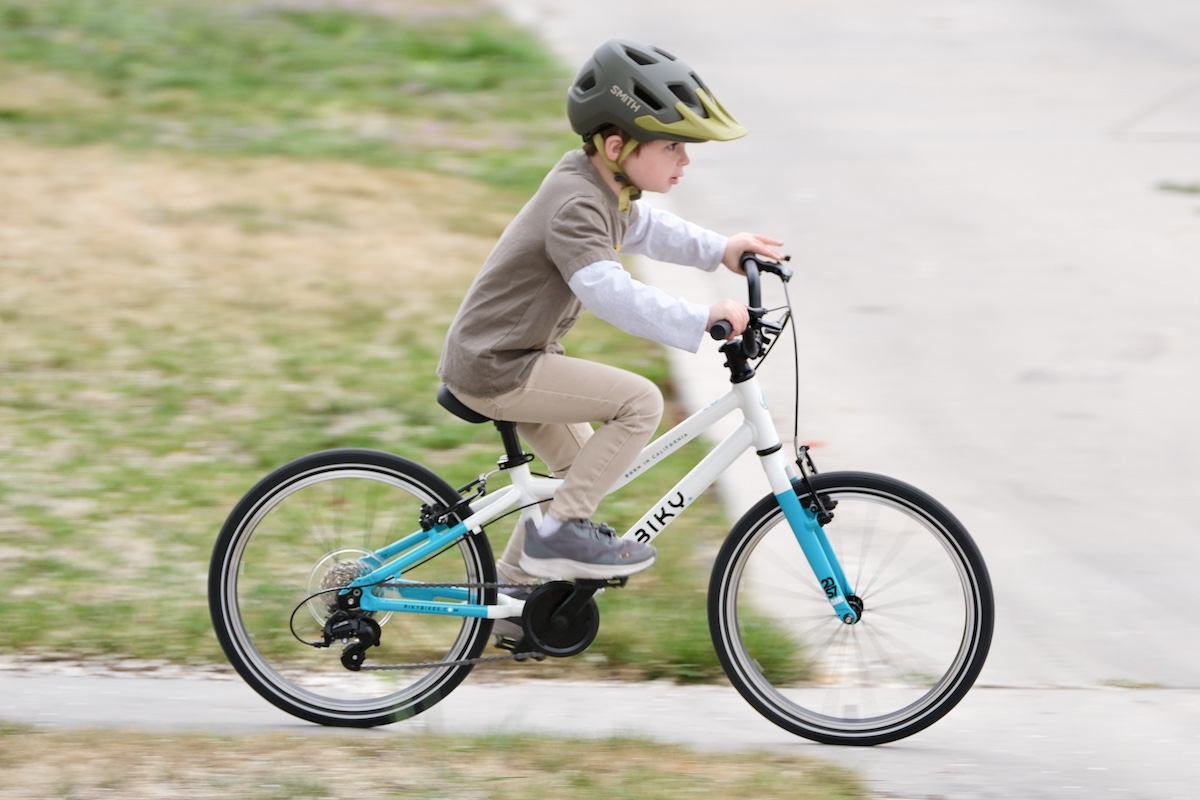
The S7 is for kids who are ready to explore gears for the first time or who need them for hills or longer rides. As one of, if not the lightest geared 20″ bikes available, it allows even the most hesitant riders to adapt to a larger wheel size as well as gears quickly. Its gear range (2.23 – 5.2 gain ratio) makes it equally comfortable for gentle climbs and picking up speed on flat ground.
Who Is the Air 20 S7 Not Ideal For?
Riders who mainly cruise flat neighborhood streets or who aren’t yet ready to take on gears are better off on the lighter, simpler single-speed Air 20. The S7’s smooth street tires are also not designed for use on non-paved surfaces.
Results of Our Test Rides
Biky Air 20 (Single Speed)
We didn’t expect our testers to love the Biky 20 as much as they did! Ranging from ages 5 to 7, even our seasoned riders, who’ve tested multiple 20″ bikes, couldn’t get enough of cruising around the neighborhood on it.
Designed to make everyday riding simple and efficient, the Biky 20 nailed it. With no gears to fuss over, it was nothing but pure, smile-inducing biking fun.
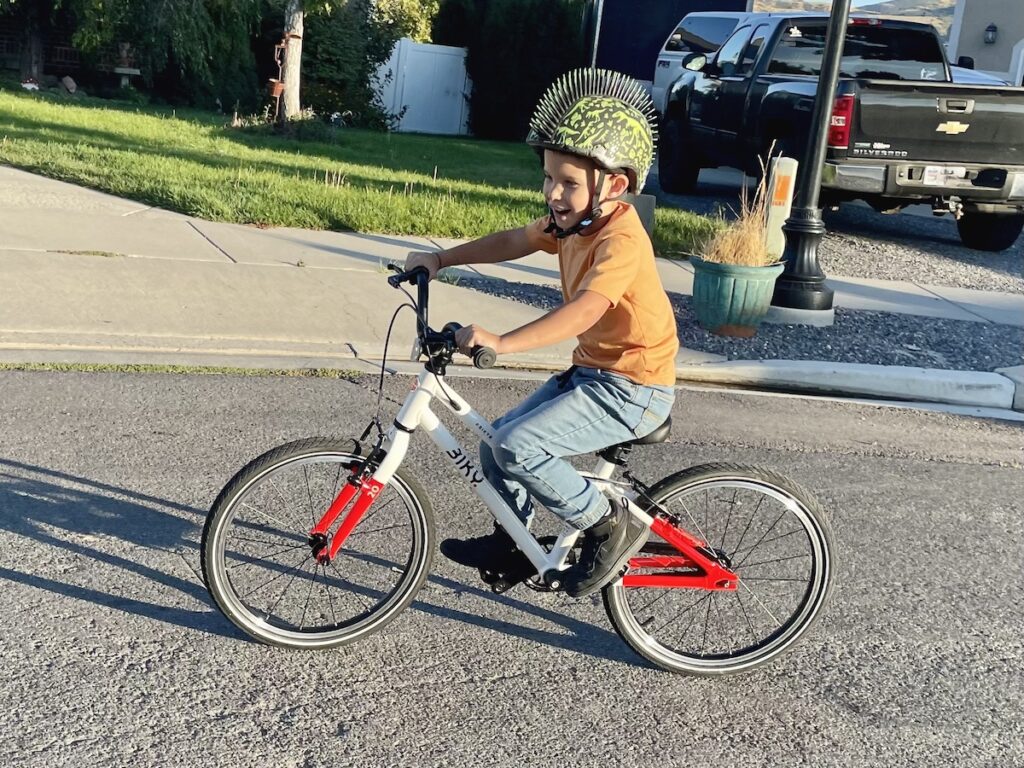
Kids who are tall enough for a 20″ bike are usually drawn to “more”, whether it be gears, a suspension fork, or bold frame designs, but after just one ride on the Biky 20, all of those ideas about what makes a bike awesome quickly melted away. The smiles said it all.
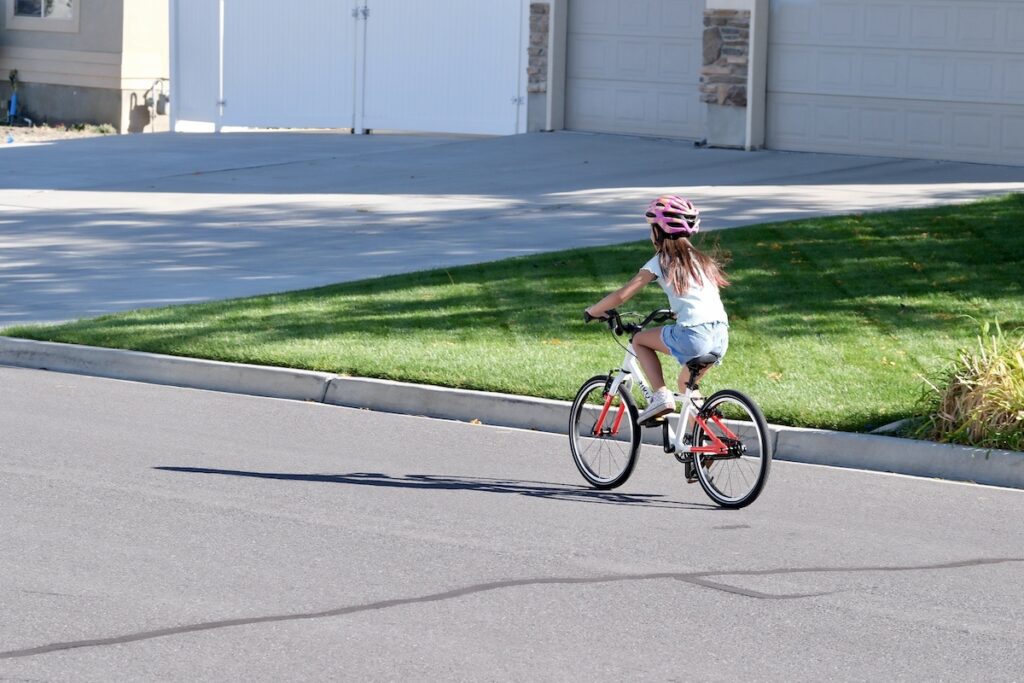
Whether your child has never experienced a quality bike before and you’re trying to spark a love of riding, or they’re still hesitant and struggling to “get it,” the single-speed Biky Air 20 should absolutely be on your list.
Biky Air 20 S7 (7-Speed)
Being a single-speed, the Biky Air 20 isn’t as much fun on hills, so if hills are unavoidable or your little one is ready for “more,” the Biky Air 20 S7 is a great choice. We tested the S7 with two riders and like the single-speed, it was love with the first few pedal strokes.
Our youngest tester was just 4 years old (and still fits comfortably on a 16″ bike), but the S7’s exceptionally low 21.75″ minimum seat height allowed him to get on a 20″ bike for the very first time. He took to the gears almost immediately, despite it being his first experience with shifting, and the bike’s light weight made it easy to maneuver and to pick up when he stopped.
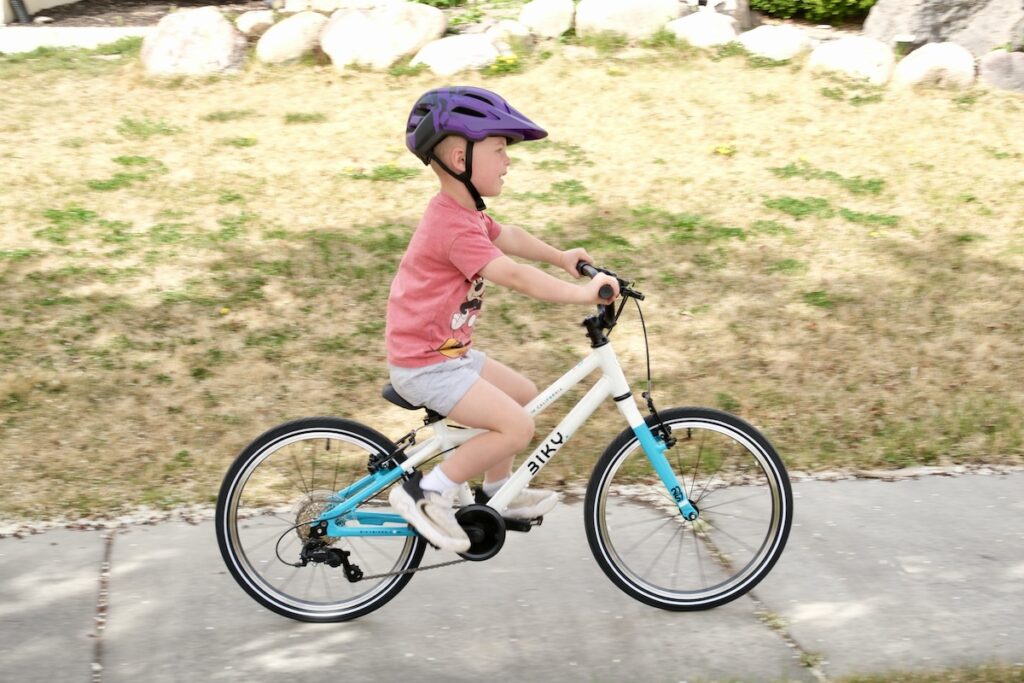
Having tested a lot of bikes with this little tester, I know his attention span on a single bike can be fleeting, but he continued to ride and ride with a huge smile on his face without asking to try another bike (which is rare!).
Our second tester, a more experienced and taller 6-year-old, loves his woom GO 4, so I was eager to see how he’d react to the Biky Air 20 S7. Within minutes he was racing around and seeing just how fast he could go in the highest gear.
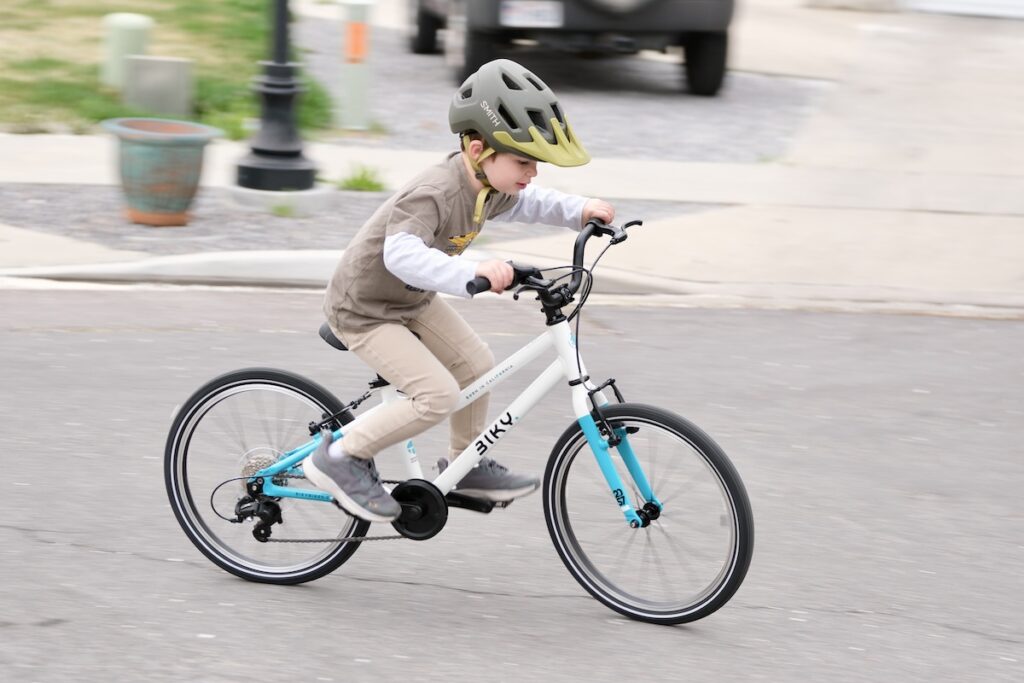
Even though the woom GO 4 has a slightly higher top gear, he was convinced the S7 had to be faster than his own bike! This was likely due to the smooth street tires on the Biky. He commented on how smooth the S7’s street tires felt compared to the multi-use tires of the woom GO 4.
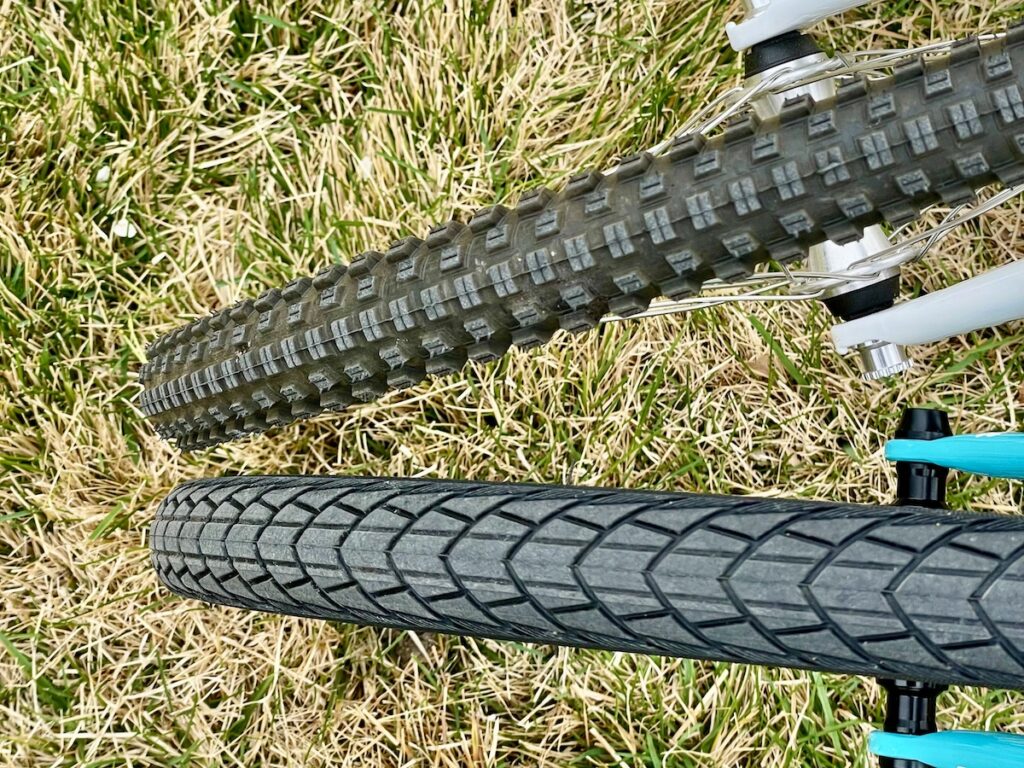
While the smooth street tires of the Biky are better on pavement, if you plan on riding on any non-paved surfaces, the multi-use tires of the woom GO 4 will be beneficial.
Gearing and Gain Ratios
With kids’ bikes, gearing is typically expressed as a gain ratio rather than by gear inches or speed, because it accounts for the entire drivetrain including the wheel size, crank length, chainring, and cassette in a single number. A bike’s gain ratio measures how far the bike travels with each pedal stroke. A lower gain ratio works like a “granny gear,” making it easier to pedal uphill, while a higher gain ratio gives you more speed per stroke on flat ground.
The single-speed Air 20 has a gain ratio of 4.5, which sits in a similar range to a middle gear on a 7-speed bike. This makes it great for kids who want to gain speed quickly without having to work too hard to get going. For reference, the Guardian Small single-speed 20″ bike has a slightly lower gain ratio of 3.96, and the Pello Reddi comes in at 4.11. While these differences are small, the Biky’s 4.5 makes it the fastest single-speed 20″ bike we recommend.
The S7’s gain ratio ranges from 2.23 to 5.2, a great spread for kids just beginning to explore gears. The low end (2.23) gives plenty of climbing power for moderate hills, the middle gears overlap nicely with the single-speed’s sweet spot, and the high end (5.2) lets faster riders push their speed on flat ground.
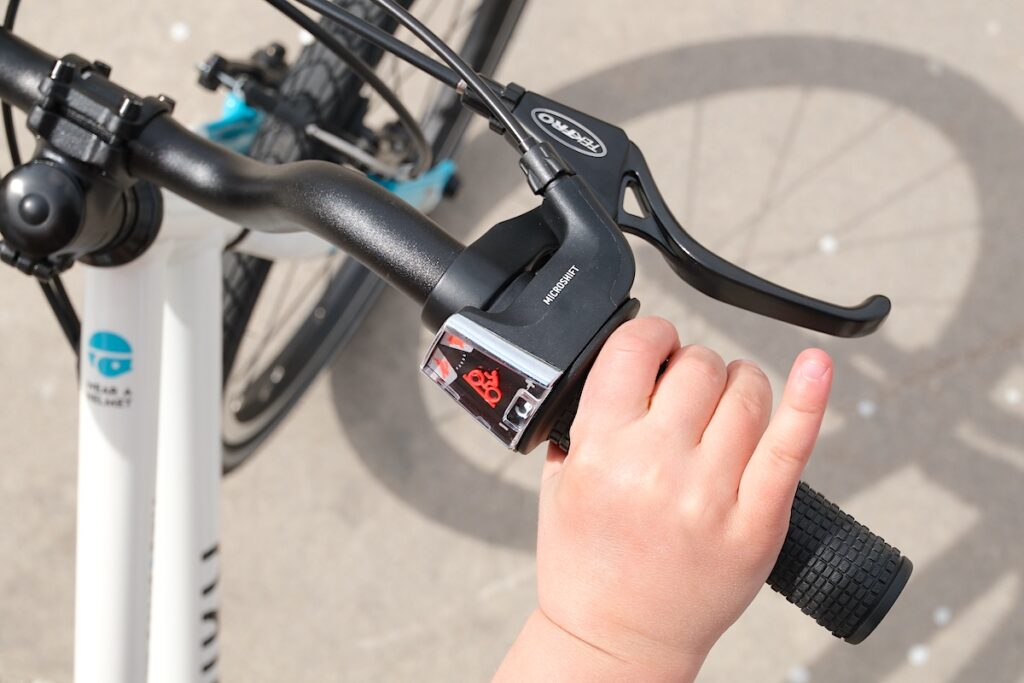
To help young riders adjust to gears, the Biky comes with the same “man on the bike” MicroSHIFT grip shifter than woom and Guardian also use. In addition to showing a gear number, the man on the bike points “uphill” in the low gears and “downhill” in the fast gear to help kids understand when to shift.
What Size Child Fits on the Biky Air 20 Models?
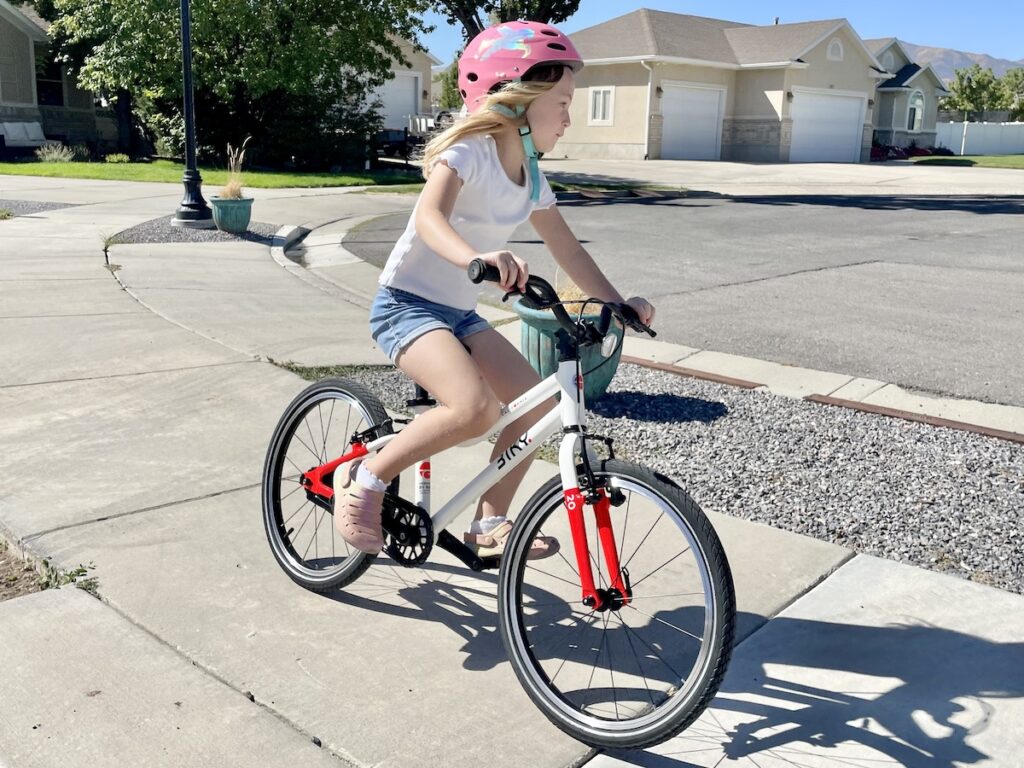
Both the single-speed Air 20 and the S7 share the same frame geometry and seat height range: 21.75″ to 28.5″. Since most kids moving up to a 20″ bike are already confident pedalers, the Biky 20 line is a best fit for kids with inseams ranging from 20″ to 26″.
Our 4-year-old tester, with an inseam around 20″, easily rode the S7 with the seat at its 21.75″ minimum. He was able to touch the ground with both toes while seated, which allowed him to push off easily and get started. Based on his experience, we have no reservations recommending the bike for a child his size.
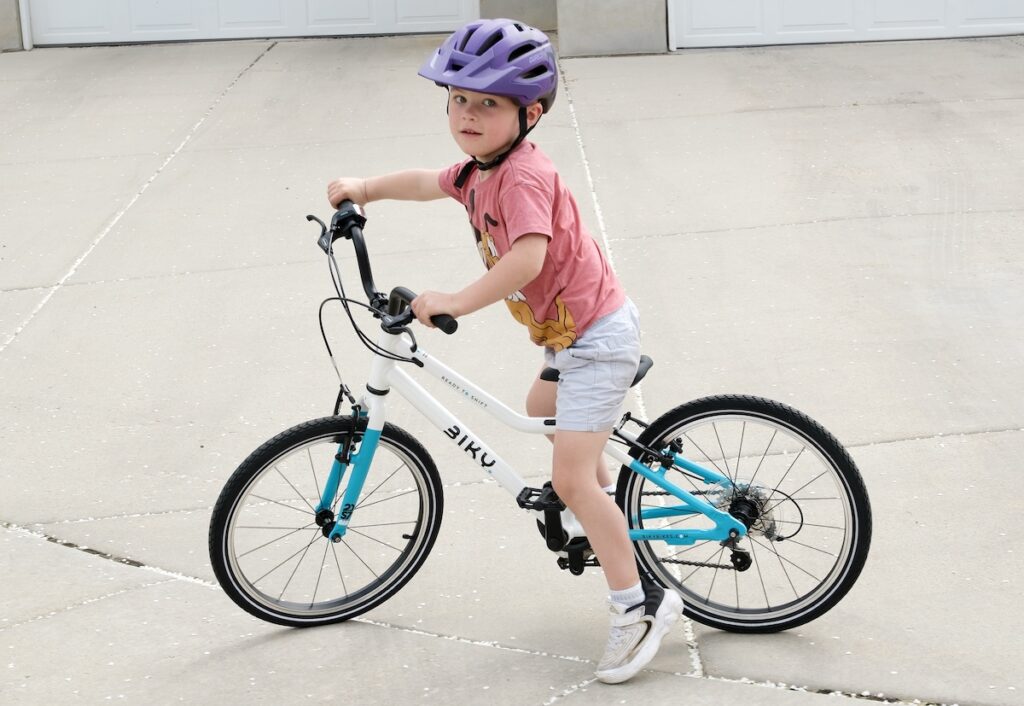
If your child is still learning to pedal, their inseam needs to be at least 21.5″ so they can sit on the saddle with both feet fully touching the ground which helps them stop confidently when they get nervous and get into a full running start before they begin pedaling.
Biky 16 to Biky 20
With the Biky 16’s max seat height at 25″ (using the longer seat post) and the Biky 20’s minimum at 21.75″, the transition between the two bikes is seamless, with plenty of overlap in fit.
As shown in the comparison below, our 43″ tall tester rides both the 16″ and 20″ with her seat set to 23″. The handlebar height is notably taller on the Biky 20, offering a more comfortable riding position and allowing plenty of room for growth.

In the images above, we forgot to rotate the handlebar back on the Biky 20 before the test, but once adjusted, she was able to ride in a more relaxed position with a comfortable bend in her arms.
Biky Air 20 Features and Components
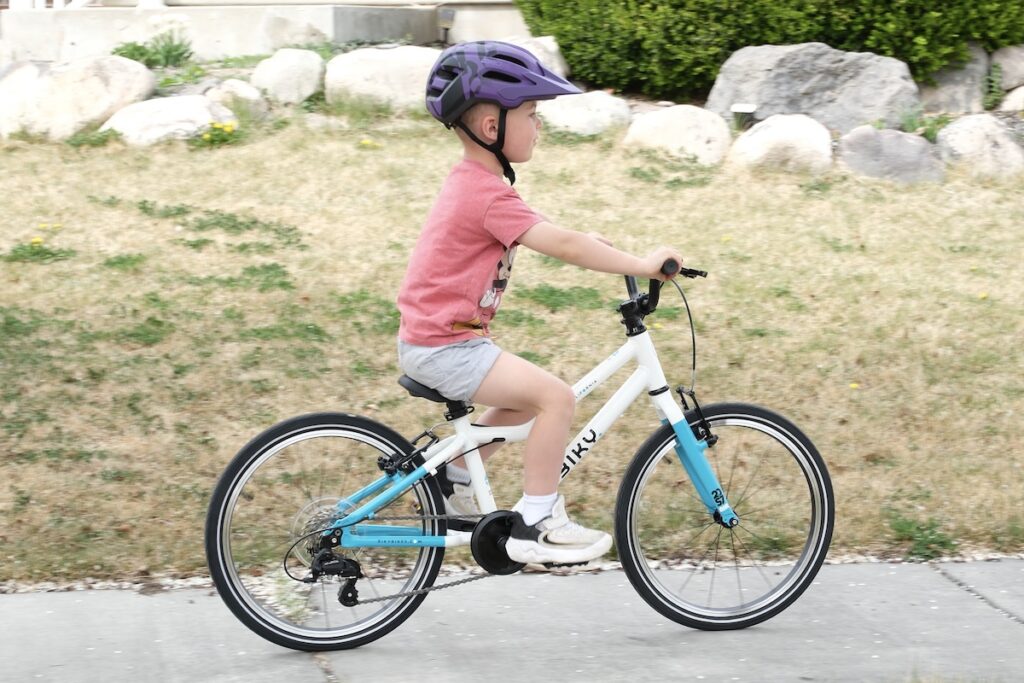
Built to last and deliver an efficient ride, both Biky Air 20 models are equipped with high-end components. Their quality surpasses many bikes found at local bike shops, and while they carry a premium price tag, the superior build is well worth the investment.
Narrow, Lightweight Frame
To maximize every pedal stroke, both Air 20 models feature a narrow q-factor and a slim frame. This design makes pedaling more efficient and accommodates a wider range of kids and especially ideal for petite riders with narrower builds.
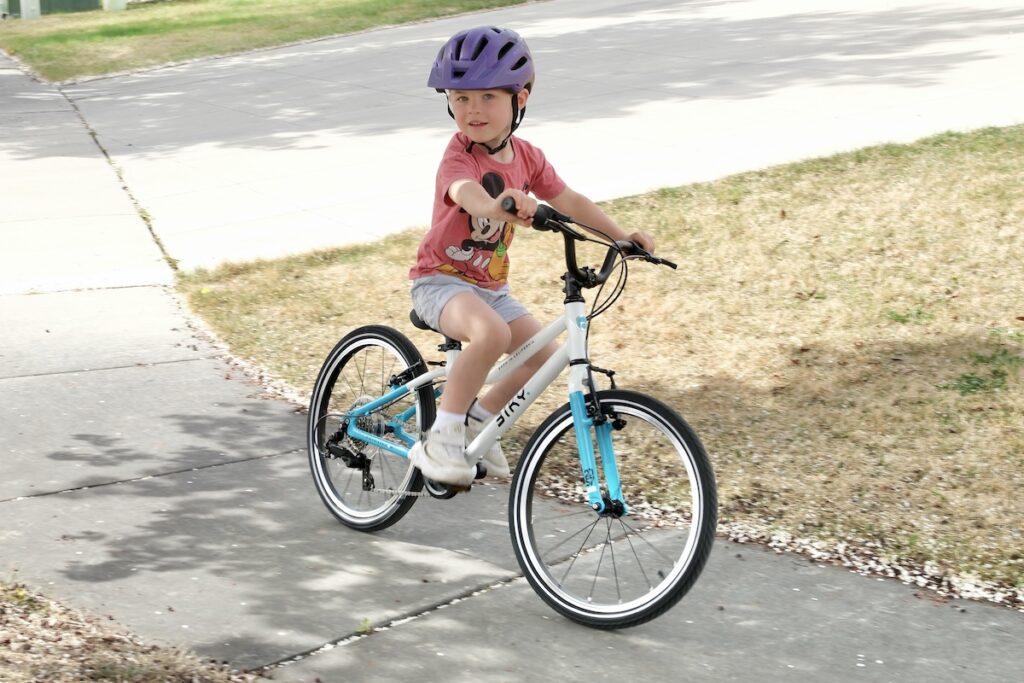
Both bikes are among the lightest, or the lightest, in their categories. The single-speed comes in at 15.3 lb., while the geared S7 is just a pound more at 16.4 lb. (both weights without kickstand). Their lightweight builds makes learning to ride fun and easy, even for the most timid riders. For comparison, the geared woom GO 4 comes in a bit heavier at 17.2 lb., but and that weight includes its kickstand.
Narrow q-factor
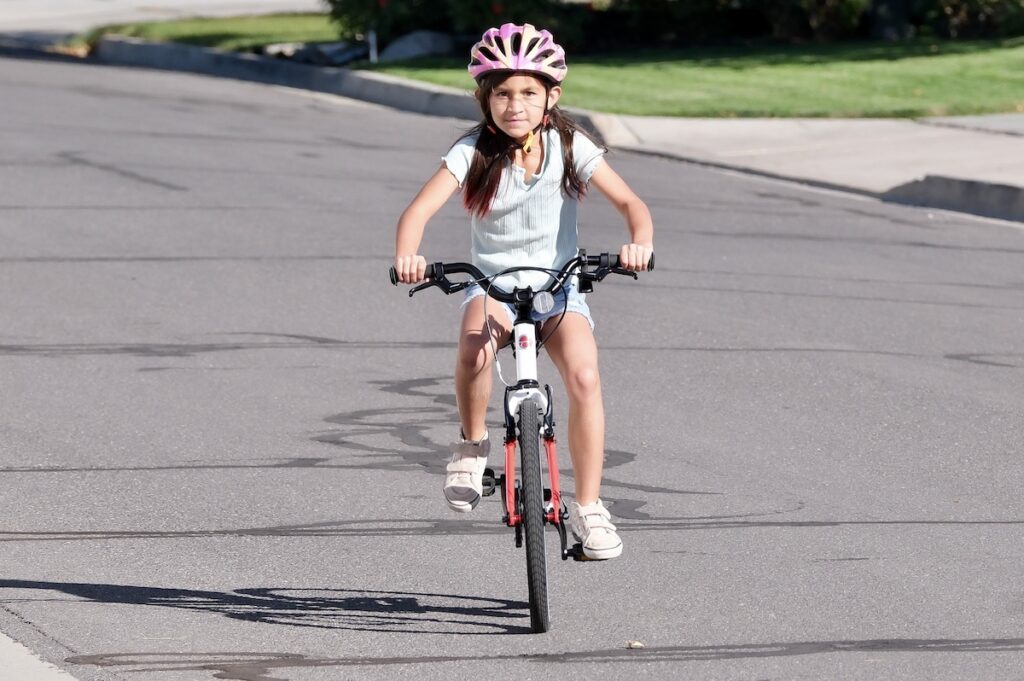
The q-factor is the distance between the pedals. This is important as it determines how much a rider has to splay their legs to pedal. A bike with a wide q-factor forces kids to pedal outward at an angle, which reduces the efficiency of each stroke. A narrow q-factor allows kids to pedal straight down, making it both more comfortable and more efficient.
The single-speed Air 20 boasts an impressively narrow q-factor of just 6″. The S7, due to its geared drivetrain, has a slightly wider q-factor of 6.5″, the same as the woom GO 4, which is still narrow and very efficient for a geared kids’ bike.
In the image below, our 6-year-old tester with an average frame demonstrates just how slim the Biky 20 is beneath her. She even has enough room to position her feet further inward on the pedals, which helps her create an even more efficient downward pedaling motion.
Slim Rear Frame Design
The single-speed Air 20’s rear frame is extremely narrow. With no rear cassette along the axle, even the most petite riders don’t need to worry about their legs or shoes brushing against the rear triangle. While rear width is rarely a problem for kids with average or larger builds (none of our testers had an issue with the wider woom EXPLORE 4 shown below), a narrow frame like the Air 20’s can make riding more comfortable and confidence-boosting for hesitant riders.

The geared S7’s rear frame, however, is wider than its single-speed counterpart to accommodate the cassette and derailleur, but it is narrower than the woom EXPLORE 4 (which adds hydraulic disc brakes) and comparable in width to the woom GO 4.
Upright Handlebars & Alignment Stamp
Both models feature mid-rise handlebars that place the rider in a comfortable semi-upright position – upright enough to prevent neck strain when looking ahead, but with just enough lean to allow easy movement on the bike.
To help parents and kids correctly position the handlebars, both models feature an alignment stamp printed on the bars. This white marking lines up with the hole in the stem, making it easy to confirm the bars are correctly centered left-to-right and at the right rotational angle.
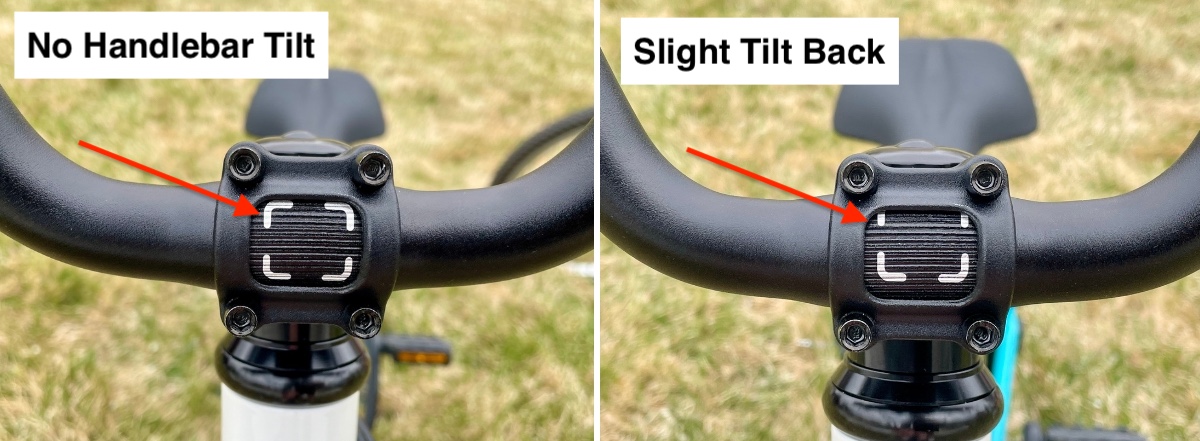
It’s also a helpful reference when adjusting handlebar tilt for smaller riders which is particularly useful at the lowest seat heights. If you rotate the handlebars inward to reduce reach for shorter riders, be sure to tilt the brake levers down as well so they remain easy for small hands to reach.
Dual Tektro Handbrakes
Both the Air 20 and Air 20 S7 are equipped with powerful dual Tektro handbrakes offering excellent stopping power. Both bikes brake feature adjustable reach, making it easy to fine-tune the lever position for smaller hands.
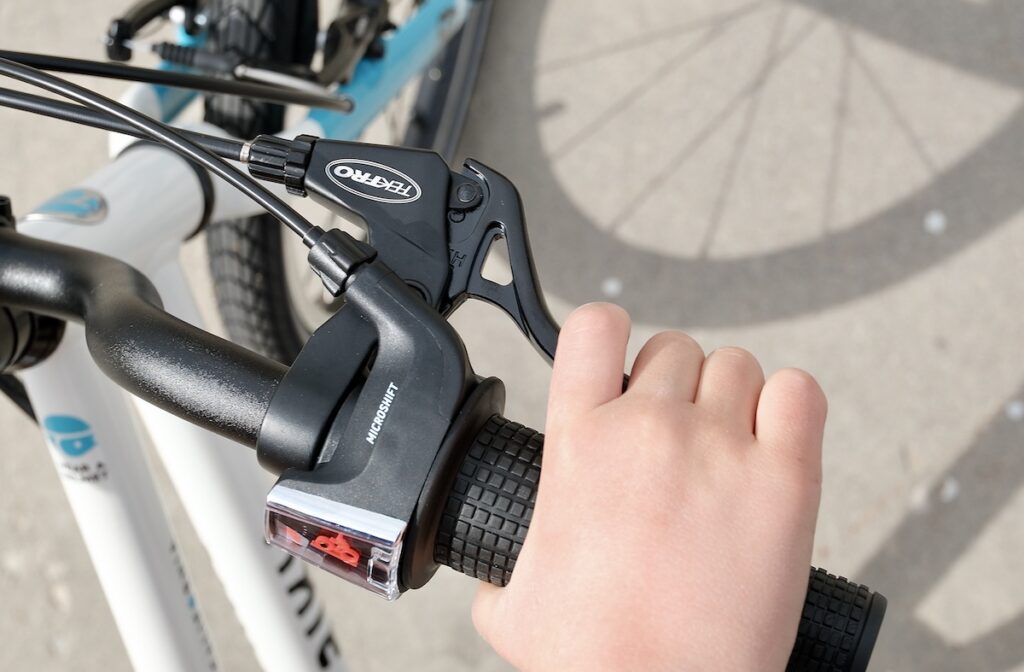
Other brands in this space use C-Star brakes, which we haven’t had any problems with, but we do prefer Tektro as we believe they provide a bit more stopping power.
Full Coverage Chainguard (Single Speed)
The single-speed Air 20 features a fully enclosed Hebie Chainlooper chainguard that keeps legs, clothes, and curious fingers grease-free. While there can be a faint noise from the chain lightly brushing the guard, it’s subtle enough that most riders won’t notice.
Derailleur Hanger (S7 Only)
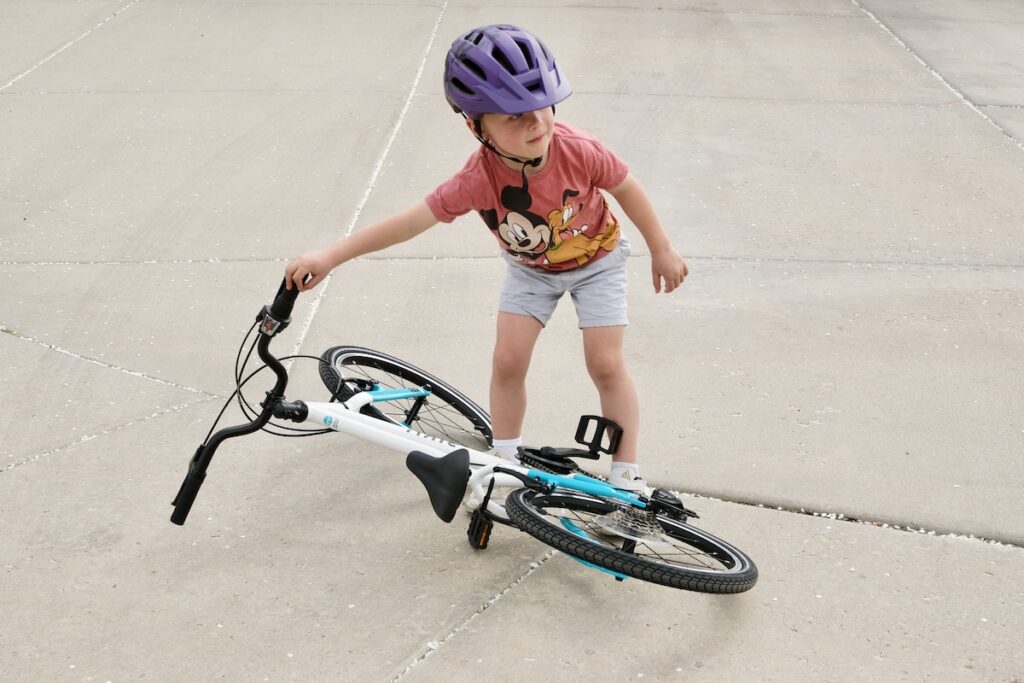
To protect the derailleur, the S7 includes a derailleur hanger, a small, replaceable piece of metal between the frame and derailleur that acts as a crumple zone. If the derailleur takes a hit from a crash or from the bike being set down on its drive side, the hanger is designed to absorb the impact and bend rather than letting the derailleur or frame get damaged.
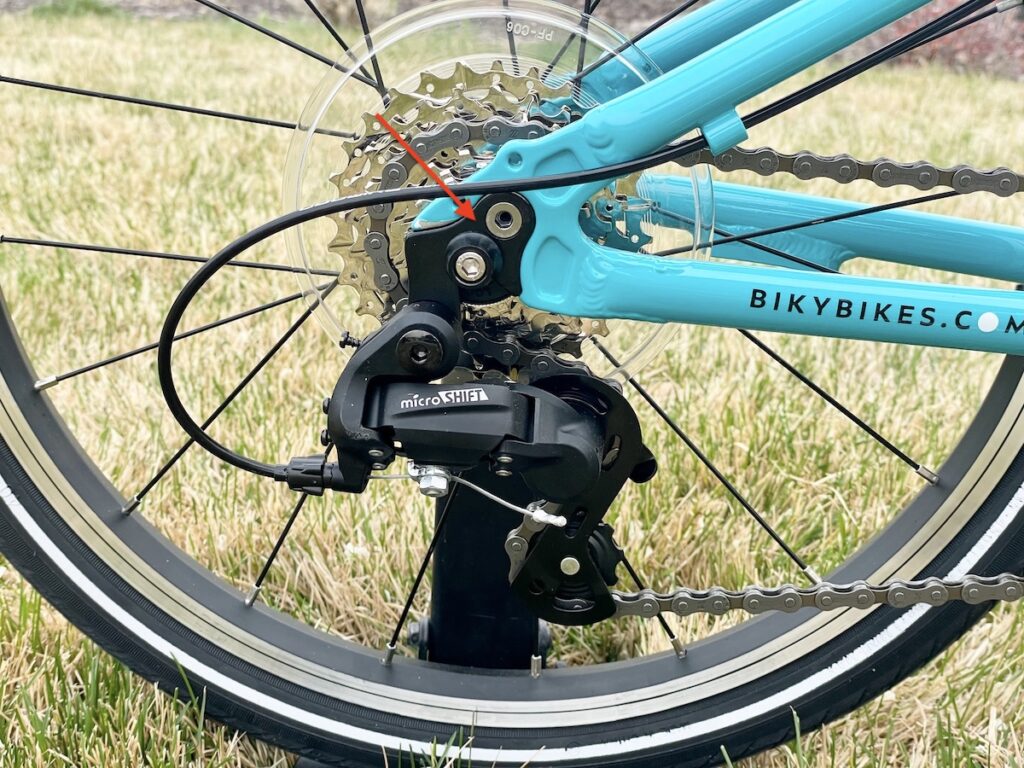
Because derailleurs on 20″ bikes sit so close to the ground, a derailleur hanger is a significant benefit and can prevent costly drivetrain repairs, particularly on a bike without a kickstand, where the chances of it being dropped on the drive side are much higher.
After-market Kickstand (Both Models)
Neither model comes with a kickstand, but both are compatible with an rear-positioned kickstand that attaches near the rear axle and does not interfere with pedal motion. This rear placement makes it easier to kick up and prevents the pedal stroke from accidentally knocking it down.
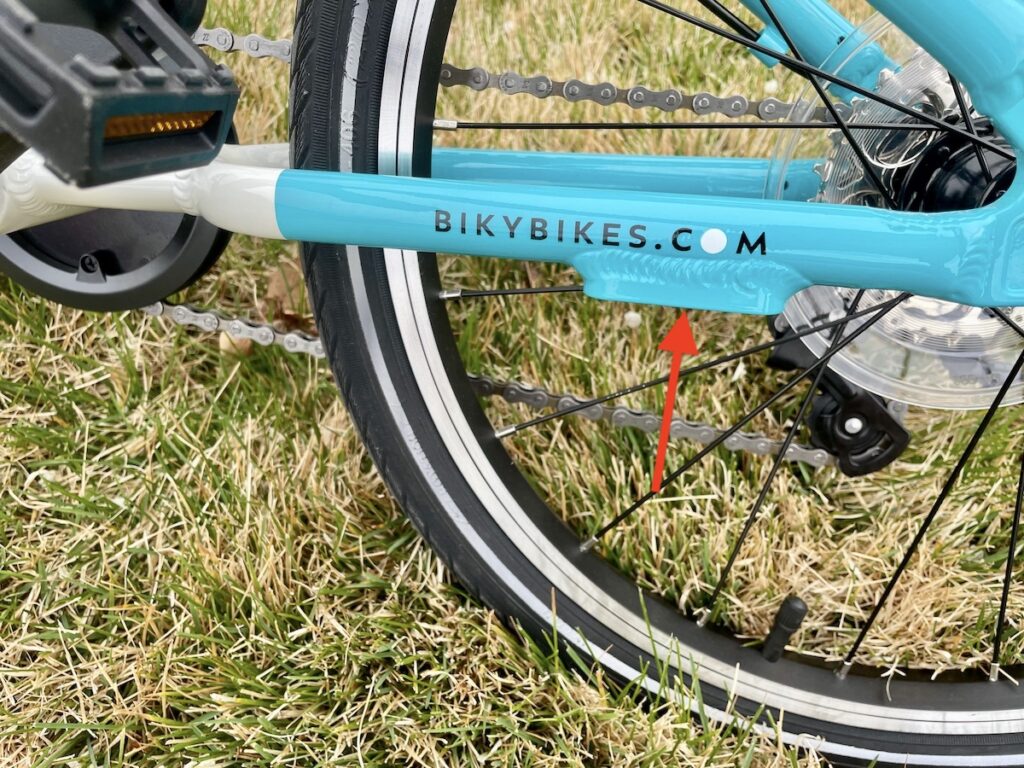
We highly recommend purchasing a kickstand for the S7 in particular. As mentioned above, young kids often drop their bikes when they stop, and if the S7 were to fall on its drive side, the derailleur could be damaged – a potentially costly fix. We also strongly recommend teaching young riders to always lay the bike down with the chain side facing up.
While the kickstand doesn’t appear to be currently available on their site, we are hopefully that it will be shortly.
Water Bottle Bosses (S7 Only)
The S7 has water bottle bosses located below the down tube. While not in the most ideal position (the bottle sits behind the front tire), having a water bottle mount on a 20″ bike is a great convenience for longer or hotter rides.
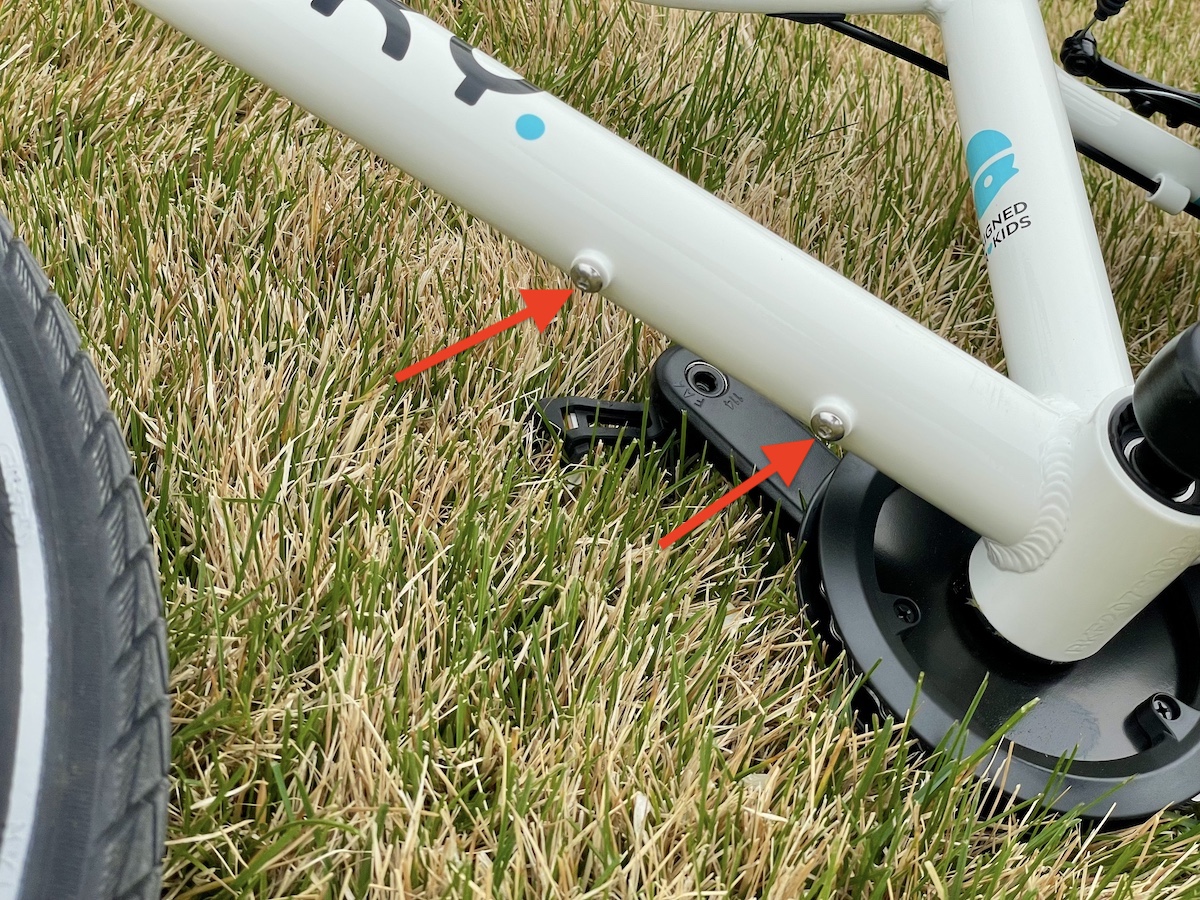
Due to the placement near the front tire, we highly recommend using a water bottle with a covered spout, such as the 15 oz. CamelBak Podium bottle, to keep the spout clear of dirt.
Biky Air 20 vs. Competitors
Single Speed: Biky vs. Guardian vs. Pello Reddi
Of the top single-speed 20″ bikes, the Biky Air 20 is the lightest and has the highest gain ratio, making it the fastest. The Guardian 20 Small is a solid choice for families on a smaller budget, while the Pello Reddi is better suited for more aggressive riders.
| Biky Air 20 | Guardian 20 Small | Pello Reddi | |
|---|---|---|---|
| MSRP | $500 | $299 | $469 |
| Seat Height | 23″ – 28″ | 21.5″ – 27.1″ | 21.75” – 26″ |
| Weight | 15.3 lb. | 20.3 lb. | 16.9 lb. |
| Gain Ratio | 4.5 | 3.96 | 4.11 |
For new or hesitant riders, the Biky 20’s lightweight, narrow build is the best option. The Guardian 20 is a solid choice for families on a smaller budget, while the Pello Reddi is better suited for more aggressive riders.
Geared: Biky vs. woom vs. Early Rider
The S7 sits in excellent company among the top geared 20″ bikes. Here’s how it stacks up against two other premium options:
| Biky Air 20 S7 | woom GO 4 | Early Rider Belter | |
| MSRP | $599 | $639 | $799 |
| Seat Height | 21.75″ – 28.5″ | 22.1″ – 28″ | 22.5″ – 27.5″ |
| Weight | 16.4 lb. | 17.2 lb.* | 17.75 lb. |
| Gain Ratio | 2.23 – 5.2 | 2.3 – 5.9 | 3.15 & 4.32 (auto) |
* woom GO 4 weight includes kickstand
Biky Air 20 S7 vs. woom GO 4:
The S7 and the woom GO 4 are very similar. They have the same shifter, similar gear range, and very close weights. The woom GO 4 has a marginally higher top gear (5.9 vs. 5.2), which may matter to flat-terrain speed demons, but for most riders the difference is negligible. Both are outstanding first geared bikes.
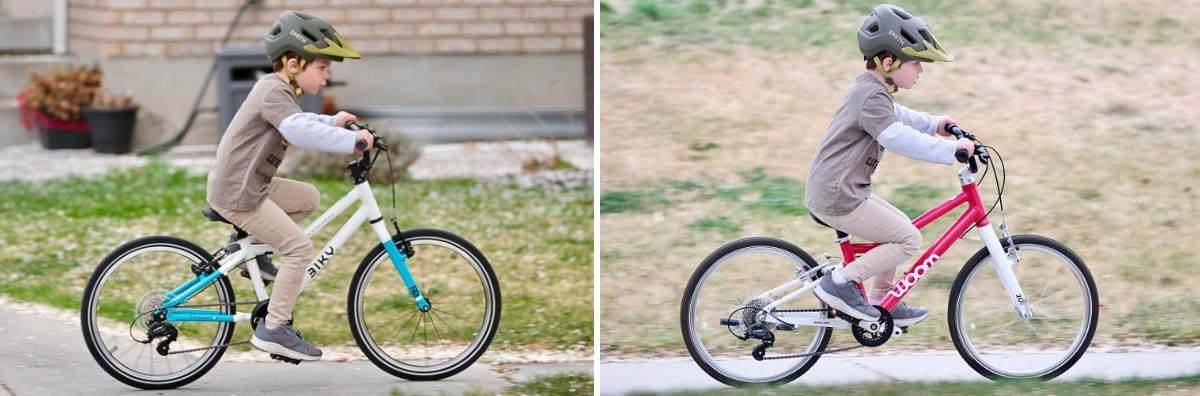
As noted previously, the woom GO 4 does have multi-use tires versus the smooth street tires on the Biky, so if you plan on doing any non-paved riding, the woom may be a better choice.
Biky Air 20 S7 vs. Early Rider Belter Auto 20
The Belter Auto 20 is a unique and exceptional bike with a carbon belt drive and a 2-speed automatic hub. With the Belter kids get the benefit of two gears without ever needing to think about when to shift, and with no derailleur to worry about.
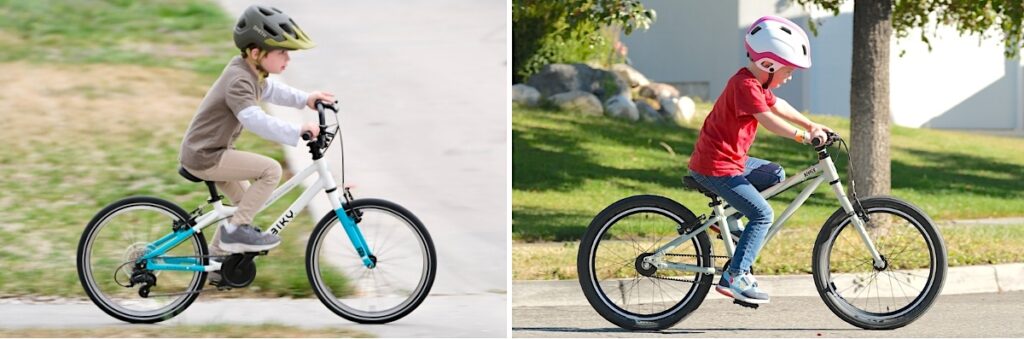
For families who want the simplicity of a single speed but the benefit of two gears, the Belter Auto is a wonderful bike. For families who want a full 7-speed range, more seat height coverage, and a better value, the S7 is the stronger choice.
Biky Air 20 Inch Bike Bottom Line
The Biky Air 20 lineup is exceptional. Whether you choose the single-speed or the geared S7, you’re getting one of the lightest, most thoughtfully designed 20″ kids’ bikes on the market.
Choose the Air 20 (single speed) if your child rides mostly flat neighborhood terrain and you want the ultimate in simplicity and lightweight fun. At 15.3 lb., it’s still one of the lightest 20″ bikes we’ve ever tested.
Choose the Air 20 S7 if your child is ready for gears, whether for hills, longer rides, or just because they’re excited to shift. At 16.4 lb., it’s barely a pound heavier than the single speed and competes directly with the best geared 20″ bikes available.
FTC Disclosure: Affiliate links are included in this review. No monetary compensation was provided for this review, however, the reviewed product was supplied by the manufacturer or distributor to help facilitate this review. All opinions and images are that of Two Wheeling Tots LLC. All content and images are copyrighted and should not be used or replicated in any way. View our Terms of Use.
