

base bikes Review: Australia’s Newest Kids Bikes

base bikes is a new brand working to make well-designed, kid-friendly bikes more accessible to families in Australia. Frustrated by the lack of lightweight bikes with modern geometry and handbrakes instead of coaster brakes—without sky-high price tags—the team behind base set out to create something better. Their goal was simple: build bikes that help kids ride with confidence while keeping things easy for parents.
Although we’re based in the U.S., we had the chance to test the 16” and 20” base bikes and were impressed by both their performance and quality. Having tested just about every kids’ bike from brands like woom, Prevelo, Pello, and Biky, we know what sets a great bike apart. Our testers put base bikes through their paces, and here’s what we found.

base bikes
MSRP: $595 AUD (16″), $695 AUD (20″)
BEST FOR: Adventerous city riders wanting a quality bike without breaking the bank
ADDITIONAL SPECIFICATIONS
BRAKES: Tekro Dual Hand Brake
TYRES: Kenda Small Block 8s
FRAME: Aluminum Alloy
Cons:
Our Experience Testing Base Bikes
A few months ago, Adam from base bikes reached out, asking if we’d test his new lineup. While these bikes likely won’t make it to the U.S. market, I was eager to check them out and share my thoughts.
Though I haven’t tested many Australian brands (besides ByK, Frog, Trek and Specialized), I’ve reviewed hundreds of kids’ bikes over the past 15 years and as a result, have become pretty picky about kids bikes. After testing both the 16” and 20” base bikes, I can confidently say they deliver impressive quality and ride experience.
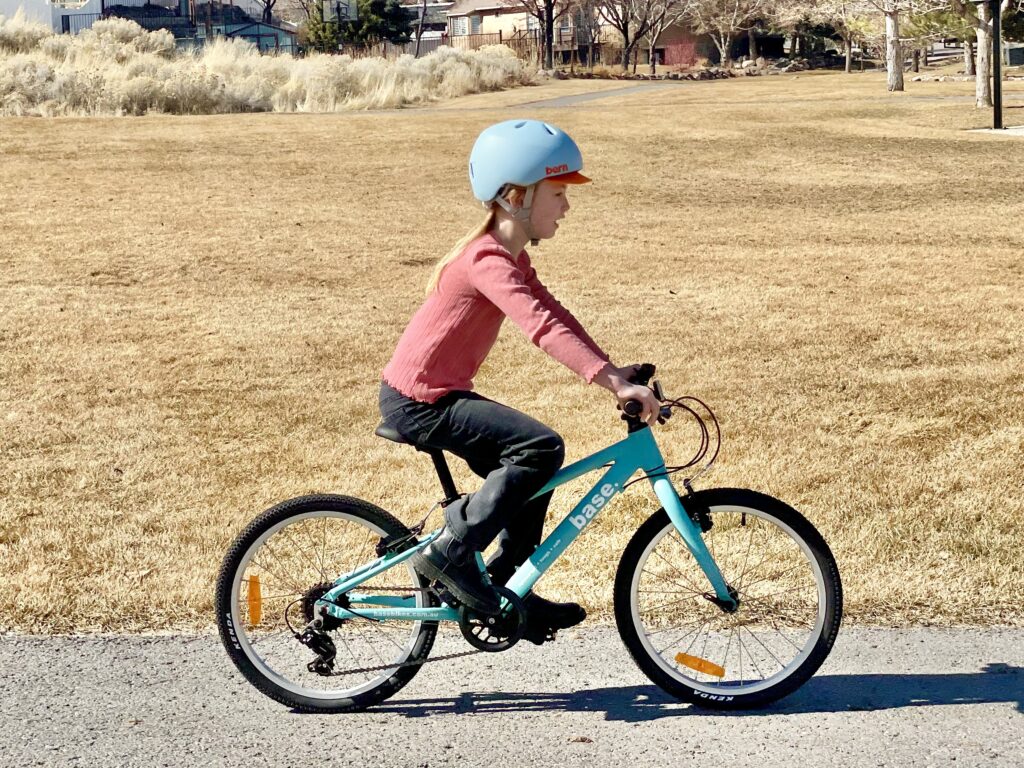
Build & Construction
A bike is made up of hundreds of components, but a few key features provide a solid indication of its overall quality and performance. The frame material and design, weight, drivetrain, brakes, and headset all play an important role in how a bike rides, how easy it is for kids to control, and how well it holds up over time.
base bikes has put thought into all of these elements, resulting in bikes that offer a smooth ride, solid durability, and an overall great experience for young riders.
Frame Design
Many cheap big-box store bikes are built with steel frames and short wheelbases, making them heavy, twitchy, and harder to balance. base bikes, on the other hand, use lightweight aluminum frames that not only reduce weight but also won’t rust over time. Their longer wheelbases improve stability, making the bike easier to balance and steer more smoothly.
When comparing the base 16” to a Mongoose 16″ bike, the difference in frame length is clear. In addition to a longer wheelbase, the cockpit—the space between the seat and handlebars—is more spacious, giving kids a comfortable and less cramped riding experience.

On bikes with small cockpits, kids’ knees often come uncomfortably close to the handlebars while pedaling. With our three-year-old tester, there was plenty of space between his knee and the headset, allowing for a natural and comfortable pedaling motion.

A longer cockpit also provides room for kids to lean forward as they gain confidence and ride more aggressively. Leaning into the handlebars helps kids shift their weight when turning at higher speeds, riding up ramps, or rolling down curbs.
Compared to well-established bike shop brands, base bikes hold their own when it comes to frame geometry. Considering how much time and investment brands like Giant and Specialized have put into refining their designs over the years, base bikes does a great job straight out of the gate.

When comparing the base 20” to the Giant Talon 20”, the differences in frame geometry are more subtle than with the 16” models. However, some of these variations come down to their intended use. The Giant Talon features a suspension fork that compresses while riding, causing the handlebars to sit higher when the fork is in a neutral position.
Weight
Weight is a critical factor in kids’ bikes, and base bikes manage to stay impressively light. A lighter bike is easier to control, especially for younger or smaller riders who might struggle with heavier frames. A bike that’s too heavy can make starting, stopping, and maneuvering more difficult, while a lightweight frame allows kids to ride longer and with more confidence.
base bikes strike a great balance between weight and durability, making them easy to handle while still being sturdy enough to withstand years of active riding. Their lightweight design stands out compared to other brands, providing young riders with a bike that is both easy to control and built to last.
| Bike | Weight (kg) |
|---|---|
| base 16 | 7 kg |
| Trek Precaliber 16 Coaster | 7.97 kg |
| Pedal Hoot 16 | 10 kg |
| base 20 | 8.5 kg |
| Trek Precaliber 20 | 10.71 kg |
| Pedal Hoot 20 | 12.7 kg |
Low Minimum Seat Height
The frame design of base bikes also allows for lower minimum seat heights compared to the average kids’ bike. A lower seat height helps kids sit lower on the frame, lowering the bike’s center of gravity. This makes the bike easier to balance, particularly at slow speeds, and helps kids get rolling more quickly after stopping. Since younger riders tend to stop and start frequently, a lower center of gravity makes a big difference in stability and confidence.
The base 16” has a seat height range of 45.7 cm to 55.2 cm, while the base 20” ranges from 55.8 cm to 64.7 cm (my measurements). For more specific information on how to choose the best size base bike for your child, be sure to check out their sizing guidelines.
Drivetrain
The gearing and components of a bike’s drivetrain can make a big difference in a child’s riding experience. To help young riders gain confidence, a bike needs to be fast enough to allow them to pick up speed in order to stay stable while riding, but not so fast that it becomes too difficult to pedal from a standstill.
To get a true sense of a bike’s gearing, we prefer to use gain ratio, as it accounts for the length of the crank arm in addition to the gears. Since crank arm lengths can vary significantly on kids’ bikes, factoring them in provides a more accurate comparison. A higher gain ratio results in a faster speed, while a lower gain ratio makes it easier to pedal, especially when climbing.
The gain ratio on the base 16 is 3.6, which is well-suited for young kids learning to ride. For comparison, the Byk 350 has a higher gain ratio of 4, making it harder to pedal from a standstill, while the Trek Precaliber 16 has an unusually low gain ratio of 2, at least according to the specs listed on their site. While the lower gain ratio on the Trek will make starting easier, it significantly limits top speed, requiring kids to pedal much faster to keep up.
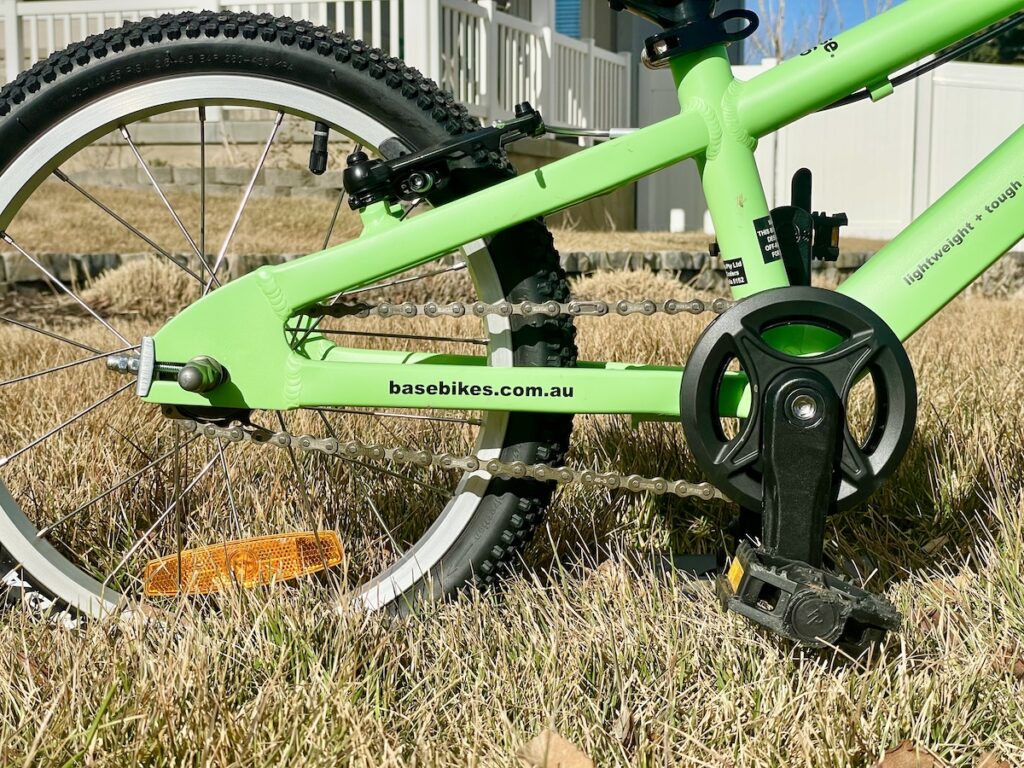
The base 20 is equipped with 7 speeds and has a gain ratio range of 2.5 to 5.1, offering a good balance for handling varied terrain. The Trek Precaliber 20, in comparison, has a more limited range of 2.3 to 4.5. The higher 5.1 gear on the base 20 allows kids to reach a faster speed when pedaling compared to the Trek.
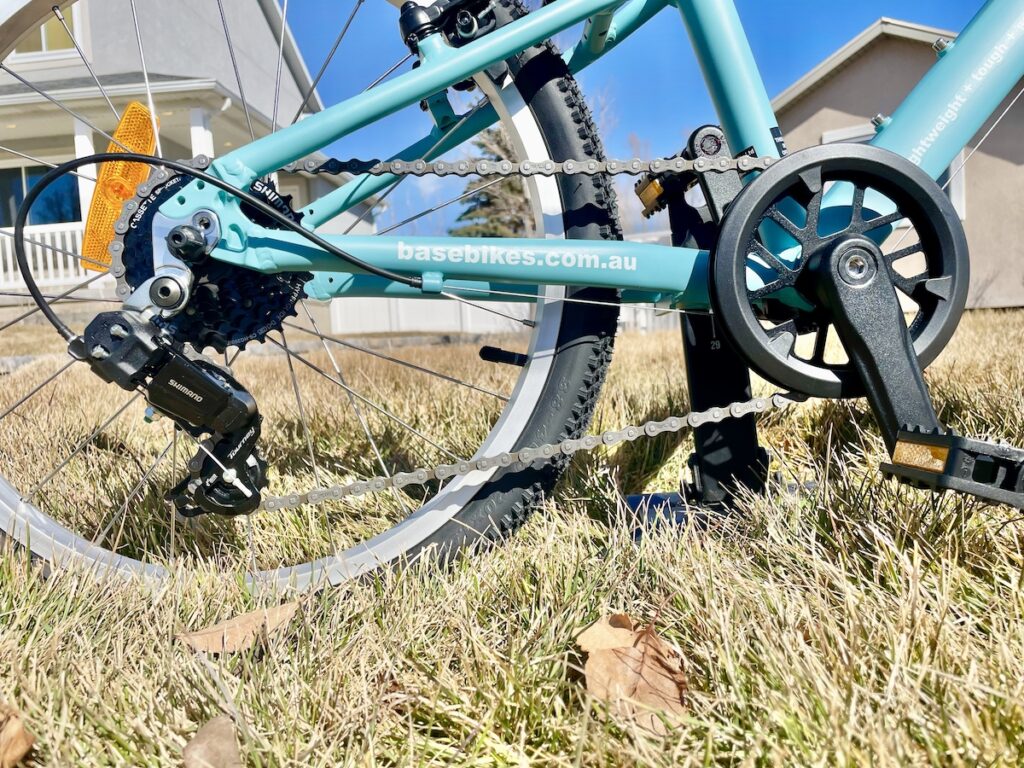
To provide an even lower gear for climbing, the next version of the base 20 will feature an improved gain ratio range of 2.2 to 5.1. However, on the current model, our 5-year-old tester had no trouble shifting gears or tackling hills at our local park.

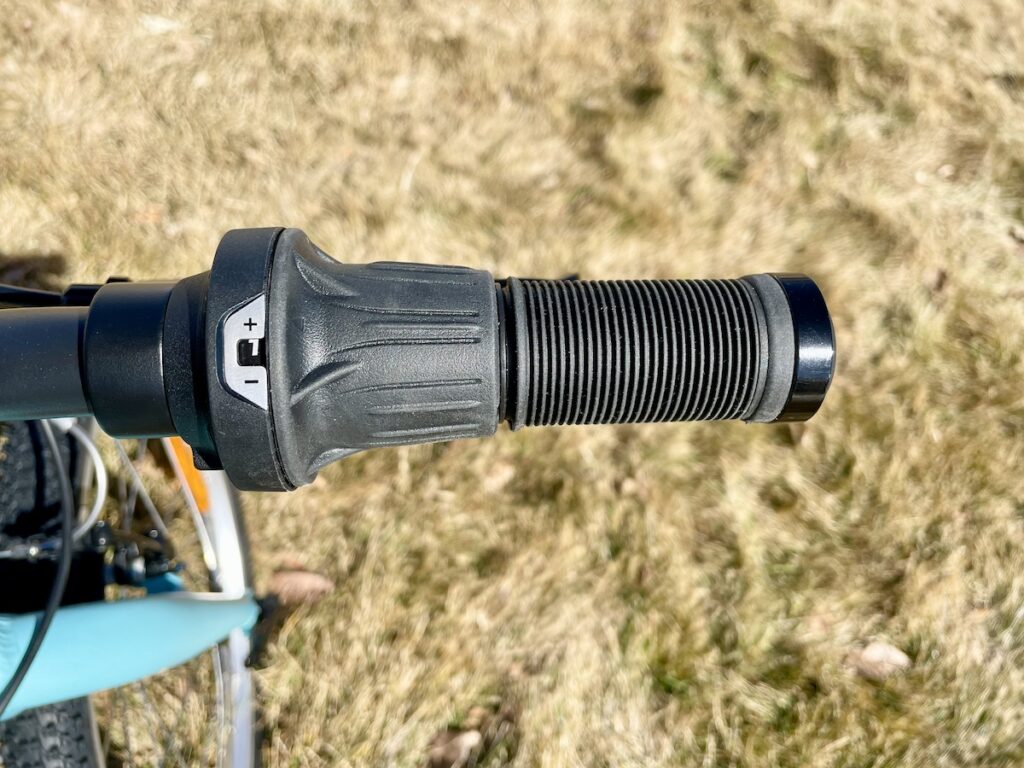
Since most kids’ first experience with gears is on a 20” bike, the base 20 is equipped with a Shimano grip shifter that includes a gear window to help them better understand shifting.
Brake Style
Both bikes are equipped with dual Tektro handbrakes with easy-to-reach brake levers designed specifically for small hands. Unlike standard single-pivot handbrakes found on most kids’ bikes, the brakes on the base use a “v-pull” design.
V-pull brakes are mounted in two positions, keeping the braking mechanism properly aligned and secure. In contrast, single-pivot brakes are only mounted in one location, making them more prone to being knocked out of place and less reliable over time.

Both the 16 and 20 also lack a coaster brake (or backpedal brake), which is a major advantage for young riders. Coaster brakes engage when kids pedal backward, but since many beginners naturally backpedal as they learn the motion, this can cause sudden, unexpected stops. This often leads to frustration and makes it harder for kids to develop a smooth, forward pedaling rhythm.
Without a coaster brake, kids can correct their pedaling motion naturally without losing momentum. This is especially beneficial for young riders moving up from balance bikes who don’t plan on using training wheels. Unlike kids who learned to pedal with training wheels, those transitioning directly from a balance bike don’t have the extra support to keep them from tipping over if a coaster brake suddenly stops them.
For families planning to use training wheels, the base 16 is compatible, as shown by the two bolts on the rear axle below, though training wheels are not included with the bike.

Headset
While it may not seem like a major component, the headset—the part that connects the bike’s fork and handlebars to the frame—is a good indicator of a bike’s overall quality. Most kids’ bikes have threadless headsets, which rely on a single bolt to keep everything securely in place. base bikes also use a threadless headset, providing a strong and stable connection that ensures smoother steering and better durability over time.

The bike includes spacers on the steer tube (red arrow above), which can be moved above the stem to lower the handlebars for smaller riders. As the rider grows, the spacers can be repositioned below the stem to gradually raise the handlebars, ensuring a more comfortable fit over time.
For additional fit adjustments, the saddle is mounted on rails, allowing it to be moved slightly forward or backward. While a small change, this adjustment can be beneficial for kids with longer or shorter torsos or arms, helping them find a more natural and comfortable riding position.
Tyres
Both models come equipped with Kenda Small Block 8 tyres, a premium option found on many high-end kids’ bikes. These tyres roll smoothly on pavement while providing good traction for light dirt trails, making the bikes versatile for a mix of riding surfaces.

base bikes Bottom Line
base bikes offer a great balance of quality, performance, and affordability, making them an excellent choice for Australian families looking to get their kids riding confidently without spending a fortune. In addition to being well-built for their price, they are lightweight, free of cumbersome coaster brakes, and equipped with high-quality handbrakes that are easy for kids to use.
FTC Disclosure: Affiliate links are included in this review. No monetary compensation was provided for this review, however, the reviewed product was supplied by the manufacturer or distributor to help facilitate this review. All opinions and images are that of Two Wheeling Tots LLC. All content and images are copyrighted and should not be used or replicated in any way. View our Terms of Use.
