

woom GO 2 Bike Review – An Amazing First Pedal Bike
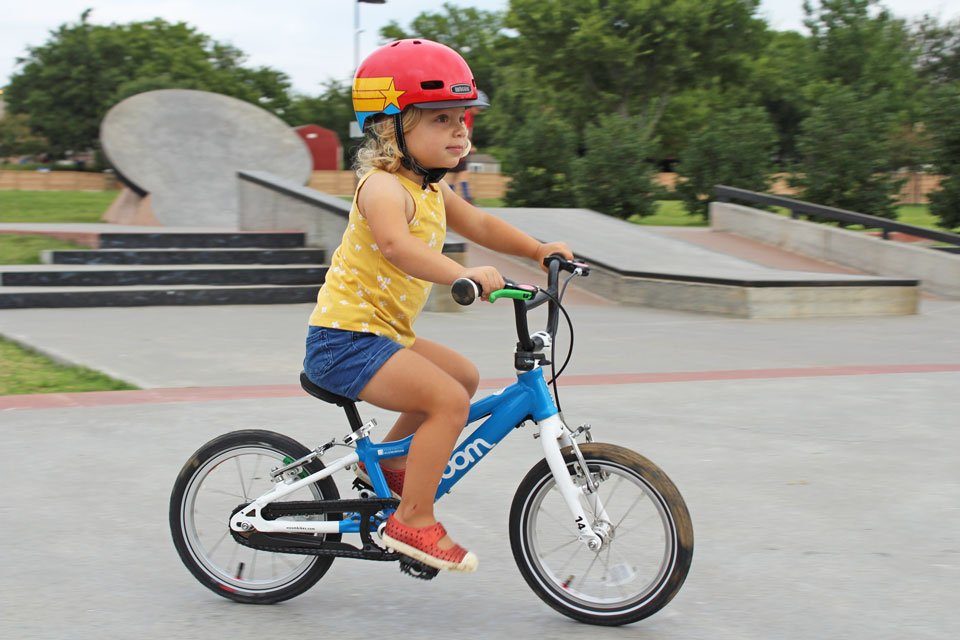
Easy to ride and confidence-building by design, the woom GO 2 is an ideal first pedal bike for kids graduating from a balance bike. Built to match the proportions and power of young preschoolers, this 14” bike makes the leap to pedals feel natural and intuitive—without the frustration.
Formerly known as the woom 2 ORIGINAL, the GO 2 maintains the same proven geometry and lightweight aluminum frame that’s made woom a go-to brand for beginner riders. As one of the lightest 14” bikes on the market, it helps kids start pedaling sooner and ride longer—whether that’s around the block or over ramps at the local pump track.
We tested the GO 2 (then the woom 2) with 2-, 3-, and 4-year-olds to compare it with other top brands. While the bikes pictured in this review show the earlier model, the updated GO 2 features only a few small differences: a new cushioned saddle, updated seatpost, and revised model labeling. The geometry, weight, and performance remain essentially unchanged.
woom GO 2
OUR SCORE: 93.5/100 – Exceptional
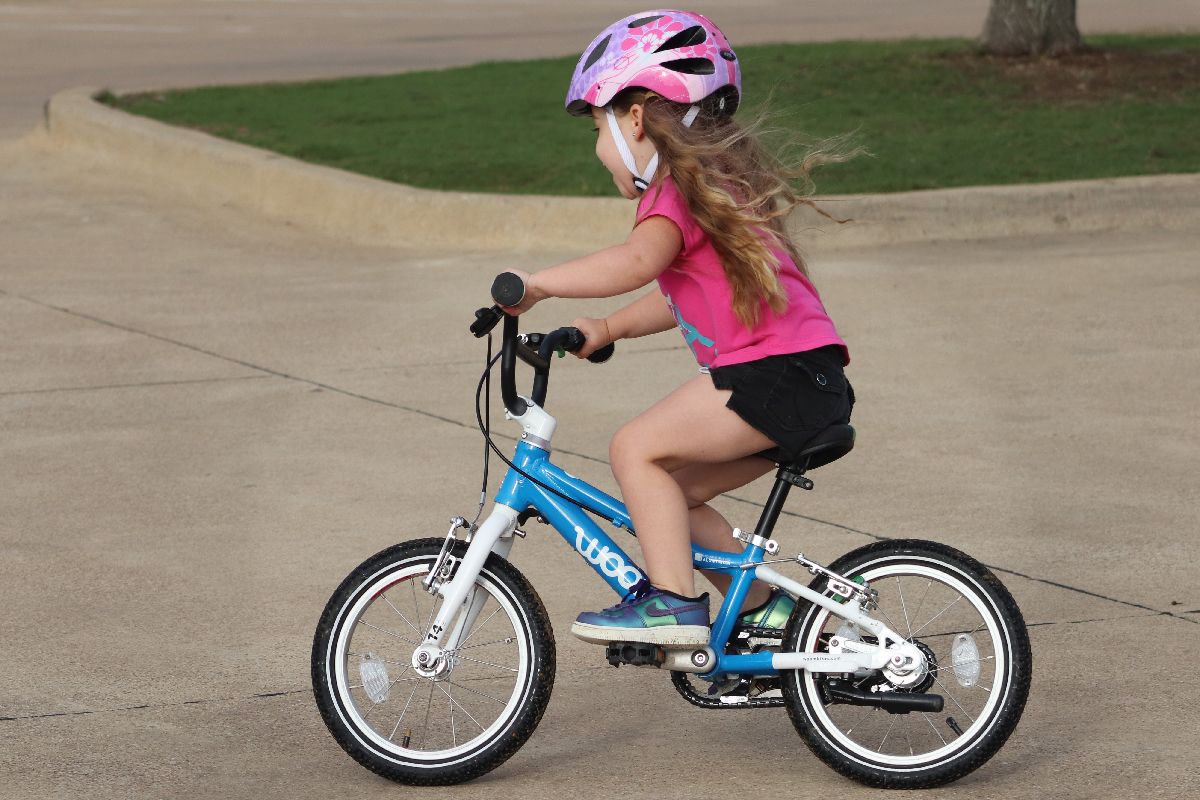
MSRP: $459 + $26 freewheel kit
BEST FOR: Any young rider advancing from a balance bike, and especially those who are hesitant or timid.
SEAT HEIGHT: 15.5″ – 19.2″
WEIGHT: 12.2 lb., Optional freewheel kit lowers weight to 11.3 lb.
ADDITIONAL SPECIFICATIONS
BRAKES: Dual hand brake with coaster brake (freewheel kit available)
GAIN RATIO: 3.8
TRAINING WHEELS: Not compatible
FRAME: Aluminum Alloy
Cons:
Our 14″ Bike Rubric Score
We score 14″ bikes on a 103-point scale across seven categories. Most are simple checkboxes; Weight and Useable Fit Range are scored proportionally against all bikes in our dataset. The woom GO 2 scored 93.5 thanks to its lightweight design (12.35 lbs), perfect assembly experience, and comprehensive warranty. This bike features woom’s innovative freewheel kit option, allowing parents to remove the coaster brake mechanism, and easily converts to a balance bike. See all 14″ bike scores.
How the woom GO 2 Scored
Score Breakdown ▼
Weight 18.9 / 20 ▼
How it’s scored: Weight score is calculated proportionally, with the lightest bike in the comparison set receiving 20 points and the heaviest receiving 0 points.
Bike Weight: 12.35 lbs
Frame Design 20 / 20 ▼
What we evaluate: Evaluates the bike’s structural foundation and geometry. Points are awarded for features that reduce weight, lower the center of gravity, improve stability, and make the bike easier for young riders to mount and control.
- ✅ Aluminum Frame (4 pts)
- ✅ Low Bottom Bracket (3 pts)
- ✅ Low Min Seat Height < 17" (3 pts)
- ✅ Confidence Building Geometry (3 pts)
- ✅ Low Step-Through Frame (3 pts)
- ✅ 14″ Wheels vs 12″ Wheels (2 pts)
- ✅ Threaded Bottom Bracket (2 pts)
Components 19 / 20 ▼
What we evaluate: Assesses the quality and appropriateness of parts that directly affect ride quality and durability. Gain ratio (3.5–4.0) and crank arm length (81-90mm = 4pts, 75-80mm = 3pts, 70-74mm = 2pts) are scored based on optimal ranges for 14″ bikes.
- ✅ Crank Arm Length 80mm (3 pts)
- ✅ Narrow Q-factor (3 pts)
- ✅ Gain Ratio 3.5-4.0 (2 pts)
- ✅ Quality Seat Post Quick Release (2 pts)
- ✅ Adjustable Handlebar (2 pts)
- ✅ Sealed/Cartridge Bottom Bracket (2 pts)
- ✅ Rattle-free Chain Guard (1 pt)
- ✅ Kickstand Included (1 pt)
- ✅ Grips with Protective Bumper End (1 pt)
- ❌ Schrader-Compatible Rim (1 pt)
- ✅ Comfortable Padded Saddle (1 pt)
Brakes 18 / 20 ▼
What we evaluate: Focuses on stopping power and safety. Prioritizes hand brakes over coaster brakes, rewards features that make brakes easier for small hands to operate, and values brake system redundancy.
- ✅ No Coaster Brake OR Removable Option (4 pts)
- ✅ Short Reach Brake Levers (4 pts)
- ✅ V-Brakes (4 pts)
- ✅ Easy Pull Levers (3 pts)
- ❌ Alloy Brake Levers (2 pts)
- ✅ Brake Duplicity (2 pts)
- ✅ Tool-Free Adjustable Reach Levers (1 pt)
Useable Fit Range 5.6 / 10 ▼
How it’s scored: Bikes with wider useable seat height ranges score higher on a proportional scale, where the widest range scores 10 points and the narrowest scores 0 points. Useable range is calculated as the lesser of (handlebar height – 2.5″) or max seat height, minus minimum seat height.
Useable Range: 4.0″
Ease of Assembly 6 / 6 ▼
What we evaluate: Measures how parent-friendly the out-of-box setup is. Points are given for clear instructions, minimal assembly requirements, and pre-tuned brakes.
- ✅ Clear Written Instructions (2 pts)
- ✅ Video Instructions (1 pts)
- ✅ Easy Assembly (1 pt)
- ✅ Pre-tuned Brakes (2 pt)
Customer Service 4 / 4 ▼
What we evaluate: Evaluates the manufacturer’s post-purchase support. Bikes earn points for responsive customer service, frame warranties, and component coverage.
- ✅ Customer Service with Real Person (2 pts)
- ✅ Frame Warranty (1 pt)
- ✅ Partial Component Warranty (1 pt)
Extra Credit +2 ▼
What earns extra credit: Bonus points for innovative features that enhance versatility or usability beyond standard expectations.
- ✅ Easily Converts to Balance Bike (+1 pt)
- ❌ Tool-Free Training Wheel Compatibility (+1 pt)
- ✅ Color Coded Levers/Cables (+1 pt)
- ❌ Rear Placed Kickstand (+1 pt)
woom GO 2 Bike Review – Results of our Test Rides
Since launching in 2013, woom has helped revolutionize the kids’ bike market. Challenging the long-held industry norm that children’s bikes are just shrunken-down adult models, woom has instead focused on building bikes that are thoughtfully engineered to work with a child’s body—rather than against it.
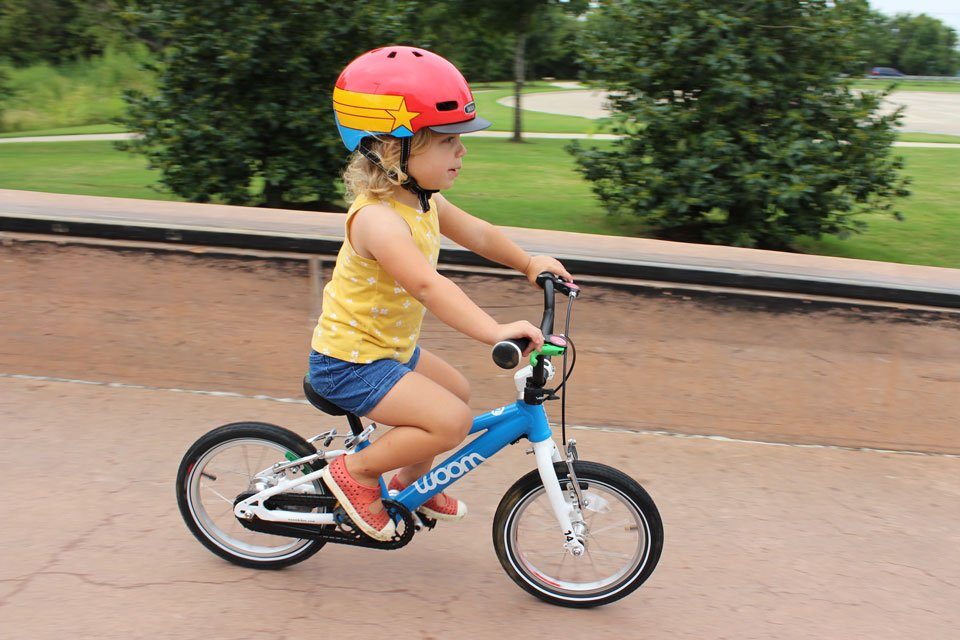
After testing hundreds of kids’ bikes over the years (and the woom 2 since 2015), we’ve found that few are as carefully dialed in for first-time riders as the woom GO 2. Unlike many brands that cut corners to hit a price point, woom consistently prioritizes performance, safety, and rider experience—even in the smallest details most competitors overlook.
Every element of the GO 2—from its ultra-lightweight frame and upright handlebars to its low center of gravity and smooth-rolling tires—has been fine-tuned to deliver a calm, confidence-boosting ride. The upright riding position keeps kids stable and in control, while the intuitive handling makes balancing feel far less intimidating.
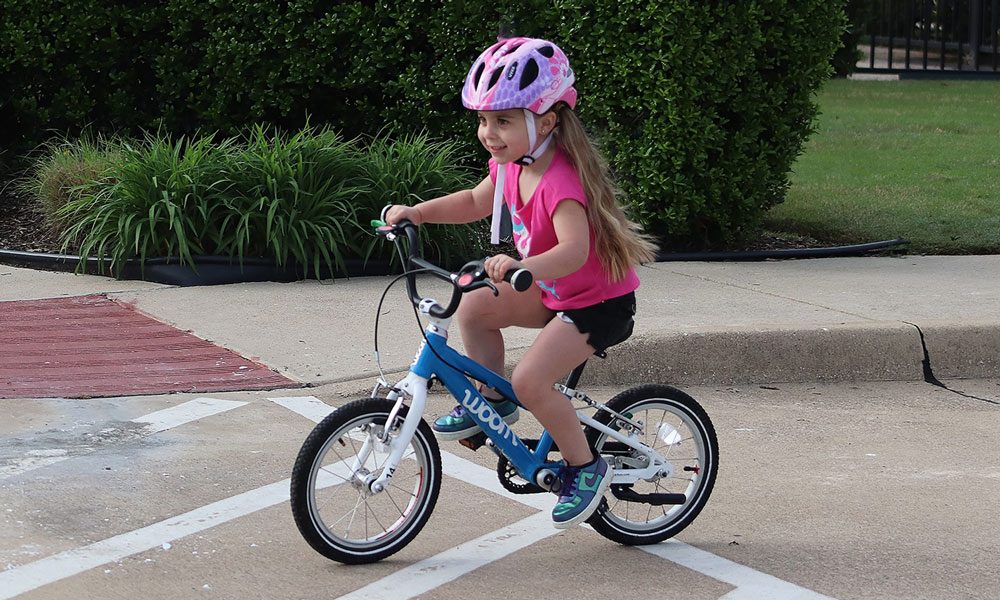
We’ve seen it time and time again: kids who struggled to ride on heavy, poorly designed bikes hop on a woom and learn to pedal almost instantly. For many families, the GO 2 becomes a true breakthrough—transforming early biking frustration into joyful, independent riding.
In this review, we’ll cover everything you need to know about the woom GO 2, including fit, features, and performance. But first, let’s start with some of the most frequently asked questions about this popular first pedal bike.
Who is the woom GO 2 Best For?
- Balance bike graduates who can confidently run, glide, brake, and navigate turns at speed without assistance.
- Timid first-time pedalers who need a bike that builds confidence with an easy learning curve.
- Kids who don’t need training wheels—the GO 2 isn’t compatible with them
- Riders with inseams between 16″ and 19″. If your child has an inseam over 19″, the larger 16” woom GO 3 is likely a better fit.
- Kickstand fans—the GO 2 is one of the few high-end kids’ bikes that comes stock with a built-in kickstand. It’s thoughtfully designed to stay out of the way while pedaling and even pops up automatically if forgotten.
What You Should Know About the woom GO 2
- The woom GO 2 includes a coaster brake to meet CPSC safety requirements. For kids ready to level up to hand brakes only, a freewheel kit is available. While the swap isn’t overly technical, it can be a bit finicky.
- For aggressive young riders who love pump tracks, jumps, and a more forward-leaning stance, the GO 2 may feel too upright. Bikes like the Prevelo Alpha One or Early Rider Belter 14” offer more performance-focused geometry better suited for high-energy riders.
What Size Rider Fits on the woom GO 2?
With a seat height range of 15.5″ to 19.2″, the woom GO 2 is designed for kids approximately 37″ to 43″ tall. As a first pedal bike, fit is especially important—your child should be able to place both feet flat on the ground while seated. This allows them to stop the bike with their feet (just like on a balance bike) and makes learning to start pedaling much easier.
To ensure a safe and confident fit, we recommend the GO 2 for kids with an inseam between 16″ and 19″. Once your child’s inseam hits 19”, they’re tall enough to fit on the woom GO 3, which has a minimum seat height of 18.75”. If your child is moving up from the woom GO 1 Plus (14” balance bike), they’re likely ready for the larger 16” GO 3.
As shown below, our 3-year-old tester (left) with a 16.5” inseam still has room to grow on the GO 2, while our 4-year-old tester (right), with a 19” inseam, has already maxed out the seat height.

While the fit range on the woom GO 2 is relatively small, this is true of all bikes in the 12” to 14” category. At this age, kids grow quickly, and it’s common for them to only fit a 12” or 14” bike for about a year before sizing up.
If you’re unsure which size woom your child needs, consult our Kids Bike Sizes guide to help you measure your child to ensure a perfect fit!
Woom GO 2 – Major Highlights
Lightweight Construction
Young riders who fit on 14” pedal bikes don’t weigh much themselves—so it’s crucial that their bikes don’t either. For kids just learning to pedal and maneuver at higher speeds, a lighter bike makes everything easier, from starting and stopping to turning and staying in control.
Built with a high-quality 6061 aluminum frame, the woom GO 2 weighs just 12.2 pounds, or 11.9 pounds with the optional freewheel kit installed. It’s so light that even our 2-year-old tester could carry it up the stairs at the skatepark!
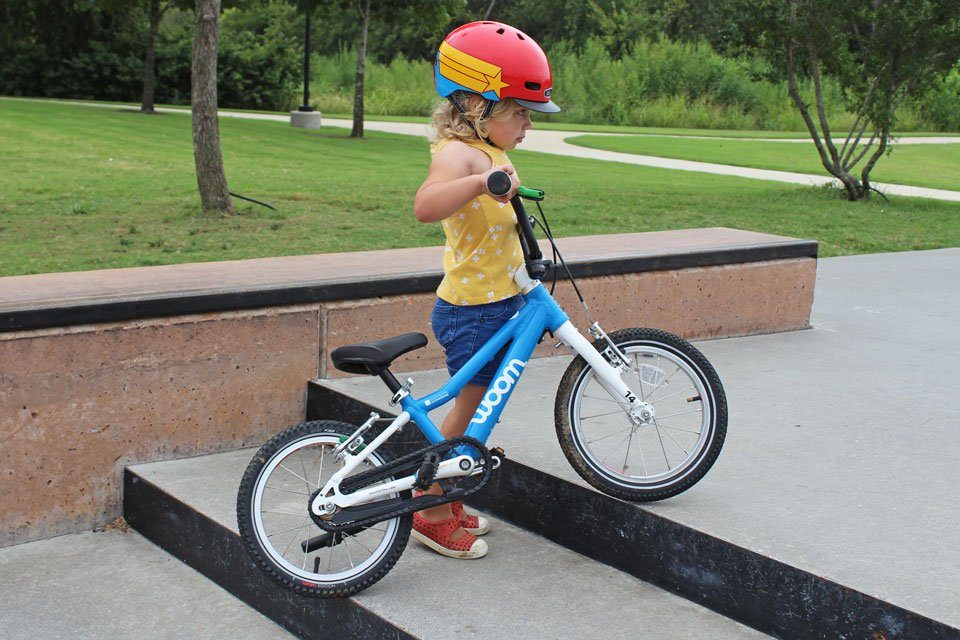
The only 14” bike we’ve tested that’s lighter is the Biky Air 14, which comes in at 10.9 pounds. The lighter weight, however, is likely due to its lack of kickstand.
Comfortable, Upright Body Position
A child’s body position plays a big role in how comfortable—and confident—they feel on a bike. During early research and development, woom found that young children naturally center their weight over the seat and prefer an upright, balanced posture—much like how they stand or walk. This upright stance is especially important for more timid first-time pedalers, as it helps riding feel familiar and less overwhelming.
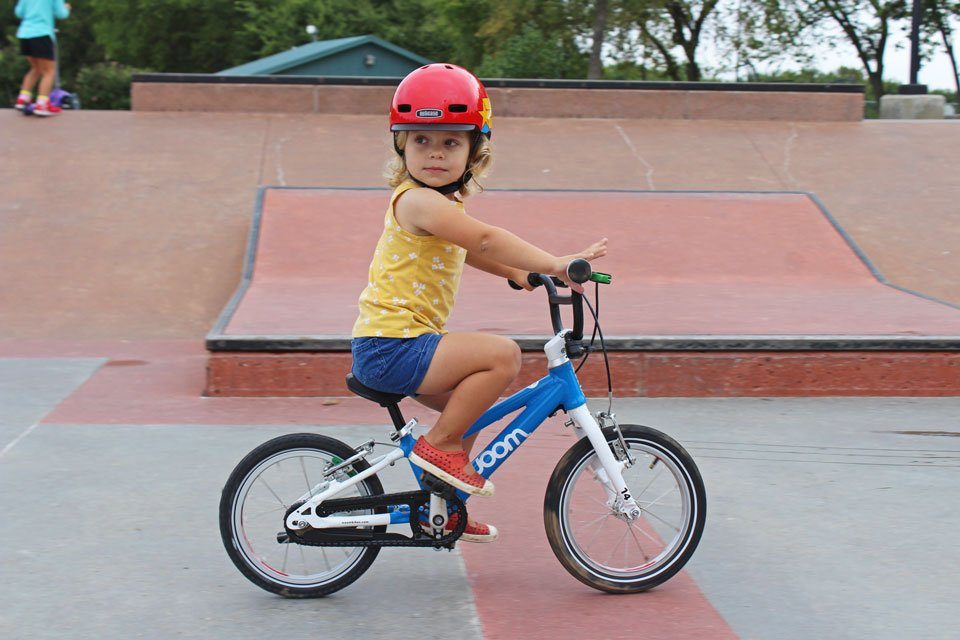
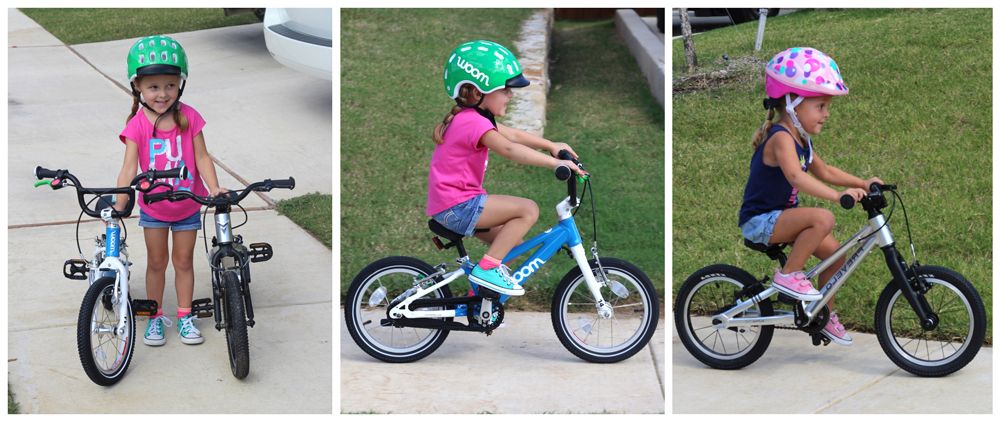
The woom GO 2’s high-rise handlebars and relaxed geometry are specifically designed to support this upright position, making it easier for kids to balance and look ahead without straining. In contrast, bikes like the Prevelo Alpha One are built for more aggressive riders who are ready to lean into corners and accelerate into climbs.
As shown below, our young tester on the blue woom 2 sits noticeably taller and more upright than our tester on the silver Prevelo Alpha One, which encourages a more forward-leaning stance.
Extended Wheelbase
While an upright riding position improves comfort and visibility, it also raises a child’s center of gravity—something that can make balancing a bit more challenging. To counteract this, the woom GO 2 features a longer wheelbase, which stretches out the bike’s footprint. This reduces twitchiness and helps create a more stable, confidence-inspiring ride.
As seen in the comparison below, many budget kids’ bikes have a shorter wheelbase, which, when combined with an upright seating position, often feels cramped and unstable. The GO 2’s longer frame design not only improves balance, but also provides extra room between the handlebars and the rider’s knees, making it easier to steer without bumping into the bars during tight turns.

Compared to the Biky Air 14”, however, the GO 2’s wheelbase is actually a bit shorter. This gives the Biky Air a bit more room for growth and a roomier feel overall. However, for more cautious or beginner riders, the GO 2’s slightly shorter wheelbase may be easier to manage. For very timid pedalers, the Biky’s longer frame can feel harder to control when starting out.

Narrow Q-Factor
The GO 2 features a narrow q-factor—the distance between the pedals—so kids can pedal with their legs aligned under their hips rather than splayed outward. This more natural pedaling motion not only improves balance and efficiency, but also reduces fatigue. While other high-end brands have followed suit, woom was one of the first to prioritize narrow q-factors in small bikes.

Slim, Ergonomic Grips for Small Hands
woom is known for sweating the small stuff—especially when it comes to features that directly affect comfort and control. One of those key touchpoints? The grips. On the woom GO 2, the grips measure just 19mm in diameter, making them significantly easier for small hands to grip securely and confidently.
As shown in the comparison image below, the woom grips are noticeably slimmer and more ergonomic than those found on bikes like the Retrospec Koda, allowing for a more natural hand position and better control while steering.
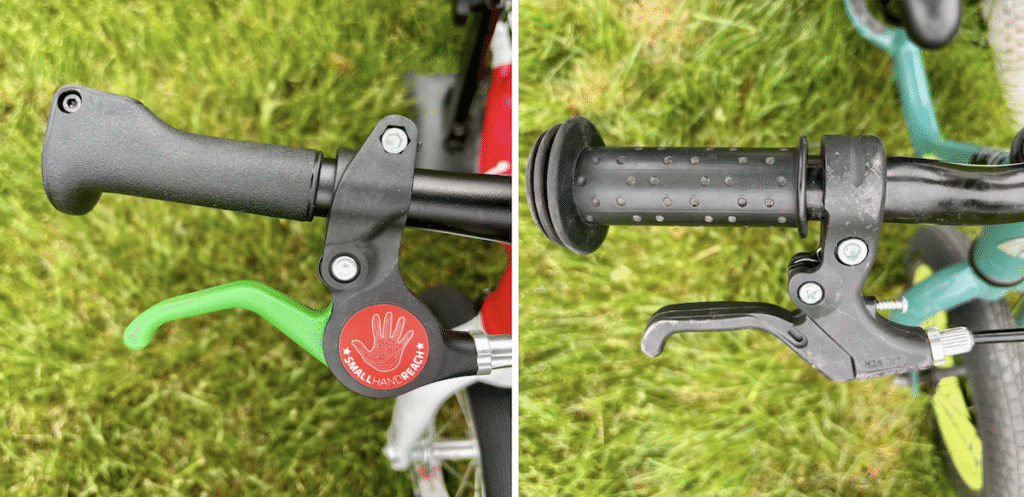
Each grip includes a subtle palm platform for added comfort during longer rides, helping to reduce hand fatigue. And at the ends, a thick, soft bumper extends beyond the edge of the handlebar, providing a bit of extra protection if the bike tips or brushes up against something.
Thoughtful Hand Braking System for New Riders
One standout feature on the woom GO 2 is its dual, easy-reach, color-coded hand brakes—a game changer for first-time pedalers transitioning from balance bikes.
While dual hand brakes provide the best stopping power, they can be intimidating for beginners—especially if a child grabs only the front brake, which at higher speeds can cause the bike to tip forward or even “endo” (when the rear wheel lifts off the ground). To promote safer habits, woom color-codes the right-hand brake lever (which controls the rear brake) bright green, encouraging kids to use that one first.

This color-coding isn’t just clever—it’s developmentally spot-on. Many kids this age haven’t fully mastered left from right, but they usually know their colors. So instead of fumbling to remember which hand to use, they simply reach for the green lever—making braking quicker, easier, and far safer. The last thing you want is a new rider hesitating to brake because they’re trying to figure out which hand is which.
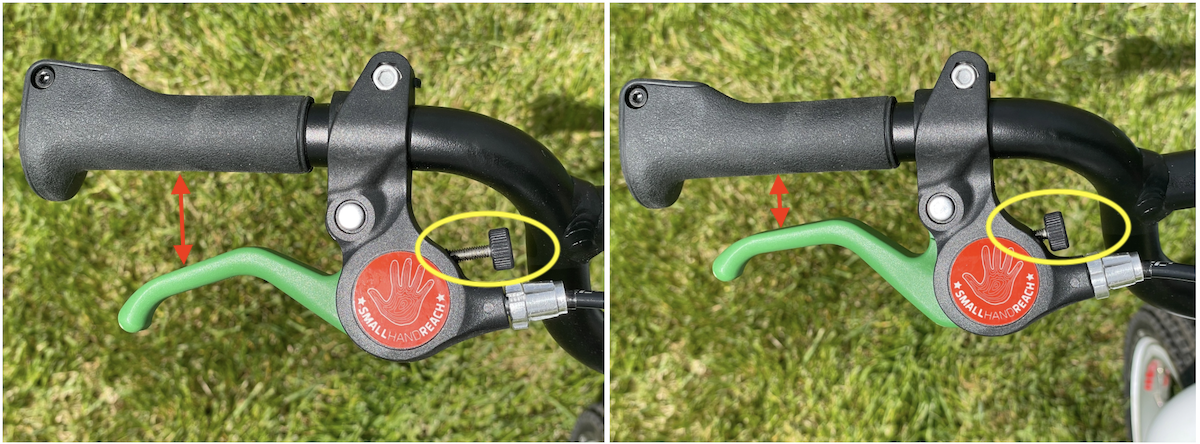
Beyond the color cue, the brake levers are perfectly sized for small hands, easy to squeeze, and tool-free adjustable (as shown below), so they can be brought closer to the grip for the smallest riders. It’s just one more example of how woom pays attention to the little things that make a big difference.
Coaster Brake Included, but Can Be Removed with Freewheel Kit
As required by the CPSC, the woom GO 2 comes equipped with a coaster brake (a backpedal brake). While it meets legal standards, we’re not big fans of coaster brakes—especially for kids learning to ride.
Why? Because when children (and even adults) are learning to pedal, it’s completely natural to accidentally pedal backward. On a bike with a coaster brake, that simple backward motion instantly activates the brake—bringing the bike to an abrupt stop. Not only does this kill all momentum, but it can also cause surprise falls when kids aren’t expecting to stop.
Thankfully, woom gets it—and they offer a Freewheel Kit that removes the coaster brake entirely. Instead of just swapping a part, the kit includes a whole new rear wheel with a freewheeling hub, allowing kids to backpedal freely without braking.
That said, installing the Freewheel Kit does require a bit of mechanical effort. You’ll need an Allen wrench set and tire levers, and should be comfortable:
- Removing the chain guard
- Detaching the coaster brake arm from the frame (the trickiest part)
- Transferring the tire and tube to the new wheel
It’s not overly technical, but it’s not tool-free either. If you’re not comfortable doing it yourself, a local bike shop can usually install it quickly for a small fee.

Gearing and Gain Ratio
On a single-speed bike, you only get one shot to get the gearing right—especially for young riders who are also learning how to pedal. Finding the right balance is crucial:
- If the gearing is too low, the bike accelerates slowly, making it harder for kids to gain enough speed to stay balanced. Once they do, they’ll have to pedal rapidly just to maintain that momentum.
- If the gearing is too high, kids may struggle to get the first few pedal strokes going, making it hard to get moving in the first place.
To strike a balance between easy starts and efficient cruising, woom chose a gain ratio of 4.0 for the GO 2. This is slightly higher than the Biky Air 14 (3.6) and the Prevelo Alpha One (3.7). While these differences may seem small, they’re enough to give the woom GO 2 a bit more speed off the line and a slightly higher top speed—both helpful for confident pedaling once a child finds their rhythm.
For most kids just starting out, this gearing hits a sweet spot: easy enough to get going, but quick enough to feel exciting once they’re moving.
Kid-Friendly Saddle Design
The woom GO 2 features an updated saddle designed specifically for smaller riders. It’s narrower and more compact than the previous version, with just the right amount of cushioning to keep young riders comfortable—whether they’re cruising the neighborhood or riding a little farther.
As shown in the image below, the same saddle used on the woom GO 3 is also found on the GO 2, and it’s significantly smaller than a standard kids’ bike saddle. The slimmer profile helps prevent chafing and gives kids better control while riding.

In the past, some of our testers found the original woom saddle too bulky or stiff, but this updated version has earned nothing but positive feedback, even from our pickiest riders. To make fit adjustments easier, the seat post now includes visual size markings (shown in the next section), helping parents fine-tune the saddle height with confidence.
Easy Fit Adjustments with Seat Post and Stem Markings
To help fine-tune the fit as your child grows, the woom GO 2 includes clearly marked sizing guides on both the seat post and stem. These A, B, and C markings make it easy to match the height of the saddle to the correct handlebar position. For example, if your rider’s seat height is in section “A” on the saddle, adjusting the handlebars to “A” helps maintain proper posture and control.

An added touch: the inside of the seat tube includes a plastic liner, which keeps the frame from getting scratched as you adjust the seat height—something we really appreciate after years of scuffed-up bikes.
Built-In Steering Limiter
The woom GO 2 includes a removable turning limiter, which subtly reduces how far the handlebars can rotate. This feature is especially helpful for new riders learning how to steer, as it prevents sharp, accidental oversteering that can lead to sudden falls.
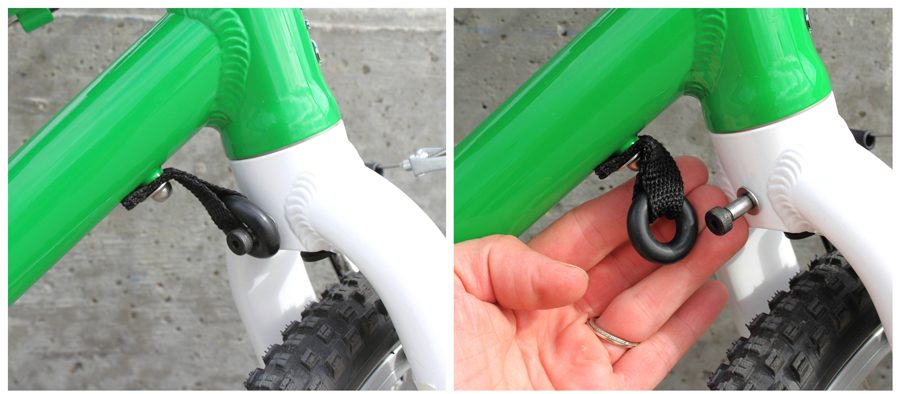
It also protects the brake cables from being pulled or twisted if the bars are spun all the way around—a common issue when a young rider picks up the bike after a crash and unknowingly spins the handlebars too far. While the limiter can be removed later on, we’ve found it’s best left in place—it doesn’t interfere with learning to ride and adds an extra layer of safety.
Enclosed Chain Guard
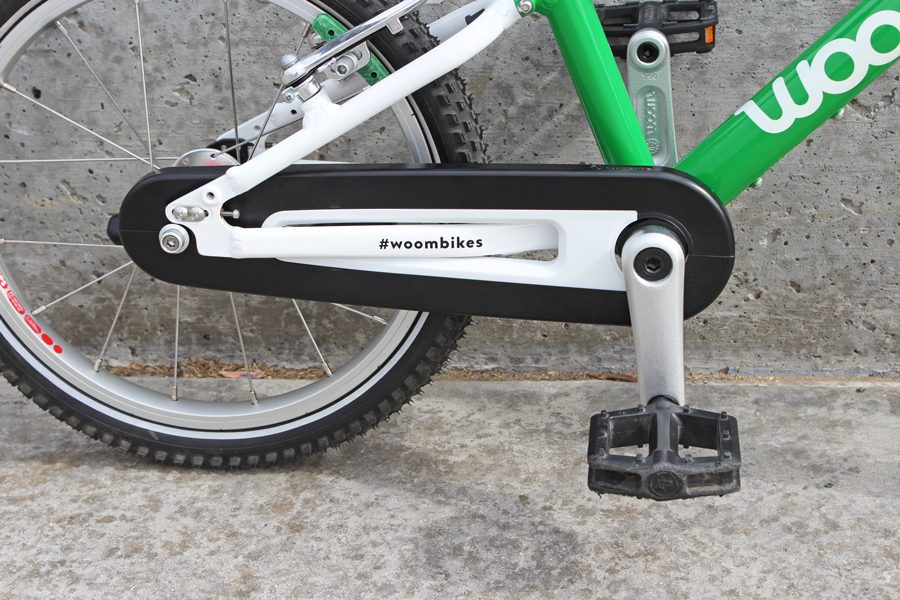
The woom GO 2 features a fully enclosed chain guard that protects the chain, chainring, and rear cog—offering both safety and low-maintenance benefits.
Like most chain guards, it helps prevent pants or shoelaces from getting caught in the drivetrain and keeps kids’ clothes cleaner by shielding them from grease. But the fully enclosed design goes a step further: it also protects the chain from dirt, dust, and debris, which helps reduce maintenance and extend the life of the drivetrain.
Tires – Excel on Paved and Packed Dirt
The woom GO 2 rolls on lightweight “SOOPA DOOPA HOOPS” alloy rims, connected with stainless steel spokes and paired with industrial bearing hubs for smooth, consistent performance. It’s fitted with Schwalbe Little Joe tires, which feature a lightly knobby tread—offering more grip than the smoother, street-oriented tires found on bikes like the Guardian 14” and Biky Air 14.

This all-terrain tread makes the GO 2 well-suited for both paved roads and packed dirt trails, giving kids the flexibility to ride with confidence on a variety of surfaces.
Thoughtfully Designed Kickstand
Unlike traditional kids’ bike kickstands that often interfere with the pedals, the GO 2’s rear-mounted kickstand stays completely out of the way. If your child forgets to flip it up, the pedals still rotate freely—and even better, the kickstand automatically springs up if it drags while riding.

It’s one of those smart little features that makes a big difference in real-world use—and helps keep frustration (and tripped-up pedals) to a minimum.
Compatible with the POP Basket
For kids who love to bring along treasures, snacks, or stuffed animal friends, the woom GO 2 is fully compatible with the woom POP basket. It mounts securely to the handlebars without interfering with the brake cables, and stays stable and rattle-free while riding.

When the ride ends, the basket pops off with a quick pull, making it easy for kids to carry their favorite finds with them off the bike too—whether it’s a plushy sidekick or a rock from the park.
The Upcycling Program
Another rare, and impressive feature of woom bikes is their Upcycling Program. By purchasing a one-time $59 membership fee, you’ll be entitled to trade in your outgrown woom for a credit of 40% off your original purchase towards the purchase of a new woom bike.
The program has no limits to the number of bikes you can trade in, but the bikes need to be in “good” condition upon return.
woom GO 2 Comparison
woom GO 2: With its upright body positioning, higher handlebars, and green brake lever for a natural riding environment and maximum comfort, the woom GO 2 is the perfect first pedal bike for most kids. It’s especially ideal for timid to average neighborhood riders who will quickly gain confidence with a bike that’s exceptionally light and easy to maneuver.
Prevelo Alpha One: Slightly heavier and with much lower handlebars than the woom 2, the Alpha One is a great fit for adventurous and aggressive riders that want to lean in to tackle hills, trails, and tricks. It’s also the smallest bike of the bunch, so if your child needs a pedal bike before they can fit on the woom 2, the Prevelo is a worthy option.
Biky Air 14: The Biky 14 shares a similarly upright riding position to the woom GO 2 and comes standard without a coaster brake, so there’s no need to purchase a separate freewheel kit. However, it’s worth noting that the Biky only includes a single rear hand brake and doesn’t come with a kickstand—both of which are included on the woom.
| woom GO 2 | Prevelo Alpha One | Biky Air 14 | |
| Price | $459 | $489 | $400 |
| Wheel Size | 14″ | 14″ | 14″ |
| Seat Height | 16″ – 19.1″ | 14.8″ – 19.3″ | 15.5” – 18″ |
| Weight | 12.2 lb. | 13.3 lb. | 11.5 lb. |
| Brakes | Dual hand, coaster | Dual hand, coaster | Single Hand, No Coaster |
| Freewheel Kit | Yes | Yes | n/a |
| Gain Ratio | 4 | 3.7 | 3.6 |
woom GO 2 Bike Bottom Line
With every detail thoughtfully refined, woom continues to set the gold standard in kids’ bikes. In a category often filled with clunky, awkward-to-ride models, the woom GO 2 stands out—delivering a smooth, confidence-inspiring ride that makes the leap from balance bike to pedals feel natural.
Consistently well-loved by our testers, the GO 2 remains a top pick for young riders ready to pedal independently for the first time.
That said, if you’re looking for a more aggressive setup with a sportier feel, the Prevelo Alpha One may be a better fit. And if you want a 14” bike with more room to grow, the Biky Air 14 offers an extended fit range that may better suit taller or longer-legged riders.
woom 2 Video Review (Older model)
This video highlights the woom 2 in action (older model) and showcases key features that make it a standout first pedal bike. It also includes a size comparison between the woom 2 (14”) and the woom 3 (16”), helping you determine which bike is the best fit for your child.
Please note: the bikes shown are the previous version of the woom 2 and woom 3, so some smaller components—like the saddle, grips, and chain guard—have since been updated in the current woom GO 2 model.
FTC Disclosure: Affiliate links are included in this review. No monetary compensation was provided for this review, however, the reviewed product was supplied by the manufacturer or distributor to help facilitate this review. All opinions and images are that of Two Wheeling Tots LLC. All content and images are copyrighted and should not be used or replicated in any way. View our Terms of Use.
