

Guardian Bikes: Are They Worth It?
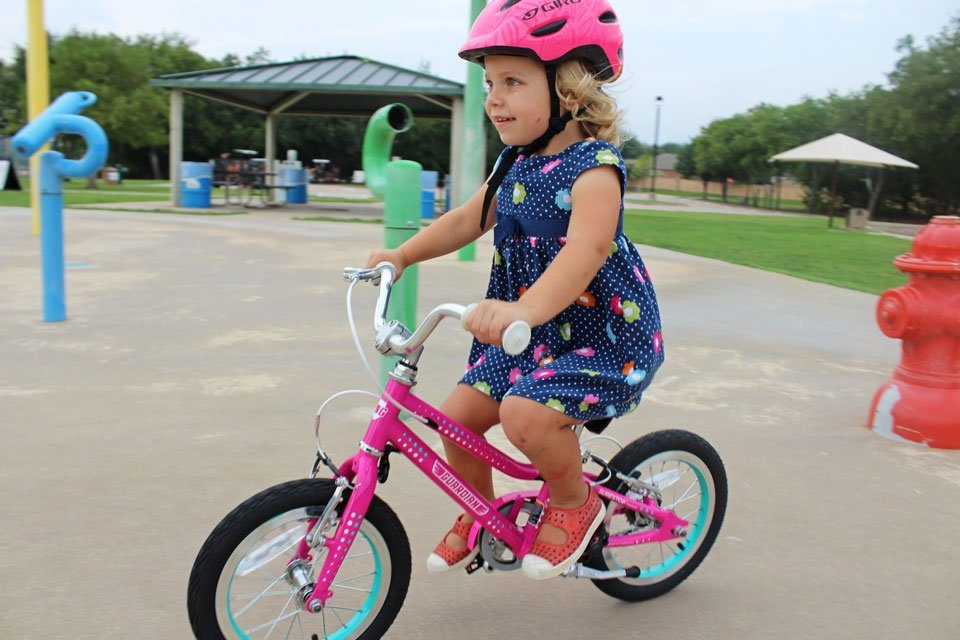
You have probably seen plenty of ads and glowing reviews about Guardian Bikes on social media, but are they true? Are Guardian Bikes really worth it?
Having worked with Guardian for years, even before their appearance on Shark Tank, and having met the founders multiple times, I can honestly say they make good bikes, but they are not the right fit for everyone. Why? Let’s break it down, here’s what parents should know before buying a Guardian.
Why Trust Us
Before we jump in, who are we and why should you trust us?
Two Wheeling Tots is the leading kids’ bike review site and has been testing and reviewing kids’ bikes since 2012 with one clear mission: to help families find the best bikes and biking products for their children. Unlike general review sites that cover a bit of everything or influencers who feature whatever product they’re sent, we focus exclusively on kids’ bikes and gear.
Over the years, we’ve tested multiple versions of every Guardian model along with hundreds of other kids’ bikes, giving us a deep understanding of how each brand compares. In fact, Guardian Bikes even mentioned us during their Shark Tank appearance when asked about third-party expert reviews.
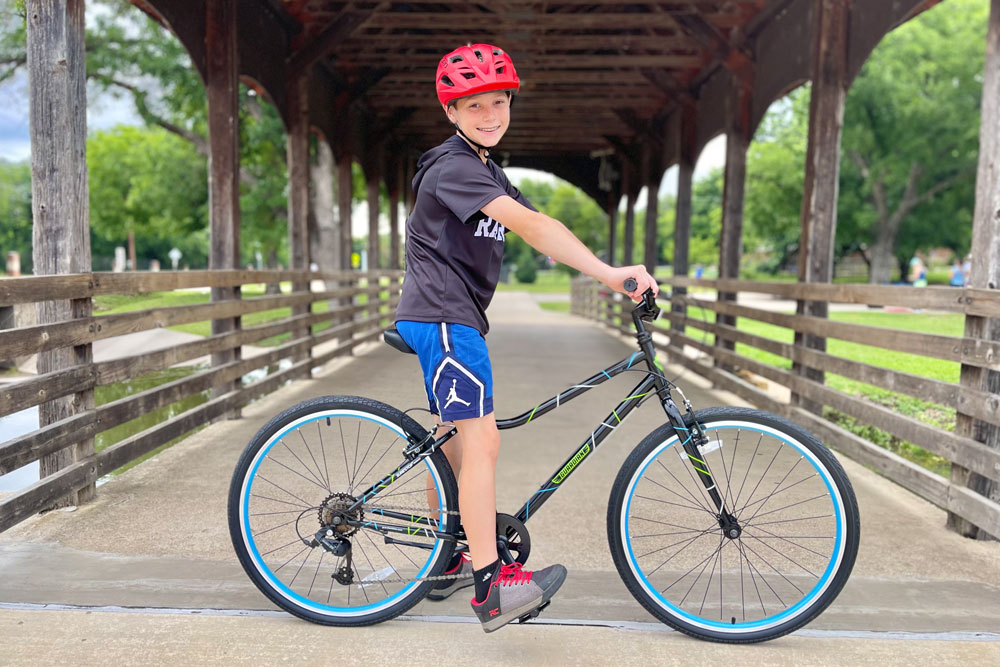
We also don’t accept paid placements, sponsored content, or compensation for our reviews (aside from standard affiliate commissions). Every opinion you read here is based on real-world testing and firsthand experience, not marketing partnerships or paid promotions.
Are Guardian Bikes the Best Choice for Your Family?
If you are upgrading from a big-box store bike, the answer is yes. Guardian Bikes are a major step up. They are easier to ride, better designed, and will fit your child properly for longer.
If, however, you are looking for the very best kids’ bike available, Guardian is not at the top of that list. Brands like woom, Prevelo, Early Rider, and Biky design lighter, higher-performance bikes with aluminum frames and premium components. Guardian’s pedal bikes are made with steel frames, which makes them heavier than the aluminum bikes offered by those brands. (Guardian’s balance bike is the only model with an aluminum frame.)
When Guardian first launched, all of their bikes were made from aluminum. Over time, the company transitioned its pedal bikes to steel to offer a more affordable price point for families. However, their marketing around being “lightweight” didn’t change much.
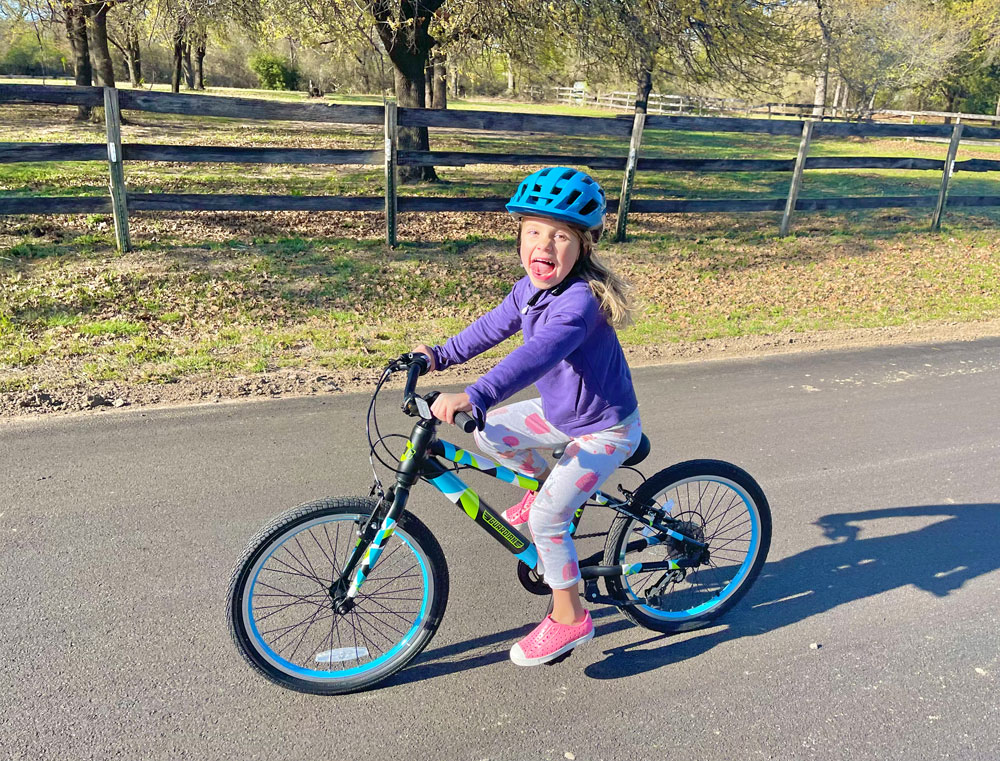
Today, Guardian bikes are still lighter than many budget or big-box options, but not as light as higher-end brands that continue to use aluminum frames.
Because of this, Guardian falls in an important middle ground in the kids’ bike market. Their bikes cost less than premium brands yet perform better than budget bikes, making them a solid choice for families who want something better than what’s sold at big-box stores without spending top dollar.
Can a Bike Really Make It Easier for Kids to Ride?
Absolutely. Guardian’s claim that a better-built bike helps kids learn faster is true.
Many children struggle to ride not because they lack confidence or effort, but because the bike itself makes learning difficult. Heavy frames, short wheelbases, and coaster brakes all make balancing harder, especially at the slower speeds most beginners ride at.
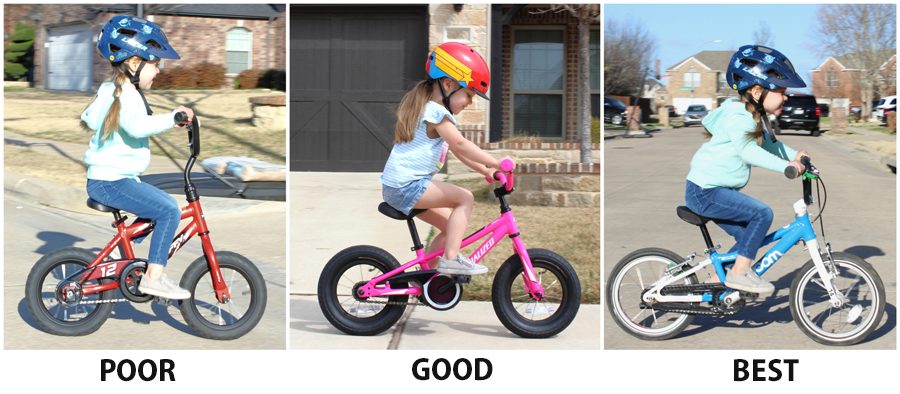
(For a deeper dive on this, see our article The Hidden Costs of Budget Bikes.)
What Makes Guardian Bikes Better Than Big-Box Store Bikes
1. Smarter Frame Design
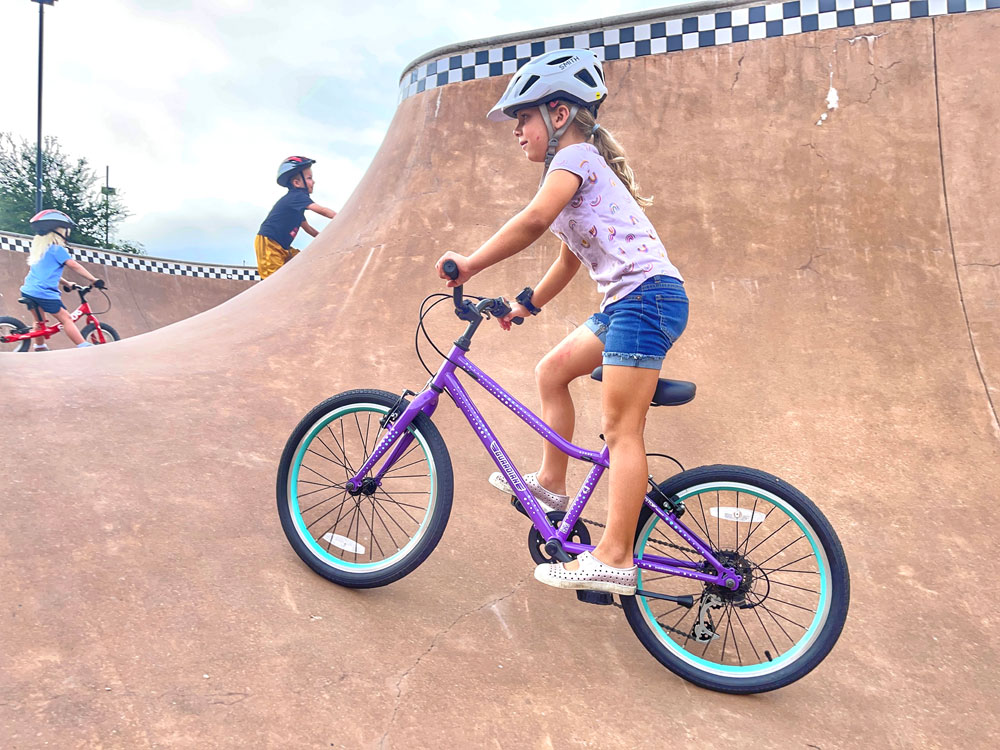
Guardian frames have longer wheelbases that help distribute a child’s weight more evenly between both wheels. As a result, the bikes feel more stable, easier to balance, and more predictable to maneuver. Their longer frames also allow for lower seat heights for the same wheel size, giving riders a lower center of gravity that further improves balance and confidence.
2. No Coaster Brakes
Guardian eliminates coaster brakes entirely, which is a huge benefit for beginners. Coaster brakes often engage accidentally when a child back-pedals, interrupting their rhythm and frustrating the learning process. Guardian relies on hand brakes instead. Most budget bikes that include hand brakes use low-quality single-pivot systems that are prone to misalignment, but Guardian’s V-brake setup is better engineered and easier to maintain (more about Guardian’s brake system below).

3. Lighter Overall Weight
While Guardian’s current steel frames are heavier than the aluminum ones they once made, they are still lighter than most big-box bikes. The result is a bike that is easier for kids to pick up, start, and balance on.
4. U.S. Assembly
All Guardian bikes are assembled in their Indiana facility. While many parts are still sourced overseas, the company is gradually working toward increasing domestic production.

In support of that goal, Guardian has advocated for policies that favor U.S. bike manufacturing, including applying additional tariffs on bicycles. Their actions have sparked debate and upset many within the bike industry, but it does not affect the performance or safety of Guardian’s bikes.
How Guardian’s Brakes Are Different
Guardian’s signature SureStop braking system connects both brakes to a single lever. When the lever is pulled, the rear brake engages first and then activates the front brake. The system works very well, providing smooth, predictable stopping power that builds confidence, especially for new riders.
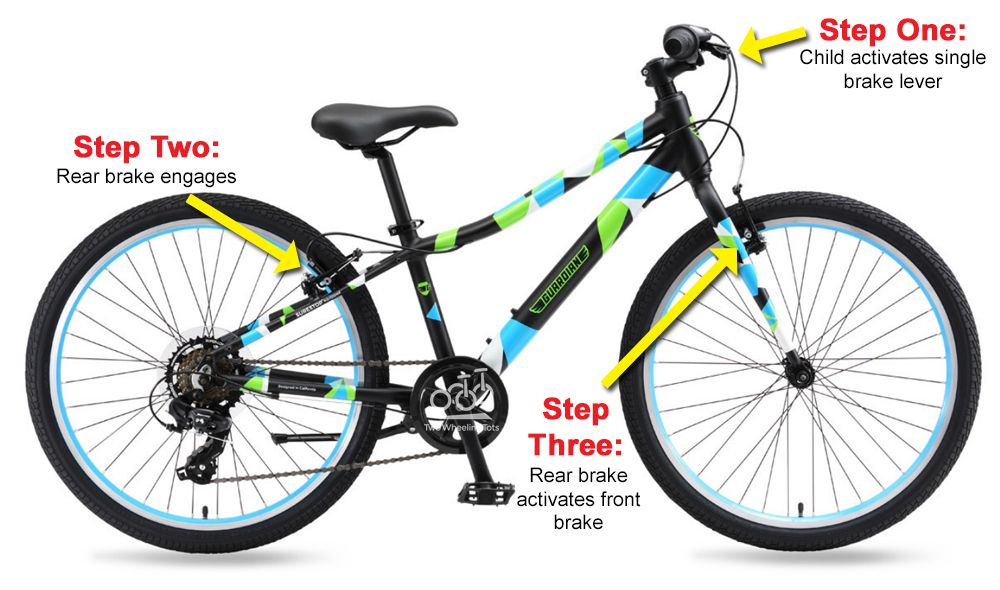
Because riders can’t engage only the front brake, the SureStop system helps prevent the over-the-bars crashes (sometimes called “endos”) that can occur when a child grabs the front brake too hard. That said, endos are rare among young riders, little kids don’t weigh much or ride fast enough for it to be a major concern. In our years of testing with hundreds of kids, we’ve seen it happen only once, and that was on a technical kids’ road bike, not a neighborhood bike.
No matter what braking system a child uses, it’s always important to teach proper braking habits early on. For bikes with traditional dual hand brakes, we recommend teaching kids to brake using either their right hand only (which controls the rear brake) or both hands together, never just the left. A small sticker next to the right-hand lever can serve as a great visual reminder. On their smaller bikes, woom helps reinforce this habit by coloring the rear brake lever green.

The main downside to the SureStop system is that both brakes rely on a single lever and rear brake caliper. If the rear brake fails, the front brake will stop working as well. While this type of failure is rare, the design does remove the backup braking protection that traditional independent dual-hand-brake systems provide.
For older tweens, teens, or kids who are beginning to explore more technical riding, learning to use the front and rear brakes independently is also an important step in developing bike-handling skills. Riders planning to move into mountain biking or more advanced terrain are better off on a bike with traditional dual hand brakes.
How do woom, Prevelo and Others Compare
Guardian Bikes are better than what you will find in most big-box stores, but higher-end brands like woom, Prevelo, Early Rider, and Biky still set a higher standard for performance. These bikes cost more, but their lighter frames, refined geometry, and higher-end parts make a noticeable difference in how they ride and how long they last.
Here is where the higher-end and mid-range brands tend to pull ahead:
1. Lighter Weight
Aluminum frames and better components significantly reduce overall weight. Ideally, a child’s bike should weigh no more than 30% to 40% of their body weight. The aluminum woom GO 3 weighs just 13 lb., while the steel Guardian 16 weighs 17.5 lb. For a 34-pound four-year-old, that is the difference between riding a bike that is 38% versus 51% of their body weight, a difference that can have a big impact on how easily they can ride and maneuver the bike.

2. Higher-Quality Components
From the bearings to the grips, the parts on premium brands are designed to last longer and perform better. They roll more smoothly, require less maintenance, and provide a more refined ride feel.
3. Independent Dual Brakes
Most high-end kids’ bikes use traditional dual hand brakes or even disc brakes. These systems provide strong, consistent stopping power and maintain braking ability if one brake fails, offering an added layer of safety and control.

4. Performance Geometry
Guardian’s upright design is great for comfort and everyday riding, but more advanced riders benefit from a lower, sportier setup. Bikes from Prevelo and Early Rider allow kids to lean into turns, handle rougher terrain, and push their skills further.

5. Wider Gear Range (for 20-inch and Up)
Guardian’s seven-speed bikes have a fairly narrow gear range (gain ratio 2.45 to 5.6) compared to bikes like the Prevelo Alpha 24 (1.79 to 6.6). For most neighborhood riders, Guardian’s range is fine, but hilly terrain or fast straightaways can reveal its limits.
6. Higher Resale Value
Guardian bikes hold their value well, but brands like woom and Prevelo tend to command even higher resale prices, helping offset their higher initial cost. For families looking for something similar in price to Guardian, Retrospec’s Koda Plus line is a phenomenal mid-range option, particularly in the 16-inch size. The Koda Plus bikes feature aluminum frames, which makes them lighter, and they include dual hand brakes, solid geometry, and smooth-rolling tires that make them stand out in their price category.
Bottom Line: Are Guardian Bikes Worth It?
If you are tired of fighting with heavy, poorly designed big-box bikes and want something smoother, easier to ride, and more enjoyable for your child, Guardian Bikes are absolutely worth considering.
They strike a balance between price and performance and are a meaningful upgrade for most families.
If you want to take things a step further, higher-performing bikes from brands like woom, Prevelo, Early Rider and Biky offer an even better ride experience. These bikes also feature higher-quality parts that last longer and perform more consistently over time. The result is a bike that not only rides better but also holds its value for years to come.
But for many families, Guardian strikes a perfect middle ground, a well-designed, confidence-inspiring bike that makes learning to ride fun, approachable, and enjoyable right from the start.
Detailed Guardian Bikes Reviews by Size
- Guardian Balance Bike: Best for Ages 2+
- Guardian 14 inch Bike Review: Best for ages 3+
- Guardian 16 inch Bike Review: Best for ages 4+
- Guardian 20 inch Bike Review: Best for ages 6+
- Guardian 24 inch Bike Review: Best for ages 8+
- Guardian 26 inch Bike Review: Best for ages 11+
Looking for Other Options?
To help parents find the best bike for their child, we’ve reviewed hundreds of bikes across every size and style. We’ve compiled our favorites on our Best Of pages listed below, where you’ll find our top picks for each wheel size along with recommendations for different price points and riding styles.
- Best Balance Bikes for All Ages: 18 mo – 3+
- Best 12 and 14 inch Bikes: Best for ages 3+
- Best 16 inch Bikes: Best for ages 4+
- Best 20 inch Bikes: Best for ages 6+
- Best 24 inch Bikes: Best for ages 8+
- Best Bikes for Tweens: Best for ages 11+
FTC Disclosure: Affiliate links are included in this review. No monetary compensation was provided for this review, however, the reviewed product was supplied by the manufacturer or distributor to help facilitate this review. All opinions and images are that of Two Wheeling Tots LLC. All content and images are copyrighted and should not be used or replicated in any way. View our Terms of Use.
