

The Hidden Costs of Cheap Kids Bikes: Why They Often Aren’t Worth It
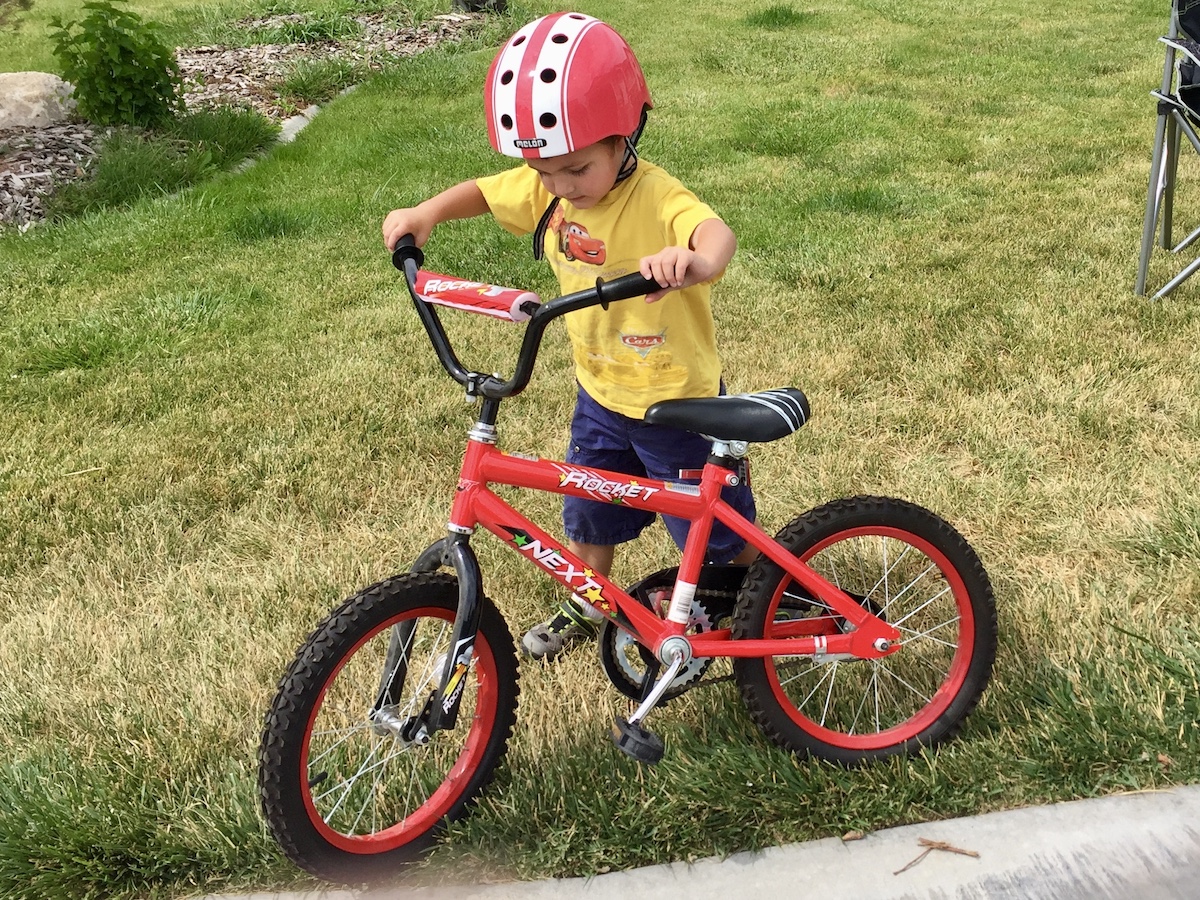
Many parents remember learning to ride a bike as hard, scary, and full of frustration including scraped knees, tears, and tense parent-child exchanges. But what if it doesn’t have to be that way?
As parents, we’re often quick to blame the child for being too scared, too distracted, or not trying hard enough. But what if the real problem isn’t the child—it’s their bike?

The truth is, most kids are given heavy, poorly designed bikes that make learning to ride unnecessarily difficult. Any safe bike is better than no bike, but most mass-produced “bargain” bikes are built to hit a price point—not to help kids fall in love with riding.
How do I know? Over the last 15 years, I’ve tested more than 300 kids’ bikes with countless young riders, including my own three kids. I’ve seen kids who struggled to ride suddenly take off within minutes because they were given a well-designed, lightweight bike that worked with them instead of against them.
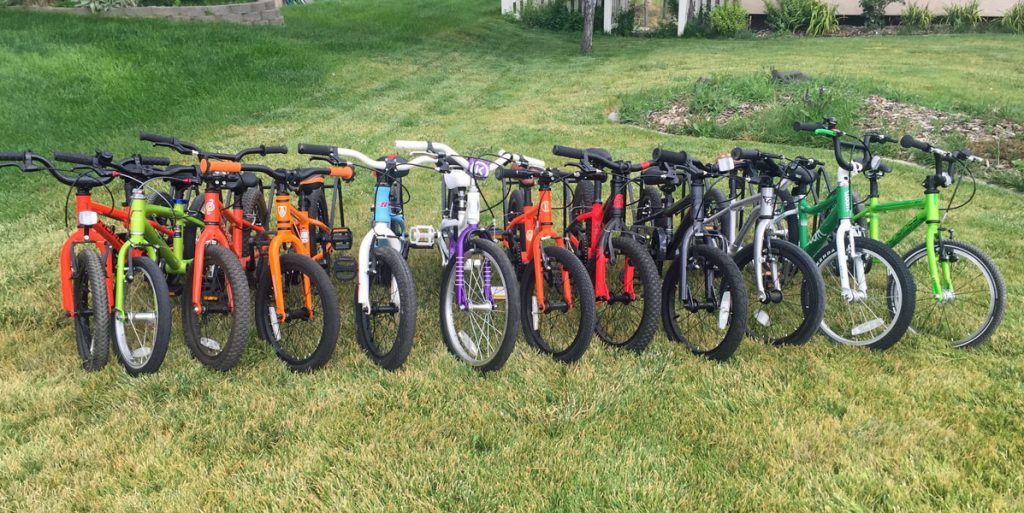
Drawing on my experience as both a bike tester and a consultant for leading kids’ bike brands, my goal is to share what I’ve learned over the years and explain why cheap bikes fall short. Once you understand what makes low-cost bikes so frustrating and what makes quality bikes worth the investment, I hope you’ll see why choosing the right bike from the start can completely change your child’s riding experience.
I’ll start by briefly explaining the false economy of cheap bikes, why they seem like a bargain but rarely are. Then, to help you see the full picture, I’ll walk through how the frame design and components differ between budget and high-end models, and why the price gap between them is so big. From there, we’ll take a closer look at the different types of brakes used on kids’ bikes and how they affect safety. Finally, I’ll share several options for families who can’t afford a high-end bike but still want something safe, durable, and fun to ride.
Why “Cheap” Bikes Cost You More
It’s hard not to walk past a bike in your child’s favorite color or covered with their favorite character and not want to buy it. After all, won’t your child want to ride more if it has their favorite character on it? Plus, the bike is inexpensive and they’ll outgrow it soon, so what’s there to lose?
More than you realize.
Between 2014 and 2018, more than one million fewer children ages 6–17 rode bicycles regularly, according to the Sports & Fitness Industry Association. While there are many reasons for this, the bikes themselves are certainly part of the problem.
According to PeopleForBikes, roughly 97% of kids’ bikes sold in the U.S. are inexpensive imports from China. Yes, they’re cheap, but they are coming at a cost. They’re harder to ride, difficult or impossible to repair, and do little to help kids fall in love with biking from a young age. At worst, they discourage them altogether. And from a financial standpoint, they often offer minimal cost savings to your family.
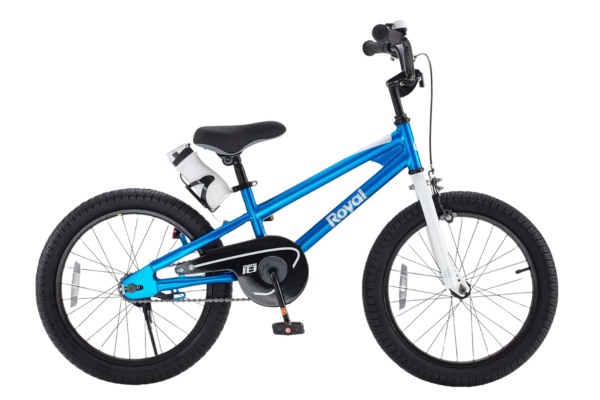
Most budget bikes have cramped frames that offer very little room for kids to grow. As a result, kids often outgrow these bikes faster than they would a properly designed, higher-end model. To see this action, check out our video review of the RoyalBaby Freestyle bike, Amazon’s top selling kids bike.

Cheap bikes also aren’t made to be repaired, they’re made to be replaced. They are disposable by design. While you can fix a flat or tighten a brake cable, many core components like bottom brackets, hubs, and headsets are sealed, riveted, or use non-standard parts that can’t be serviced or cost more to service than the bike is worth. When something breaks (and something always does), the entire bike ends up in the trash.
That kind of design is wasteful both financially and environmentally. By contrast, high-quality bikes are built to be maintained, upgraded, and passed down. Replacement parts are available, and can easily last through multiple kids.
To put it in perspective, buying a 12” bike and then a larger 16” cheap bike for your child might cost around $240 in total. The upfront cost sounds appealing, but these bikes have little to no resale value. As a result, that initial cost is essentially per child.
In contrast, investing in one high-quality 16” bike can easily replace both the 12” and 16” cheap bikes and last for years, making the cost per family instead of per child. But how can one bike replace two? Premium bikes are designed with lower minimum seat heights to fit younger riders and longer wheelbases that provide more room for growth, allowing kids to comfortably ride them much longer than cheap bikes.
2 x $120 = $240
Resale Value = ~$80
Total Investment PER CHILD = $160

1 x = $499
Resale Value = $325
Total Investment PER FAMILY = $174
I’ve seen this difference firsthand in my own family. When my daughter was ready for her first pedal bike, we found an old purple 16” Specialized for sale. It was scratched and faded, but built to last. Years later, we stripped the paint, resprayed it green, and passed it down to her younger brother. Fifteen years later, that same bike is still ready for action.
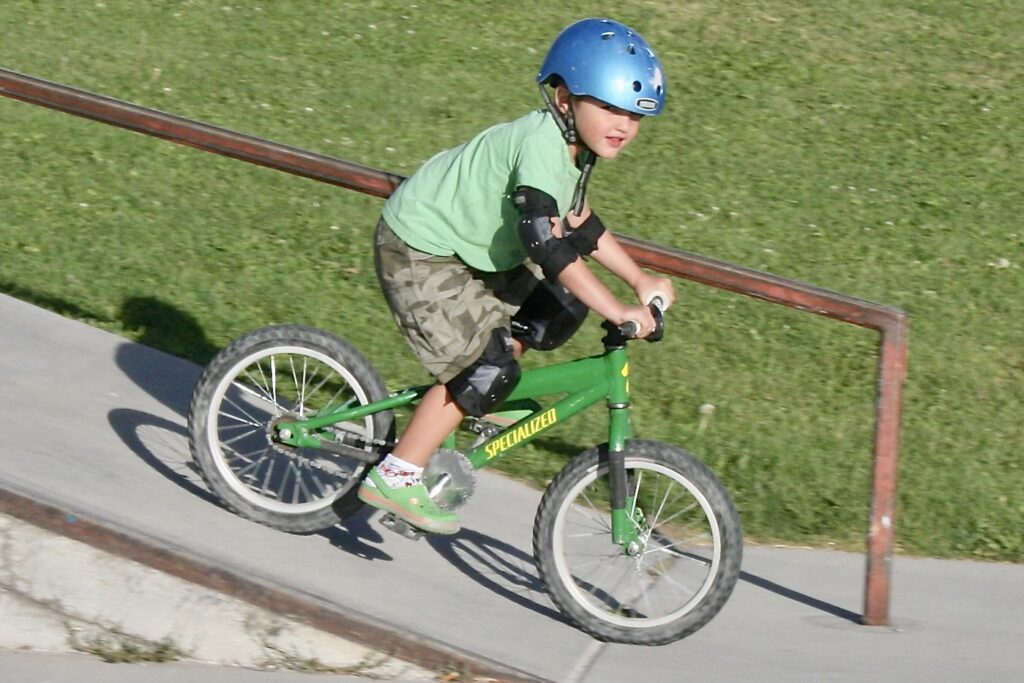
Why? Because it was built with serviceable parts and thoughtful design from the start. A good bike is a long-term investment, not a disposable toy.
Quality bikes also hold their value and can often be resold or traded in through programs like woom’s UpCycle or Prevelo’s Trade-Up Club. Over time, that investment pays off both financially and even emotionally as kids are more likely to enjoy riding at a younger age and keep riding more often because their bikes actually fit and perform the way they should.
Built to a Price, Not to Perform
Now let’s dig a little deeper into why cheap bikes are hard to ride, why they cost significantly less, and why higher-end brands perform better.
The Warehouse Buffet Bike
Most cheap bikes aren’t carefully designed; they’re simply assembled. They’re put together piecemeal, like a buffet, using a mix of standard, mass-produced parts, whatever happens to be available in bulk. Frames, cranks, and forks are matched together to hit a price point rather than a performance goal. It’s why so many low-cost kids’ bikes look very similar, differing only in color or a random brand name that may change from year to year. These three bikes are all being sold under a different brand name.
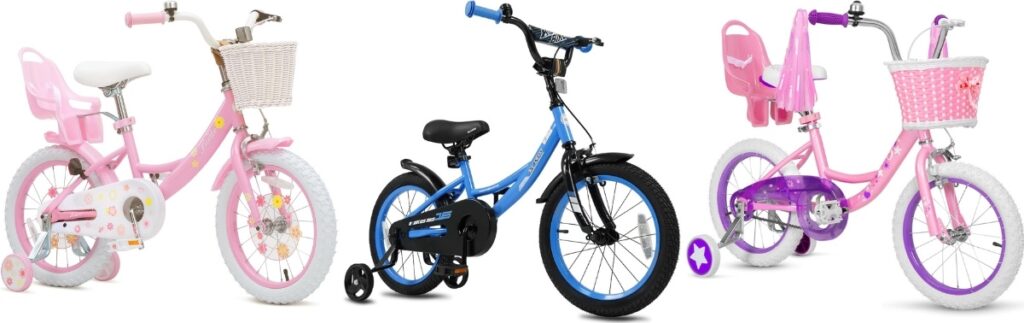
Because performance isn’t a priority, these bikes are rarely tested with real kids. Testing costs money, and that cuts into profits. As a result, when real kids finally ride these bikes, the geometry and proportions are often completely off. Seat heights are too tall for the wheel size, handlebars are excessively wide, and crank arms are so long or wide that kids must splay their legs to pedal, creating an inefficient and uncomfortable motion.
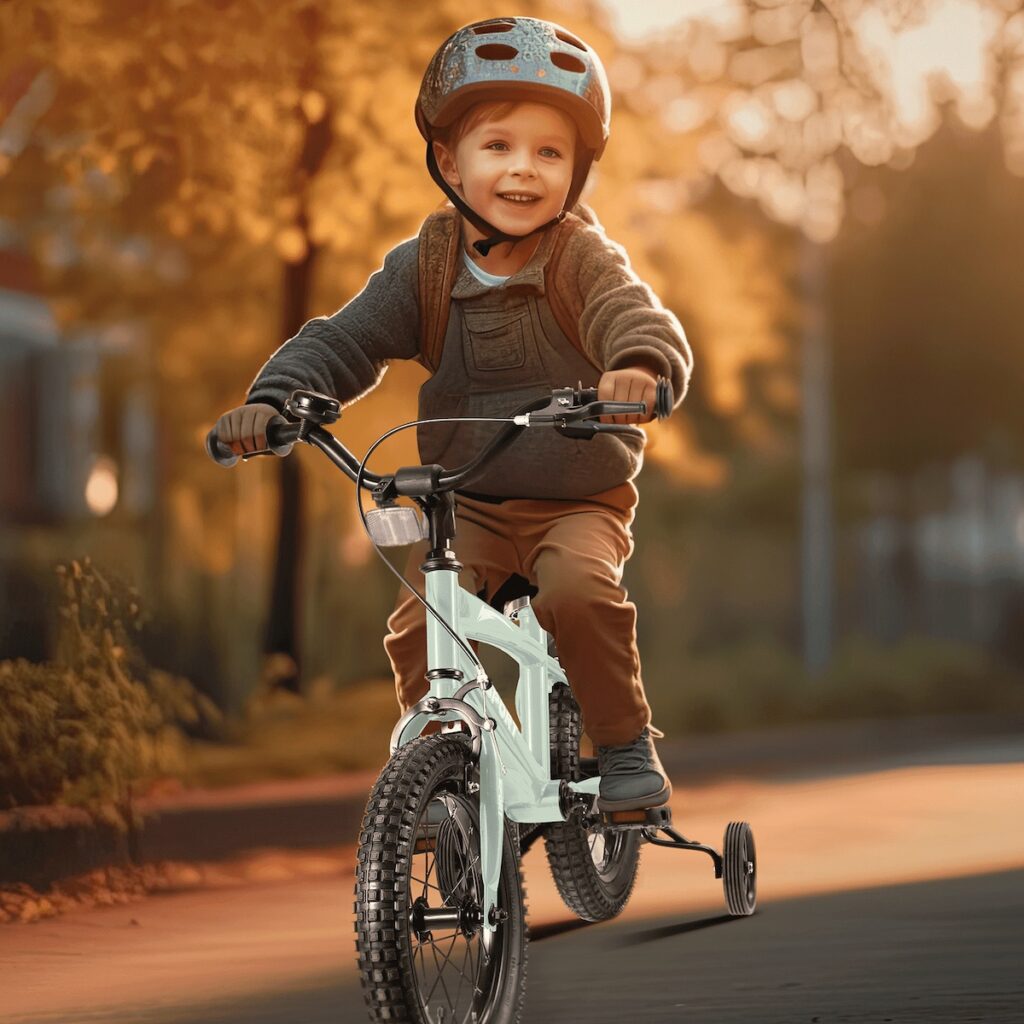
You won’t see these problems in marketing photos, and that’s because the photos themselves aren’t real. Most promotional images are digitally created or heavily edited, with stock photos of kids added onto bikes to create a false impression of proper design and fit.
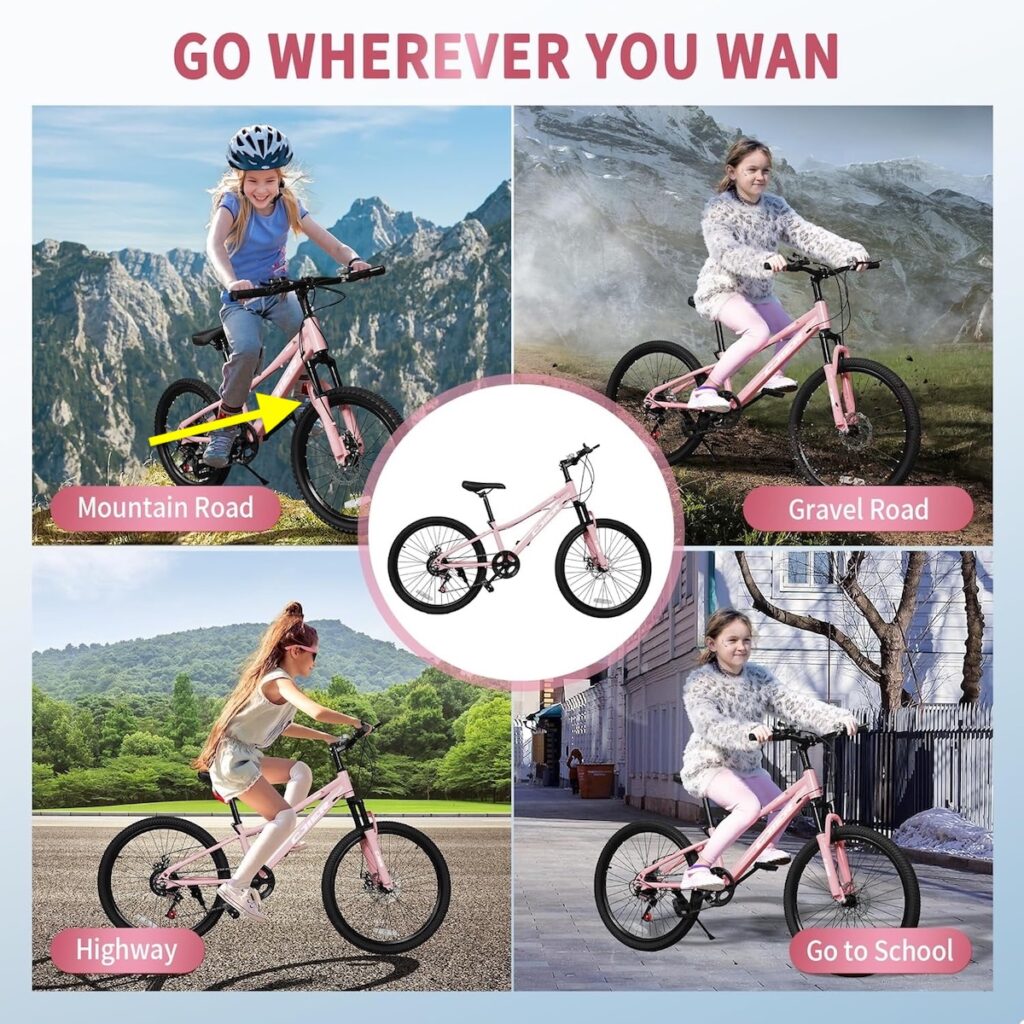
Sometimes, brands don’t even try to get it right. We’ve seen plenty of examples where the bikes are assembled incorrectly in their own photos. In the image below, for instance, there are multiple problems including a backwards fork!
If these bikes perform so poorly, why do they keep selling? Because most parents simply don’t realize how bad they are. We’re surrounded by cheap bikes, and most parents have never seen what a truly well-designed kids’ bike looks or feels like. We simply don’t know what we don’t know.
One of my goals here at Two Wheeling Tots is to help change that. Investing in a quality bike not only makes riding easier and more enjoyable for your child, it also makes sense long-term. Quality bikes can be repaired, resold, and kept out of landfills. And the more parents who choose well-built bikes, the more high-quality used bikes will become available for families who may not have the budget for a new one.
Cheap Bikes = Short Frames, Tall Handlebars, Poor Balance
How can you spot a cheap bike? Beyond the price tag, one of the biggest giveaways is a short wheelbase. Compact frames require less material and are cheaper to ship, allowing manufacturers to cut costs but at the expense of proper fit and stability.
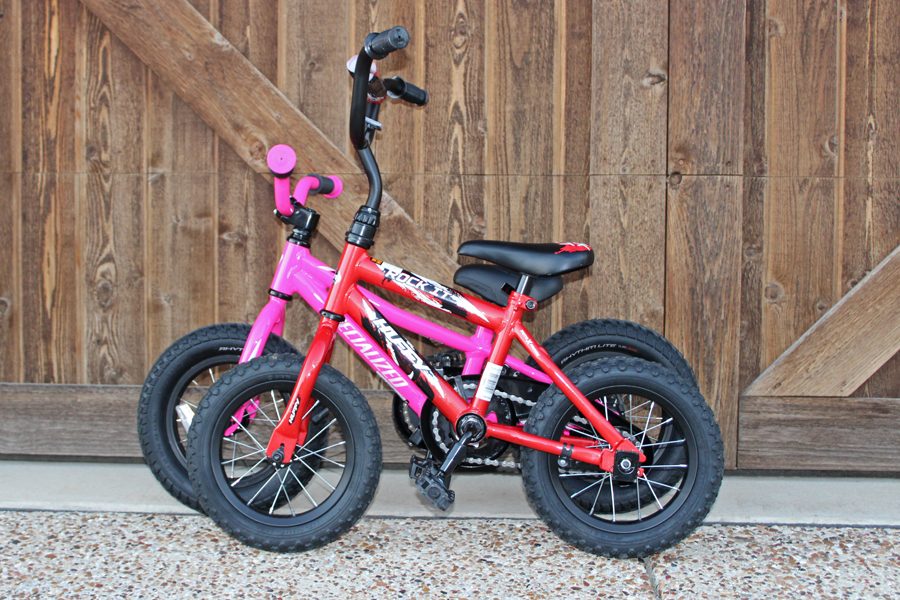
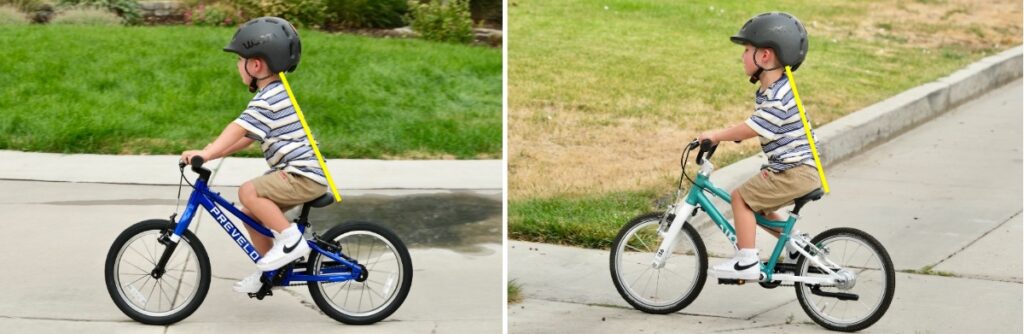
To make up for the lack of space on a short frame, cheap bikes are often paired with tall handlebars. While taller handlebars allow the bike to accommodate taller riders, they prevent kids from leaning forward while riding. Leaning slightly forward while riding is a natural position that balances weight between the front and rear wheels and makes the bike easier to control.
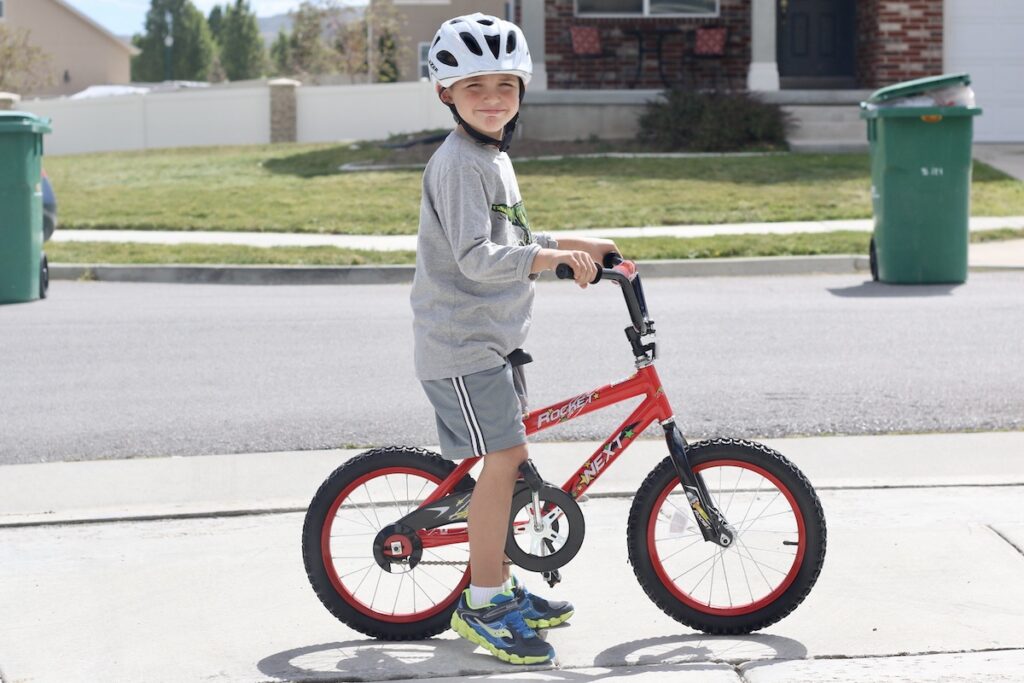
In addition to limiting that forward lean, forcing a child to sit too upright raises their center of gravity, making it harder to balance especially at slower speeds. The shorter wheelbase also reduces stability, and in many cases, kids can even bump their knees into the handlebars while turning.
High-end kids’ bikes, on the other hand, are designed with longer wheelbases and true kid-specific geometry. This allows kids to sit “in” the bike rather than perched on top of it. The lower center of gravity makes balancing and steering feel more natural, helping kids progress faster and ride with greater confidence.
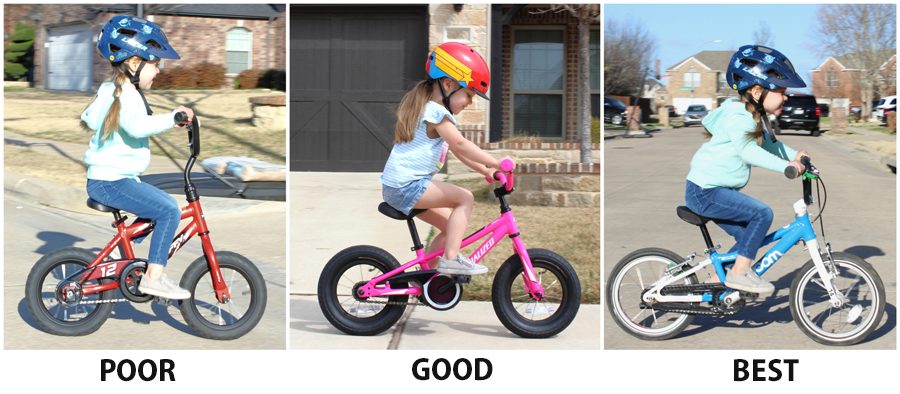
A longer wheelbase and better weight distribution also give manufacturers flexibility with components. For newer or more timid riders, higher-rise handlebars can be used without the risk of knees hitting the bars when turning (ex: woom GO 3 below). For more confident riders, a flat handlebar setup lets them lean naturally into corners, drops, and small jumps just like on a properly designed adult bike (ex: Prevelo Alpha Two).
Problematic Frame Designs
Forks, frames, and fenders—oh my! In addition to short frames, many “higher-end” cheap bikes pile on unnecessary accessories to create the illusion of added value. Unfortunately, most of these extras only make the bike heavier, harder to ride, and more frustrating for kids to handle.
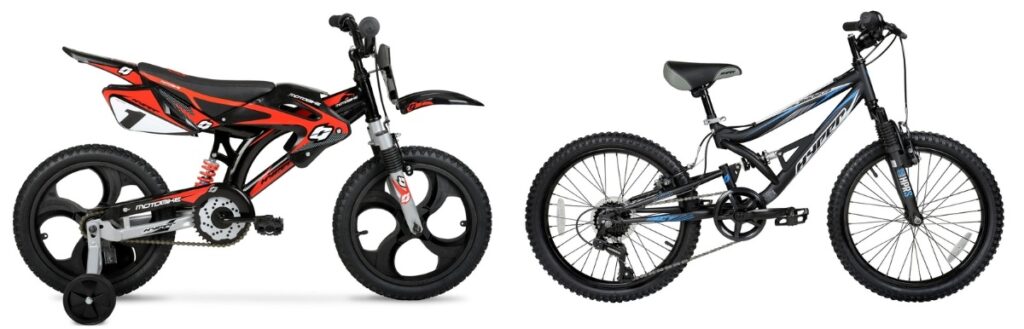
Suspension forks, oversized or oddly shaped frames, and decorative fenders are some of the most common add-ons we recommend avoiding. While they may look cool, they don’t improve performance and often make the bike less efficient and more difficult for kids to control.
Looks Over Performance: Theme and Character Bikes
Cheap bikes can also fall into the trap of commercialism. A bike covered in favorite characters might seem like a fun choice, but those logos and designs come at a cost. Manufacturers pay licensing fees to use popular characters, which means less of your money goes toward the quality of the frame, components, or overall design. And if you look closely, you’ll notice that neither of these bikes includes a hand brake because that costs extra.
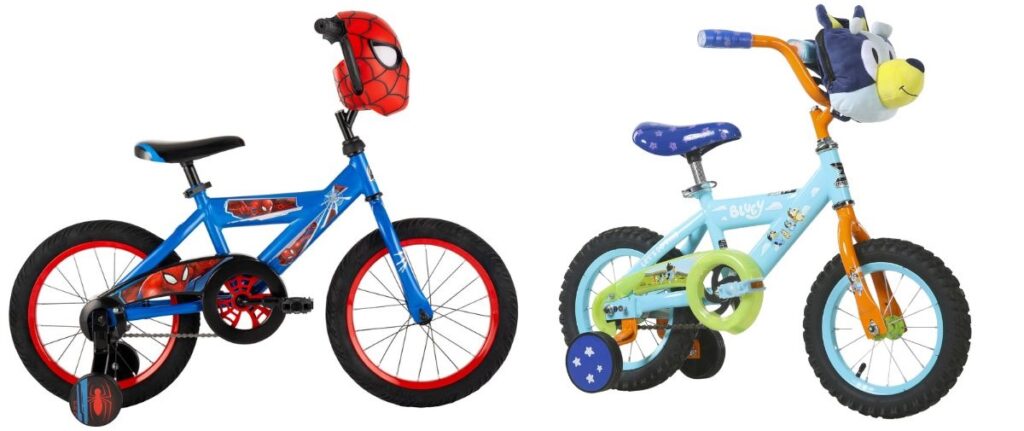
It’s why “character bikes” tend to be heavier, less efficient, and harder to ride. Quality brands, by contrast, focus first on performance and timeless design. They build bikes meant to last for years, not just until the next movie franchise fades from popularity. After all, your youngest child probably won’t be interested in the same characters your older child loved.
Timeless bikes still look good years later and can easily be passed down or resold. If your child really needs a little extra motivation from their favorite character, that’s okay! Instead of buying a themed bike, you can use accessories to bring in that pop of personality. Adding baskets, colorful grips, or removable decals can transform a classic, well-built bike into something that feels special and uniquely theirs.
Heavy Weight
It should come as no surprise that when bikes are built with low-end components or loaded up with unnecessary add-ons, they often end up very heavy. Heavier bikes are much harder to ride, especially at slow speeds, where most kids spend the majority of their time. (Thanks to the Conservation of Angular Momentum—college physics class for the win!)
This is why bike weight matters so much for kids. Ideally, a child’s bike should weigh no more than 30% to 40% of their body weight. That can be challenging, especially for petite riders, but it makes a noticeable difference in how easily a child can balance, start, and stop a bike.
High-end brands like woom, Prevelo, Early Rider, and Biky build their bikes from lightweight aluminum rather than the cheaper, heavier steel used in most big-box models. The result is a bike that’s several pounds lighter which can completely transform how a child rides.
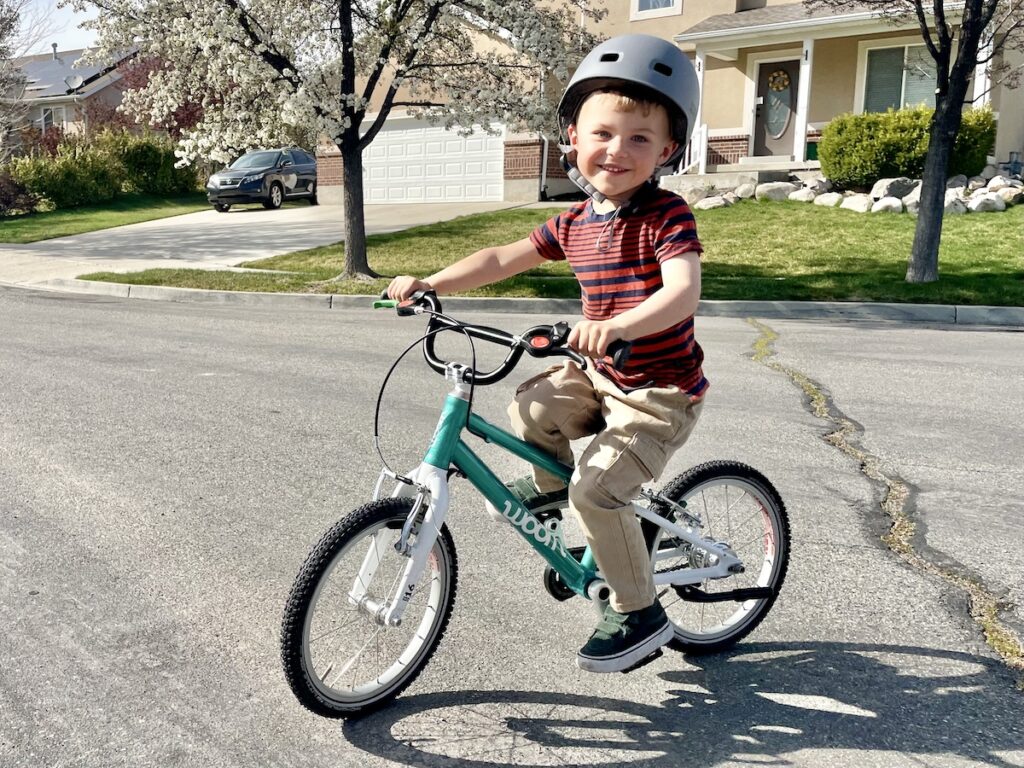
For example, the aluminum woom GO 3 weighs just 13 lb., while even the mid-range steel Guardian 16 tips the scales at 17.5 lb. For our 34 pound 4-year-old tester, that’s the difference between riding a bike that’s 38% of his body weight versus one that’s 51%.
To put that in perspective, imagine riding a bike that weighs more than half of your own body weight. Go ahead and do the math, you’ll probably be surprised by how heavy that would be and you already know how to pedal!
One-Size-Fits-All Components
Lastly, one aspect of cheap bikes that’s harder to spot is the use of low-quality and often oversized components. Many manufacturers reuse the same cranks, handlebars, and pedals across multiple bike sizes to cut production costs. While it’s cheaper than designing true kid-specific parts, it leads to inefficient pedaling and awkward body positioning. And like most things in life, when cost drives design, performance suffers.
For example, cheap bikes often have a wide Q-factor, which is the distance between the pedals. When that spacing is too wide, kids have to pedal with their legs splayed outward, making each pedal stroke less effective and more tiring. Because parents rarely notice this detail, so many manufacturers don’t bother to address it.
Higher-end bikes, on the other hand, use narrower, kid-specific crank arms. While these parts significantly increase production costs, they create a much more efficient and comfortable riding position for kids.

Outdated Standards and Weak Brakes
Even if a bike isn’t designed well, it must still be safe to ride, right? Yes and no. Let’s take a closer look at the safety standards that govern kids’ bikes and how those outdated rules have affected the brakes used on them.
CPSC Testing: A Rulebook from the 1970s
To be sold in the U.S., kids’ bikes must pass CPSC certification through third-party testing. While it’s reassuring that there’s at least a baseline for safety, these standards were written more than 50 years ago and haven’t evolved alongside modern bike technology.
CPSC testing checks for things like lead in paint and whether brakes technically function, but it doesn’t assess how well a bike actually performs. In other words, a bike can “pass” the test and still be frustrating or unsafe to ride.
Single-Pivot Brakes: Old Technology with Issues
Single-pivot brakes are the cheapest type of rim brake to install, which is why they remain a staple on low-cost bikes. Unfortunately, they’re also one of the worst brake types for kids. They require much more hand strength to activate, offer less stopping power, and frequently fall out of adjustment.
Parent Tip: Test the kid-friendliness of a bike’s brake lever by pulling it with just your pinky. If it’s hard to pull with your pinky, it’ll be hard for a young child to squeeze with their whole hand.
Within just a few weeks of regular use, single-pivot brakes often start to squeal, drag, or stop working altogether adding frustration for both kids and parents. Because the CPSC standards only require brake performance comparable to what existed in the 1970s, bikes today can still legally ship with these poor performing brakes.
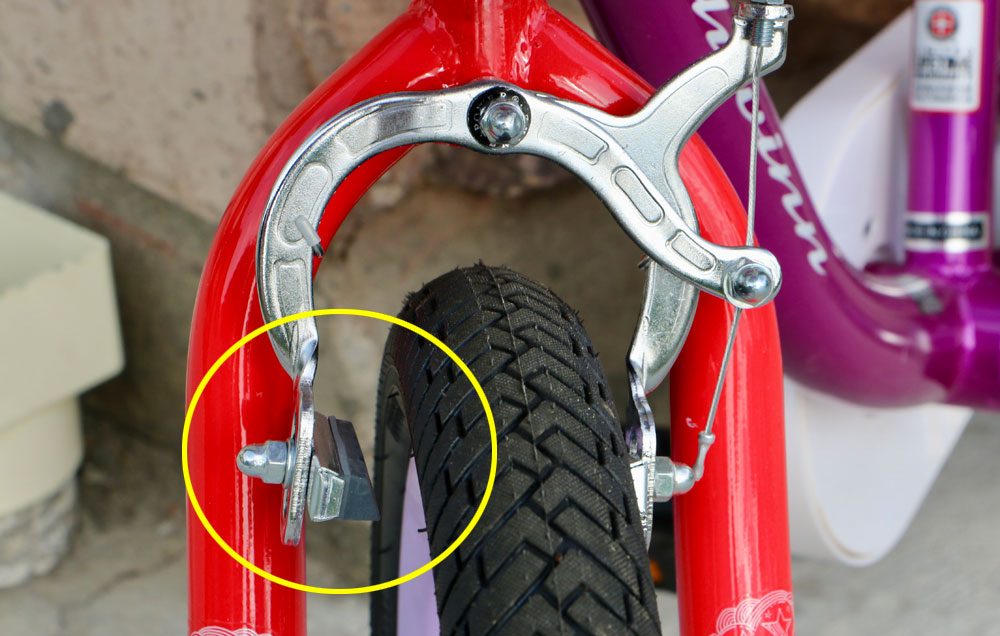
But manufacturers keep using them because they’re easy to install: a single bolt through the fork or frame allows almost any generic part to fit. That convenience keeps production costs low, but at the price of kids safety.
With a good chunk of the 97% of cheap kids’ bikes sold in the U.S. built with these outdated components, manufacturers have little incentive to modernize. When old technology meets low price targets, both performance and safety suffer.
Problematic Painted Rims
The situation gets even worse when these brakes are paired with painted rims. Brightly colored rims look cute, but that layer of paint reduces braking friction, especially in wet conditions, making stopping less predictable and often unsafe.
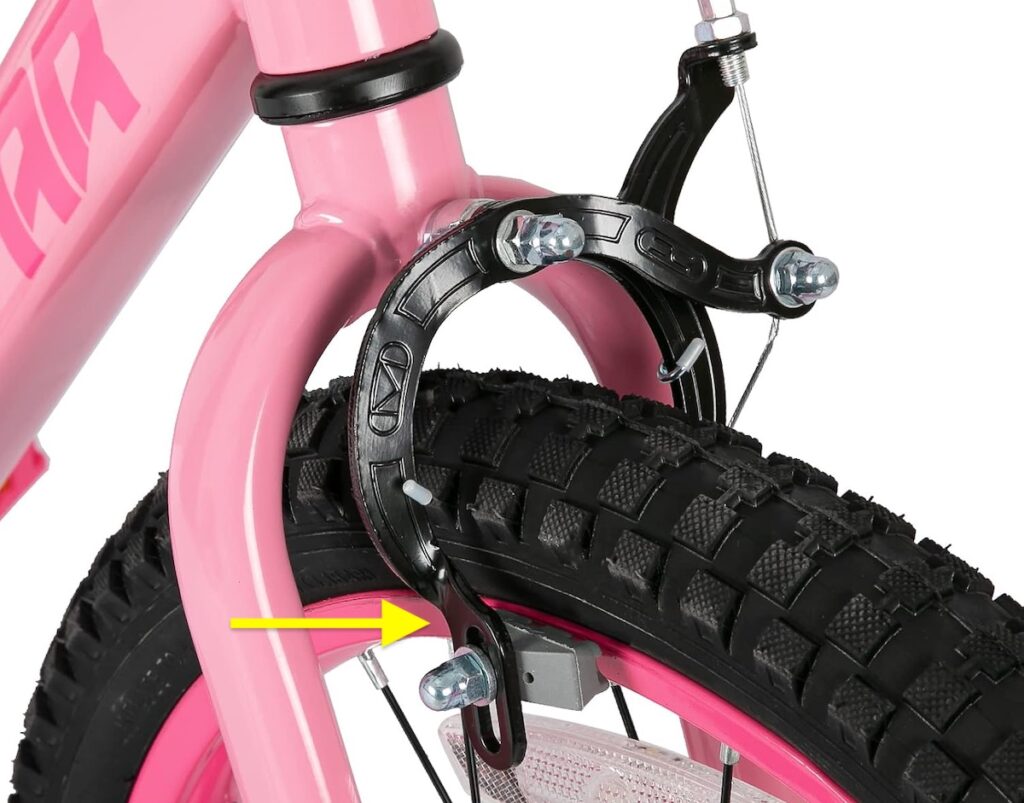
You’ll almost never see rims with painted sidewalls on bikes equipped with V-brakes or other high-end braking systems. Quality manufacturers leave the braking surface unpainted or machined clean to ensure consistent friction and reliable stopping power. It’s a seemingly small detail, but it says everything about whether a bike was built for looks or for safety.
The Coaster Brake Catch
In addition to allowing for poor hand brakes, CSPS regulations still require coaster brakes (back-pedal brakes) on smaller bikes. This rule dates back to the 1970s, when the single-pivot hand brakes of the time were so weak that a coaster brake was needed as a backup.
What’s the issue with coaster brakes? While coaster brakes are durable and nearly maintenance-free, they’re also one of the biggest sources of frustration for young learners, especially for those transitioning from a balance bike to their first pedal bike.
When kids are first learning the pedaling motion, their movements are often jerky and uncertain. As they try to coordinate balance, steering, and this new circular motion with their legs, they frequently backpedal without realizing it. This backward motion is completely natural, it’s how their bodies instinctively try to regain balance at slower speeds. Adults do it too; if you’ve ever pedaled a bike slowly and felt yourself begin to lose balance, you probably pedaled backward slightly to catch yourself before falling.
On a bike equipped with a coaster brake, however, that natural backpedal instantly locks the rear wheel. The bike stops unexpectedly, often causing the child to lose balance or tip over. For a young rider who’s already nervous, that sudden stop can be confusing and discouraging, and it can quickly lead to frustration or even fear of riding.

On bikes without coaster brakes, that same backpedal motion doesn’t stop the bike. Instead, it allows the child to regain balance and correct their pedaling motion while the bike continues rolling forward. The momentum they maintain helps stabilize the bike and gives them the confidence to start pedaling forward again.
While removing a coaster brake (especially on a bike that has quality V-brakes) might seem like a reasonable fix, it’s not that simple. Doing so requires installing an entirely new rear hub, which often costs more than the bike itself, although woom does offer a replacement rear wheel for their 14” bike. Designing bikes without coaster brakes from the start is a much simpler and safer solution.
Dual-Pivot Brakes: The Better, Safer Choice
Instead of single-pivot brakes or coaster brakes, look for bikes with dual-pivot V-brakes or, for older and more advanced riders, disc brakes. These modern systems require less effort to activate and stay in tune far better than cheap single-pivot designs.
Why? Because they’re mounted to two separate posts welded directly to the fork and frame (which adds to the cost of the bike) rather than a single bolt. This design provides greater stability, precision, and long-term reliability.
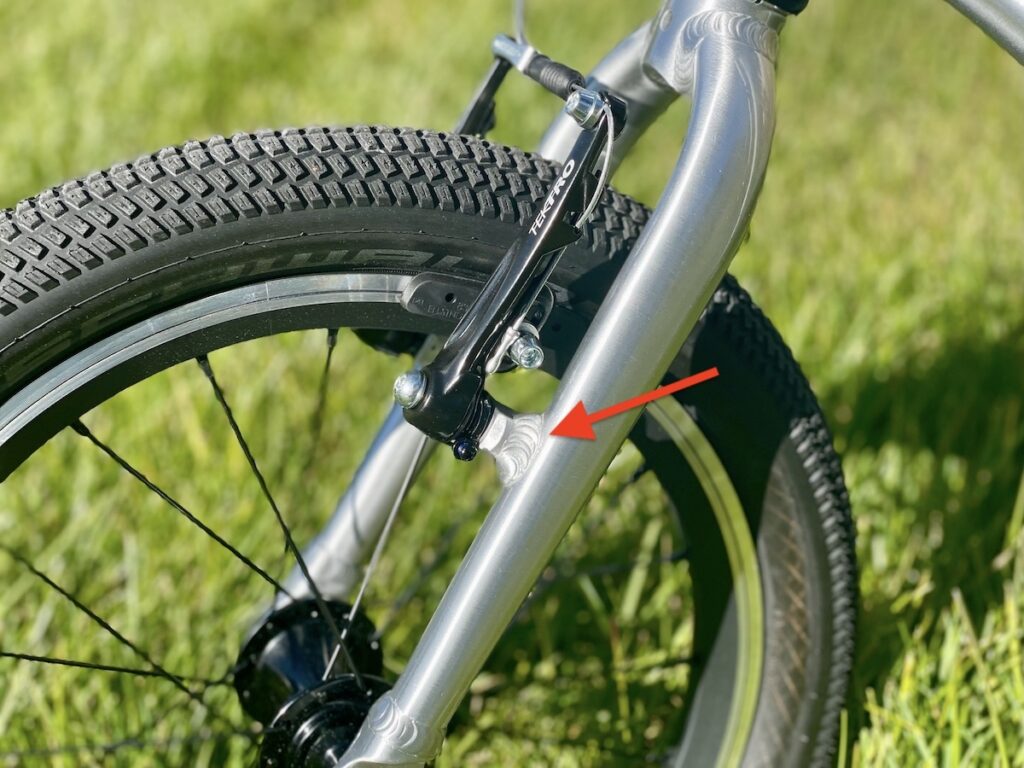
The metal used for V-brake calipers is also typically cast rather than stamped, as with many single-pivot brakes. This makes them more durable and far less likely to bend or go out of tune.
Quality V-brakes also feature kid-specific levers designed for small hands, with a shorter reach that lets riders pull the brakes without loosening their grip on the handlebar. The improved leverage and lighter action make braking safer, easier, and more reliable.

Because quality V-brakes provide stronger, more reliable stopping power, bikes equipped with them don’t need a “backup” coaster brake. Another reason you’ll only find coaster systems on cheap kids bikes.
Can’t Afford a New High-End Bike?
I completely understand that not every family can spend several hundred dollars on a new kids’ bike and that’s okay. I’m a firm believer that any safe bike is better than no bike at all, and there are far more important priorities in a family budget than a bike. But if you’re working with a tighter budget, here are some other options to consider:
1. Buy Quality Used
A well-made used bike will almost always outperform a brand-new budget bike. When inspecting a used bike, here are a few quick checks to make sure it’s safe and worth the purchase:
- Brakes: Squeeze the brake levers, they should stop the wheel firmly without touching the grip. Check the brake pads for wear
- Tires: Check that they still have tread and aren’t cracked or dry.
- Whole Bike Check: Lift and gently drop the bike on its wheels; rattling often signals loose or worn parts.
If it’s from a reputable brand, replacement parts are usually available and worth investing in.
2. Look for Mid-Range Options
Brands like Retrospec, REI Co-op and even Huffy’s GRM line offer more affordable models that still maintain kid-specific geometry and safe, effective braking. They may not be as light or refined as boutique brands, but they offer far better performance and safety than mass-market bikes from big-box stores.

Warehouse deals are also often available from woom and Prevelo.
3. Buy Higher-End First and Budget Later
If high-quality bikes still feel out of reach, especially if you have multiple kids, consider investing in just one higher-end bike when they’re young. For most children, the biggest difference comes from that first pedal bike.

When their first bike is fun, comfortable, and confidence-boosting, that positive experience sticks with them. So if you can only afford one quality bike, make it a small one like a 16” bike. Once your child learns to ride well on a well-designed bike, that confidence and skill often carry over, even as they move on to heavier or less refined bikes later.
4. Skip the Smaller 12” or 14” Pedal Bikes
If I had to buy just one high-end bike for kids, I’d choose a 16” bike. Most premium 16” models have low enough seat heights to serve as a child’s first pedal bike, especially for those moving up from a balance bike. These bikes typically avoid coaster brakes and offer a lot more room for growth compared to 12” or 14” bikes that kids outgrow in less than a year.
If your child is eager to ride before they fit on a 16” pedal bike (and hopefully they are!), start them on a balance bike. While we love high-quality balance bikes, the difference in performance between cheap and expensive balance bikes isn’t nearly as dramatic as it is with pedal bikes.

By skipping a 12” or 14” pedal bike in favor of an inexpensive balance bike and then upgrading to a high-quality 16” pedal bike later, you can give your child a better overall riding experience without breaking the bank. To save even more, spend a year or so hunting for a used 16” bike while your child enjoys their balance bike.
Bottom Line: Cheap Kids Bikes Often Aren’t Worth It
If you can afford a high-quality, well-designed kids’ bike, like those from woom, Prevelo, Early Rider, or Biky, please seriously consider buying one instead of a cheap bike from a big-box store. As parents, it’s easy to think it doesn’t really matter, but after testing over 300 kids’ bikes over the last 15 years, I can assure you that it does.
Quality bikes are easier to ride, lead to less frustration for your child, and create far less stress for you. They help kids learn faster, ride farther, and actually enjoy the experience.
You might be thinking, “But I grew up on a cheap bike and did just fine!” And you’re right, I was in the same boat as a child. But cheap bikes today aren’t what they used to be. The difference between a quality kids’ bike and a mass-produced bargain bike has only grown wider. Today’s low-cost bikes are often thrown together without much thought, designed to be disposable, and difficult or impossible to repair.
Don’t just take my word for it, call your local bike shop and ask to speak with the mechanic. Most will tell you the same thing: many of today’s cheap bikes simply aren’t serviceable. So if it’s at all possible, give your child the gift of learning to love riding from the start. A well-designed, lightweight bike that truly fits can make all the difference, not just in how they ride, but in how they feel about riding.
FTC Disclosure: Affiliate links are included in this review. No monetary compensation was provided for this article, however, some products shown were supplied by the manufacturer or distributor to help facilitate reviews. All opinions and images are that of Two Wheeling Tots LLC. All content and images are copyrighted and should not be used or replicated in any way. View our Terms of Use.
